How to Store a Convertible With Its Roof Up: Seals, Fabric, and Moisture
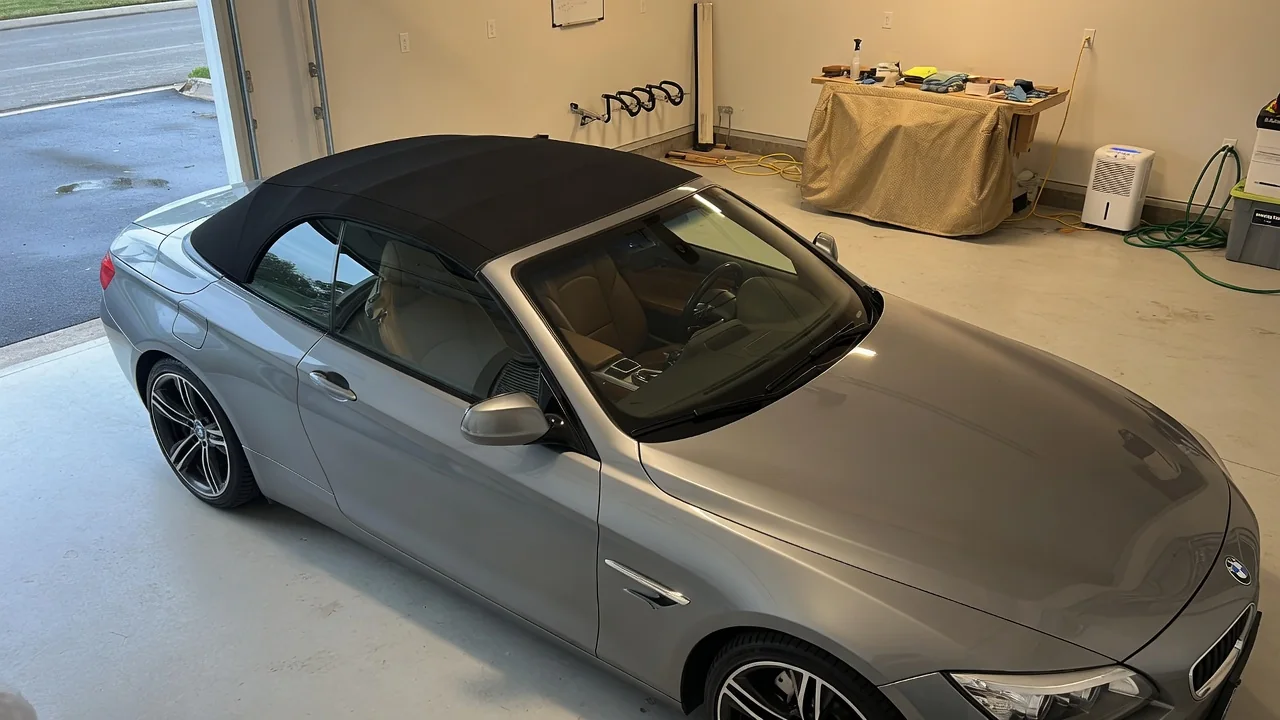
Storing a convertible with its roof up is a common starting point for long-term storage. A raised top keeps the fabric flat, the rear window unfolded, and the weatherstrips close to the position they were designed to seal in. A raised roof is not automatically a protected roof, though. Over weeks or months, three things decide how well the top comes through: the shape the seals hold, the condition of the fabric when it goes into storage, and how much moisture stays trapped around it.
Seal shape: keeping weatherstrips in their working position
A convertible top relies on rubber weatherstrips along the windshield header, the side rails, and the window openings. When the roof is latched, these seals are pressed against glass and body panels. Rubber held under the same compression for a long time can take a set: it loses some of its ability to spring back, and the result can show up later as wind noise, whistling, or small water leaks. With the top folded, some seals can instead be pinched or bent at angles they were never shaped for. Storing with the roof up keeps them in their intended working shape, so the main job is to keep that shape healthy.
Before storage, clean the seals with mild soap and water, dry them, and treat them with a rubber care product intended for automotive weatherstripping. Avoid petroleum-based products, which can soften or swell some rubber compounds. When you latch the roof, check that no seal lip is folded over or tucked under the frame. On cars with frameless side windows, confirm that each window has closed fully into its seal. On some vehicles, disconnecting the battery can affect how the windows index against the top, so the owner's manual is the place to check whether a reset procedure applies.
Some owners leave the side windows lowered slightly to reduce compression on the window seals. That eases pressure on the rubber, but it also lets dust, insects, and rodents into the cabin, so it only makes sense in a clean, secure, enclosed space. Whatever you decide about the windows, do not leave the roof partly unlatched or stopped midway through its cycle. That leaves the fabric and seals unsupported in a position the design does not expect to hold for long periods.
Fabric condition: preparing the soft top before it sits
The top should go into storage clean. Dirt, pollen, bird droppings, and tree sap hold moisture against the material and can stain or weaken it over time, and storage gives them months to do it. Soft tops are generally either woven fabric or vinyl, and the two need different cleaners and protectants, so use products meant for your top's material and follow the care guidance from the vehicle or top manufacturer. Work with a soft brush, rinse thoroughly so no cleaning residue remains in the weave, and let the top dry completely before anything else touches it.
Cleaning is also the best moment to inspect. Look for loose or fraying stitching, wear at the edges, thin spots where the fabric rides over the frame bows, cracks in vinyl, and any separation where the rear window is bonded or sewn in. Storage does not stop these problems from progressing, and they are easier to deal with before the car sits than after. If water no longer beads on a fabric top, reapplying a water repellent suited to the material, after it is clean and dry, restores some protection.
Keeping the roof up holds the fabric under even tension across the frame, which helps it avoid the sharp creases that develop when a top stays folded for months. It also spares a flexible plastic rear window from long-term folding, which can leave permanent lines or cracks, especially in cold conditions. Do not set anything on the raised roof. If you use a car cover, choose one with a soft inner lining and a snug fit so it does not shift and rub the fabric when air moves through the space.
Moisture: the main risk during long storage
Trapped moisture is the most likely cause of damage to a convertible top in storage. A damp top or a humid cabin can lead to mildew, musty odors, staining, and corrosion on the metal parts of the top frame and latches. Never cover or store a wet top. After washing or driving in rain, let the car dry with the roof up in a ventilated space, and check the places where water tends to linger: seams, the underside of the fabric along the rails, and the edges of the rear window.
Most convertible bodies include drain channels or tubes that carry away water getting past the seals, often around the top storage area and the rear quarters. If leaves or debris clog them, water can collect inside the body even when the roof is up and closed. Where the drains are accessible, clear them before storage; the owner's manual or service information shows where they are on a specific car. Also feel the carpets, the trunk floor, and the area behind the seats for dampness, since stored water inside the car will keep humidity high for the entire storage period.
The storage space matters as much as the car. Plastic tarps and non-breathable covers trap condensation against the top, so use a breathable cover or none at all indoors. Temperature swings in a garage cause condensation, and some ventilation helps it clear. Moisture-absorbing containers placed securely in the cabin and trunk can lower humidity, but they need to be checked and replaced as they fill. On a bare concrete floor, a vapor barrier sheet placed under the car, not over it, is a common way to limit moisture rising from the slab.
Practical implications and limits
Convertible long-term storage with the roof up works best with periodic checks rather than a set-and-forget approach. A quick visit every few weeks lets you catch a musty smell, a damp patch, a cover that has slipped, or signs of pests before they become expensive. If you choose to operate a power top during storage to keep the mechanism moving, do it with the top dry, at moderate temperatures, and with a healthy battery, since power tops depend on adequate voltage. A battery maintainer supports this, but skip cycling the top if the owner's manual advises against it.
Storing the roof up preserves condition; it does not repair it. Seals that are already hardened or cracked, fabric that has shrunk or worn through, and existing leaks will still be there in spring. Vehicle design also changes the details. Retractable hardtops have no fabric to manage but still depend on seals and drains, and specific tops may have their own latching, tensioning, or storage procedures. Where the owner's manual or manufacturer service information gives instructions, they take priority over general advice. Outdoor storage exposes the top to sunlight, rain, and wider temperature swings, so these steps reduce risk there without matching the protection of a dry, enclosed space.
When the car comes out of storage, give the roof the same attention it got going in. Remove dust from the fabric before it gets wet, look at the seals for flattened or misshapen sections, confirm that the windows close properly against the top, and check for water entry with a gentle hose test or the first light rain before relying on the seal at highway speed. Problems found at this stage point back to which of the three areas needs work before the next storage season.