How to Park a Car on a Steep Driveway
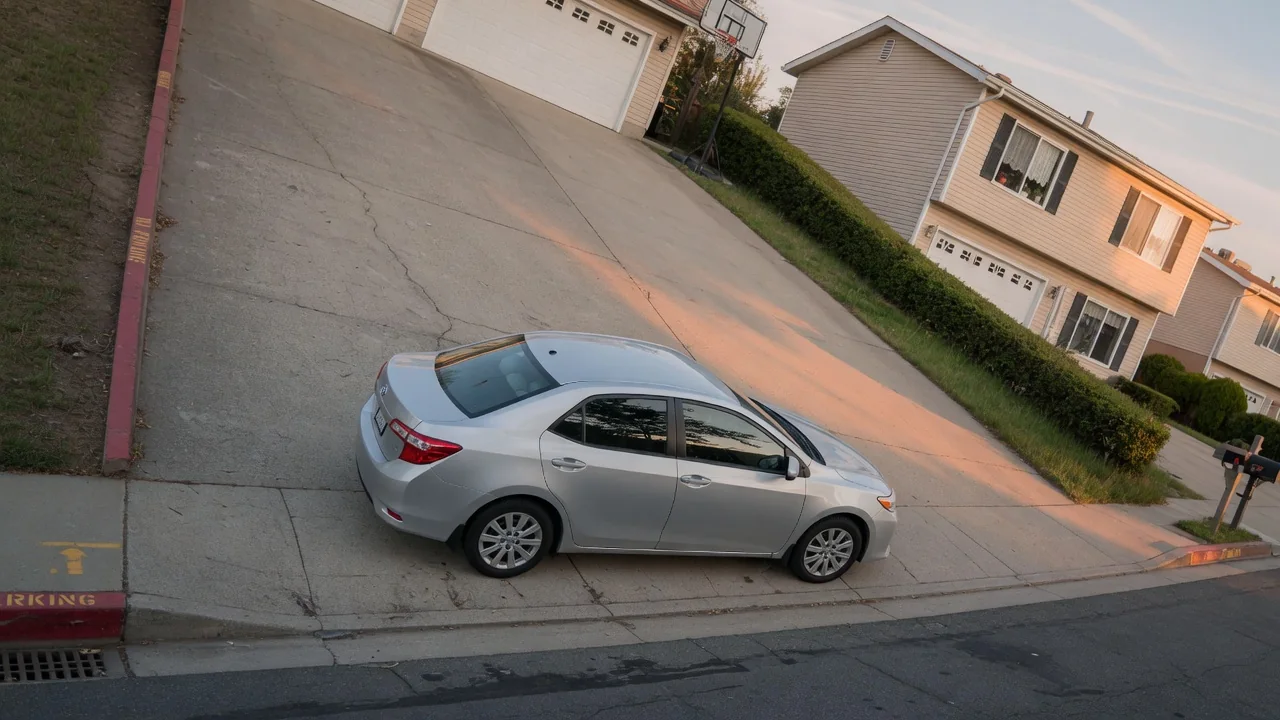
Knowing how to park a car on a steep driveway comes down to three things: arriving at an angle and speed that protect the underside, holding the vehicle with more than one device, and confirming it stays put before walking away. The slope changes how the brakes, transmission and tires share the load, so small habits make a real difference.
Approach and clearance
The transition where the street meets the driveway is usually where contact happens. A low front bumper, air dam or exhaust can scrape as the nose rises or drops, and a long wheelbase can ground the middle of the car on a sharp crest. Approaching slowly and at a slight diagonal lets one wheel climb at a time, which effectively softens the angle. Listen for scraping and watch how close the front overhang comes to the pavement on the first attempt.
Clearance varies widely between vehicles. A sedan with a sport body kit, a loaded trunk or a hitch-mounted rack sits closer to the ground than the same model empty, while a crossover with shorter overhangs may clear the same lip easily. Decide before you commit whether to nose in or back in; reversing up a slope often gives better visibility when leaving later, but backup cameras can distort the grade. Stop with enough room to open doors and walk around the car safely.
Parking brake and gear
On a grade, the order of steps matters. With the foot brake held firmly, apply the parking brake first, then ease off the pedal slightly so the car settles onto the brake, and only then select Park in an automatic. This keeps the vehicle's weight from resting on the parking pawl, a small locking piece inside the transmission that was never meant to carry the whole load. A harsh clunk when shifting out of Park later is a sign the pawl was holding the weight.
With a manual transmission, leave the car in gear after setting the handbrake; first gear when facing uphill and reverse when facing downhill are the usual choices, since engine compression then resists the direction of roll. Electronic parking brakes work by a switch and may apply automatically on some models, so check the instrument cluster for the indicator rather than assuming. Lever, pedal and button designs all behave differently, and the owner's manual describes the exact sequence for a particular vehicle.
Exit check
Before opening the door, release the foot brake gently and watch for movement. A properly secured car may settle a fraction of an inch as slack is taken up, then stop completely. Continued creeping means the parking brake is not holding, and the pedal should go straight back down. Turning the front wheels so that any roll would steer the car toward a curb, a wall edge or away from the street adds a passive backstop if everything else lets go.
Getting out on a slope has its own hazards. Doors swing harder downhill and can strike a wall or pull out of your hand, while an uphill door may fall shut on a leg. Loose items, shopping bags and unbelted cargo shift toward the low end of the cabin. Once outside, glance back at the wheels and the gap to any nearby object; a reference point such as a paving joint makes it easy to see later whether the car has moved.
Everyday Use and Observations
Daily parking on an incline reveals patterns worth noticing. A lever that travels higher than it used to, or a pedal that needs more clicks, suggests the parking brake is holding less firmly than before. Wet leaves, frost, loose gravel or a smooth sealed surface reduce tire grip, so a car that holds well in dry weather can slide with the wheels locked. Wheel chocks placed on the downhill side of the tires offer inexpensive extra security for long stays.
Some gauges and systems respond to the tilt as well. The fuel reading may shift, and fluid level checks are not reliable on a slope, so those are better done on level ground. Hill-start assist, where fitted, holds the brakes briefly when pulling away, yet it is a driving aid rather than a parking device. When leaving, keep the foot brake pressed while releasing the parking brake, and expect the car to want to move the moment it is freed.
Limits and Next Steps
Every securing method has limits. Parking brakes rely on cables, shoes, pads or electric actuators that wear and can lose effectiveness, and very cold conditions can occasionally leave a mechanism reluctant to release. A heavy trailer, a full load of passengers or a roof box increases the force trying to pull the vehicle downhill. If the slope is so severe that the car scrapes regardless of angle or will not hold reliably, parking on flatter ground nearby is the sensible choice.
A car that rolls after being secured, a brake warning light that stays on, or grinding noises when the parking brake is applied all deserve a professional inspection rather than guesswork. A technician can check adjustment and component condition against that vehicle's specifications. For persistent clearance problems, driveway modifications such as a reshaped transition are a matter for a qualified contractor. Until any doubt is resolved, treat chocks and turned wheels as essential backups rather than optional extras.