How to maintain and protect synthetic leather car seats
Synthetic leather car seats give a premium look without the upkeep demands of natural hide, but they still need a consistent routine to resist cracking, fading, and staining. The material is a plastic-based surface, usually polyurethane or vinyl, so its main enemies are heat, UV light, abrasive dirt, and harsh chemicals. A gentle cleaner, a protectant designed for artificial leather, and regular wiping keep the coating supple and bonded to its fabric backing. Understanding this helps owners protect synthetic leather car seats and avoid the peeling that appears after neglect.
Direct answer
The essential answer is to maintain synthetic leather car seats through frequent gentle cleaning followed by a compatible UV-protectant. Dirt acts like fine sandpaper, gradually scratching the topcoat and letting moisture reach the backing. A damp microfiber cloth removes light dust; a diluted mild soap lifts body oil and sunscreen before they degrade the plastic. Harsh solvents, bleach, and stiff brushes should be avoided because they can dry the coating or create micro-tears.
Protecting synthetic leather requires reducing sun load and chemical contact. Parking in shade, using a windshield shade, or adding window tint lowers interior temperatures that accelerate plasticizer loss. When you choose a dressing, look for water-based products labeled safe for vinyl or polyurethane. Heavy oil-based conditioners cannot soak in as they do with real leather; they may leave a slick residue that attracts more dust and makes seating surfaces slippery.
How to proceed
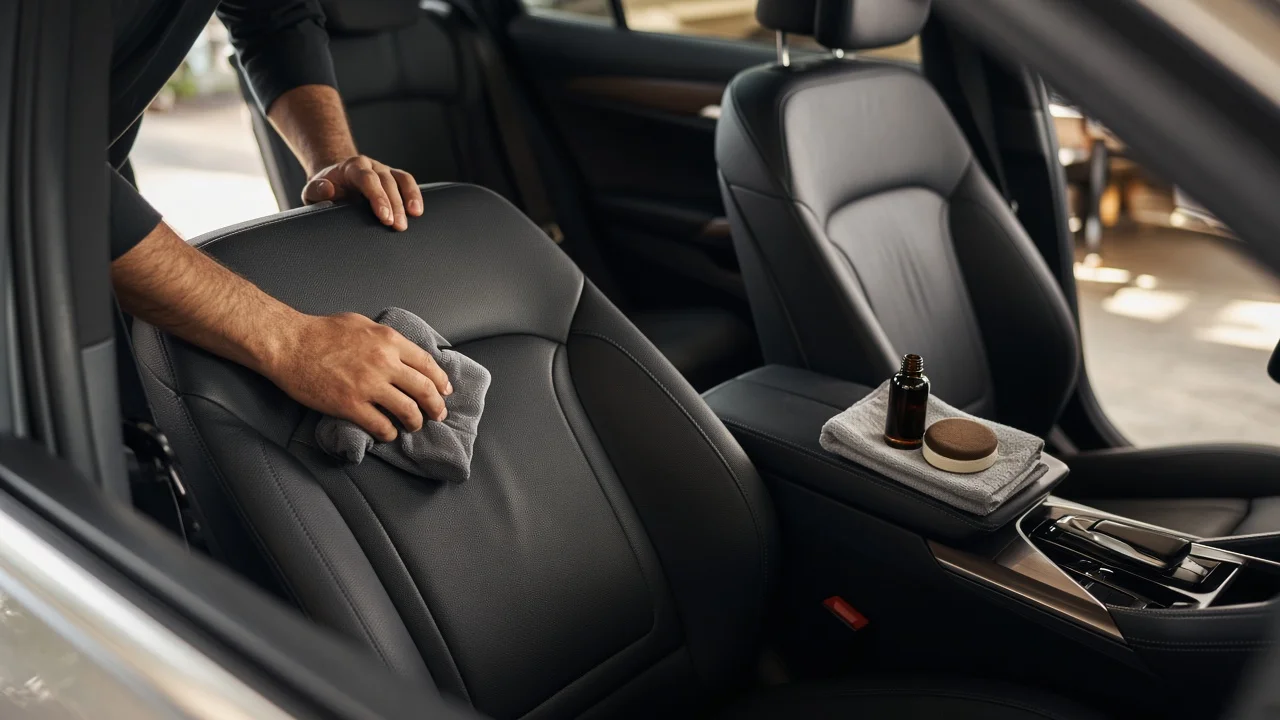
Begin by vacuuming the seat seams and perforations with a soft brush attachment. Then wipe the surface with a lightly damp microfiber cloth, rinsing it often to prevent dragging grit across the panel. For deeper cleaning, apply a small amount of mild soap solution to the cloth, not directly to the seat, and work in small sections. Dry the area immediately with a separate clean towel to stop water from sitting in the stitching.
After the seat is dry, apply a thin layer of protectant to an applicator pad and spread it evenly. Allow it to haze briefly, then buff with a dry microfiber cloth to remove excess. Check the result by pressing a clean tissue on the surface; if it clings or shows oil, you have used too much. Repeat this routine whenever the seats look dull or feel tacky, but avoid aggressive scrubbing that wears the printed grain pattern.