How to clean synthetic leather car seats
Synthetic leather car seats resist stains well, but daily dust, skin oils, sunscreen and spilled drinks still build up in the grain. The right approach removes that film without drying or cracking the polyurethane or vinyl surface. A mild pH-neutral cleaner is usually the best cleaner for synthetic leather car seats because aggressive solvents can dull the finish and weaken the coating. Knowing how to clean synthetic leather car seats correctly matters more than buying an expensive specialty product, so the method below focuses on safe products and controlled wiping.
Direct answer
The best way to clean synthetic leather car seats is to use a mild, pH-neutral interior cleaner diluted according to the label, a soft microfiber towel, and a second dry towel for buffing. Synthetic leather is a non-porous or low-porosity polymer surface, so cleaners do not need to soak in or condition like real hide. Instead, the goal is to lift oils and grime from the grain without leaving residue that makes the seat feel sticky or attracts new dirt.
Look for a cleaner labeled safe for vinyl, polyurethane, leatherette, or coated automotive interiors. Avoid products built around strong alkaline degreasers, bleach, or heavy solvents unless the label specifically approves them for synthetic upholstery. A diluted mild soap solution can work for light dust and fingerprints, but a dedicated automotive interior cleaner is usually the safest choice because it is formulated to rinse away easily and reduce streaking on shiny seat panels.
How to proceed
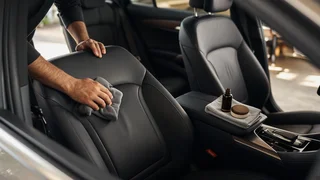
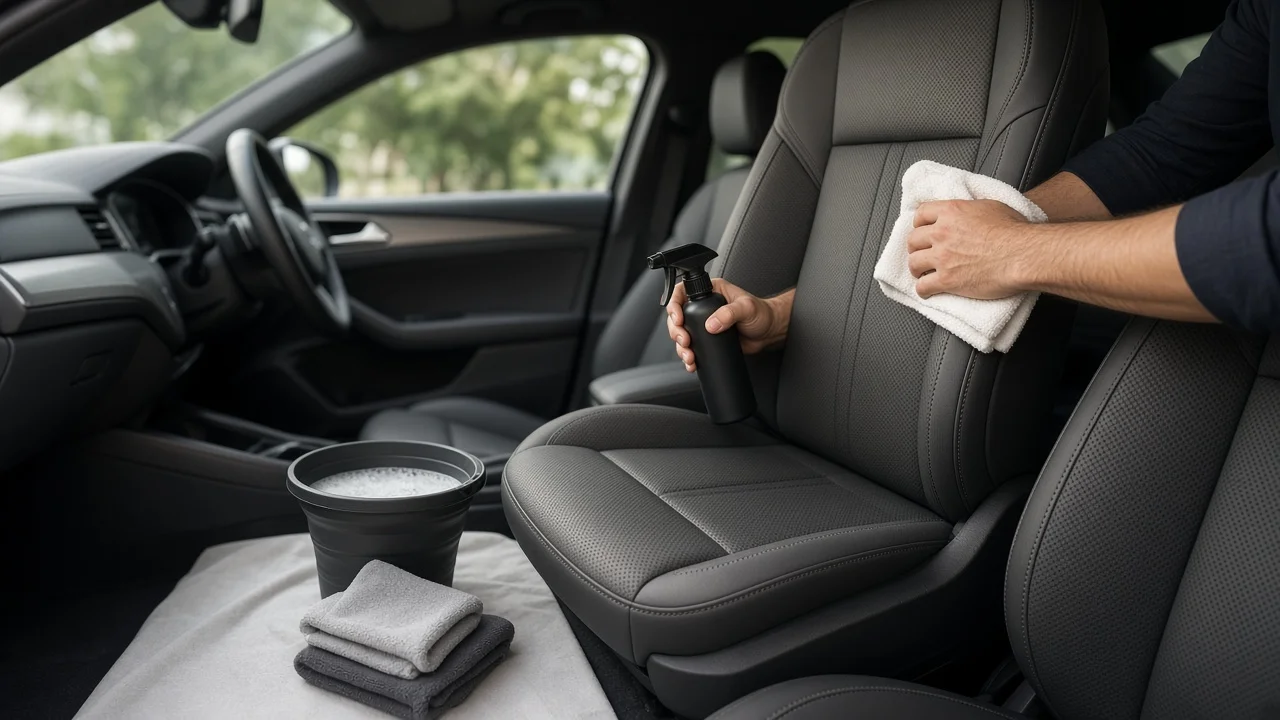
Start by vacuuming the seat cushion, backrest, and crevices with a soft brush attachment to remove grit that could scratch the coating during wiping. Then lightly mist a folded microfiber towel with the cleaner rather than soaking the seat directly. Wipe one section at a time using straight overlapping passes, and follow immediately with a dry towel to lift the loosened film before it dries. If the seat has perforations or contrast stitching, work across those areas with light pressure to avoid forcing moisture into the seams.
After the first pass, inspect the surface under good light for hazy spots or streaks. A second wipe with a clean damp towel and a final buff usually restores an even low-sheen finish. Avoid leaving the seat wet, and do not apply leather conditioners or oils made for natural hides; they can sit on the surface and create a slick residue. Repeated gentle cleaning is better than occasional aggressive scrubbing, because preserving the factory topcoat helps prevent the cracking and gloss loss that make synthetic leather look worn.