How to Install a Turbo Blanket
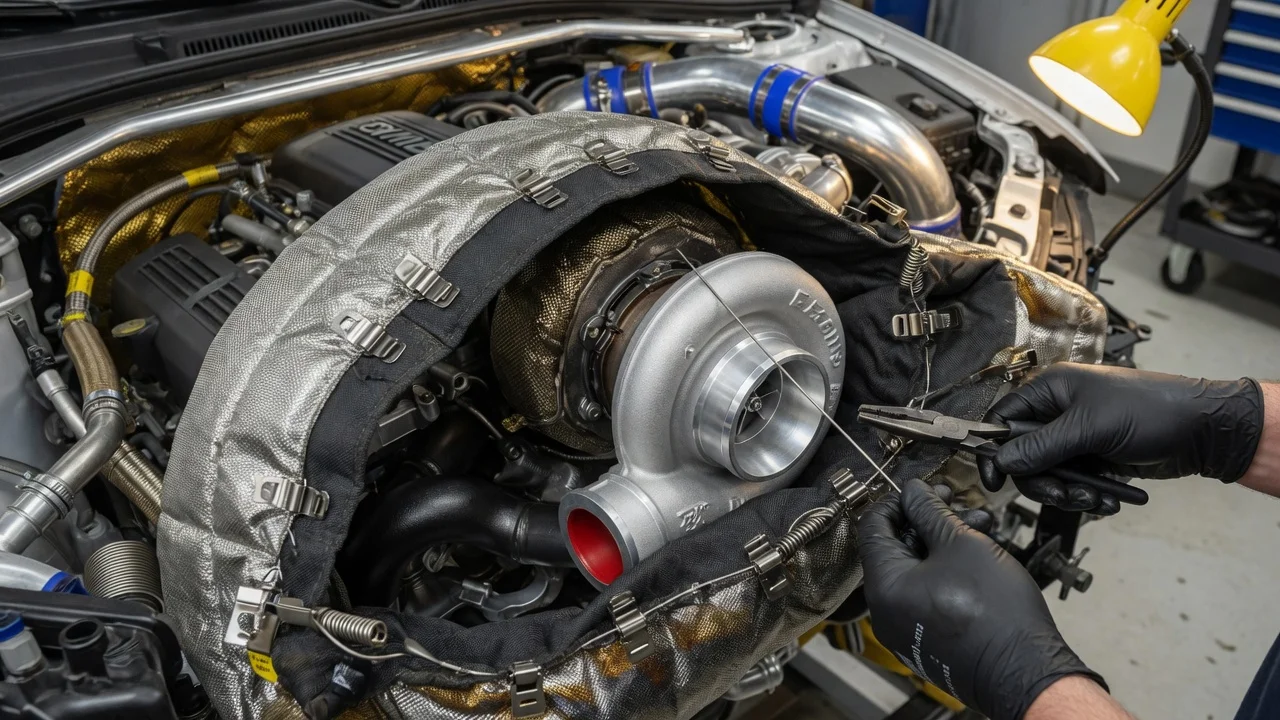
A turbo blanket wraps the hot turbine housing so more heat stays in the exhaust stream and less reaches nearby wiring, hoses and intake parts. Fitting one is usually a modest job. It only works, and only stays safe, when the blanket matches the housing, clears every line and actuator, and goes onto a turbocharger with no oil or exhaust leaks. This guide covers fitment, preparation, removal of existing shields, installation and the checks that follow.
Confirm the part and repair scope
Blankets are shaped for specific turbine housing families and flange styles, so a generic size can sit loose or block a port. Start with the turbo that is actually on the engine. Model year, engine variant and engine configuration all matter, because one vehicle line can use different turbochargers across trims and production changes. Check the service history as well: a replacement or upgraded turbo may have a different housing than the factory part. Read the identification tag on the turbo if it is legible, then compare it with the blanket maker's fitment information instead of relying on the vehicle name alone.
Be clear about what the blanket can do. It reduces radiant heat; it does not repair anything. If you want the blanket because of melted boots, brittle wiring, a burning smell or diagnostic codes, find the cause first. Forum symptom reports about heat soak are useful background, but they are not a verified failure on your car. A burning smell under certain symptom conditions often traces to an oil leak at the feed or return fittings, or to an exhaust leak at a gasket. Wrapping over either problem hides it, and an oil-soaked blanket can become a fire hazard. Boost-related or sensor codes also need proper diagnosis. Some vehicle and turbo makers advise against covering their units or limit what may be covered, so check the manufacturer specifications and any warranty terms before you buy.
Prepare tools and safe access
You will usually need basic hand tools for heat shield and intake fasteners, penetrating oil for corroded bolts, sturdy jack stands if you work from below, and a work light. Wear gloves, eye protection and a dust mask, because blanket insulation often contains fibers that irritate skin and lungs. Use the service information for your exact engine to see what has to come off for access. That may include the air box, intake pipes, upper heat shields or covers underneath. Work only on a fully cold engine: the turbine housing stays dangerously hot long after shutdown. If you need to unplug sensors or move wiring harnesses, label each connector so it goes back in the same place.
On some layouts the turbo is reachable in minutes. On others it sits tight against the firewall, low behind the engine, or between the cylinder banks of a V engine. Access there can mean removing intake manifolds, coolant lines or chassis parts, and that is better left to a shop. Inexperienced owners should also be cautious around old exhaust hardware: small studs and bolts can snap, and extracting a broken stud from a turbo or manifold is a separate repair.
Remove without avoidable damage
Remove the intake components that block the turbine side, then unbolt any factory heat shield. Keep the fasteners and note where each one came from. Factory shield bolts are often small and seized, so apply penetrating oil, give it time, and turn with steady pressure rather than impact force. As you work, don't bend or kink the oil feed line, the coolant lines or the wastegate actuator rod. Keep pressure off nearby exhaust temperature and oxygen sensor wiring.
Check the blanket instructions to see whether the factory shield is replaced or retained, since some designs fit only with the shield removed. With the housing exposed, do a careful inspection. Look for wet oil at the line fittings, soot trails at the flanges that point to exhaust leaks, cracks in the housing, and damaged lines or actuator linkage. If anything looks wrong, diagnose and repair it before covering the turbo. Then clean oil residue and debris off the housing so nothing contaminates the new blanket.
Install and restore the system
Test-fit the blanket on the cold housing before fastening anything. Line up its openings with the turbine inlet flange, the outlet or downpipe connection and the wastegate area so nothing is pinched or blocked. The blanket should cover the turbine housing only. Keep it off the center bearing housing, the compressor housing, the oil and coolant lines, and any wastegate actuator that the instructions say needs airflow. Secure it with the supplied springs, wire or straps exactly as the maker describes. Make it snug enough that it cannot shift, without crushing sensors or lines. Don't cut or trim a blanket unless the instructions allow it, because cut edges fray and shed fibers.
Reinstall the intake pipes, clamps and anything else you removed, and confirm each connection is fully seated. Route wiring and hoses so they don't rest on the blanket surface, and refit sensor connectors to their labeled locations. A passive heat cover normally needs no programming or calibration. Still, follow the vehicle service information for any steps tied to disconnecting the battery or unplugging sensors.
Check the completed work
For the first start, work outdoors or in a well-ventilated area and keep a fire extinguisher within reach. Let the engine idle and look and listen for rattles, contact with lines, or anything moving where it shouldn't. Many blankets give off light smoke or odor during the first few heat cycles while coatings or binders cure. Follow the maker's guidance on that break-in. Smoke that persists beyond it, a blue haze, or a smell of burning oil points to a leak rather than normal curing, and you should stop and inspect.
Once the engine has cooled, recheck the fasteners and the fit, because blankets often settle after heating. After that, look at the blanket at each routine service. Watch for oil saturation, fraying, loose fasteners and contact with lines or wiring. Remove the blanket and diagnose further if you see a new warning light or stored diagnostic codes, a change in boost behavior, an exhaust tick or whistle, or any wet spot on the blanket. A covered turbo still needs periodic uncovered inspection to confirm it is staying dry and sound.