How to install a subwoofer without an amp

A subwoofer without a dedicated amplifier is possible only when the head unit already supplies a powered subwoofer output, or when the speaker is a powered enclosure. If the source is a standard line-level or high-level car stereo channel, a passive subwoofer will not produce useful bass without external amplification. The question usually assumes a factory or aftermarket radio, an existing speaker wiring path, and a desire for stronger low-frequency response. This does not mean amplification is absent from the vehicle. The power may come from the stereo’s built-in subwoofer channel, a separate OEM module, or an amplifier built into the subwoofer box itself.
Direct answer
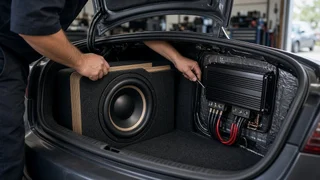
You cannot connect a typical passive subwoofer directly to ordinary front or rear speaker wires and expect it to play with suitable output. A passive voice coil needs real wattage and a low-pass crossover to separate bass from midrange. Without that, the subwoofer may barely move, or the head unit may be driven into clipping while trying to supply current it was not designed to deliver. The practical exception is a powered subwoofer with its own internal amp, which still needs signal and turn-on connections but no separate amplifier chassis.
Some car stereos include a dedicated subwoofer output that is already amplified or designed for a specific OEM speaker load. In those vehicles, the connection may be direct because the head unit or factory module is the amplifier. However, aftermarket radios with a single RCA subwoofer jack usually provide only preamp signal voltage, not the power to move a subwoofer cone. Confirm what the output actually provides before cutting or splicing any car audio wiring. A low-voltage signal connection is not the same as a speaker-level connection.
How to proceed
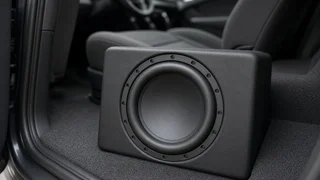
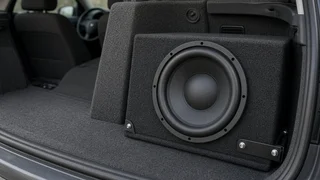
First identify the audio source and the subwoofer type. A powered enclosure typically requires constant power, a solid chassis ground, a remote turn-on signal from the head unit, and an audio input. If the stereo has a dedicated subwoofer RCA output, run a shielded RCA cable from that jack to the powered enclosure input. If there is no subwoofer output, some powered boxes accept high-level input tapped from a full-range rear speaker channel, and the enclosure’s internal crossover filters the bass. Use the correct signal type and do not force an RCA plug onto speaker wiring.
For a factory stereo with an existing powered subwoofer, vehicle integration is important. The wiring may already be present in the rear deck, cargo area, or under a seat. In that case, connecting the replacement speaker to the factory plug may restore bass without adding an aftermarket amp, but the impedance and mounting should match the original design. After making the connections, test at moderate volume with a familiar track. Listen for clean low-frequency output without rattling, intermittent signal reception issues, or a sudden shutdown. If the cone barely moves or the sound is thin, the source is likely not providing enough power for that subwoofer.