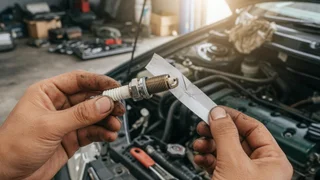
How to Gap a Spark Plug with a Feeler Gauge
A spark plug gap that is too wide or too narrow changes the voltage required for the arc at the electrode tip, affecting combustion pressure and ignitability. Using a feeler gauge lets you compare that air gap against the manufacturer specification and correct it by carefully moving the ground electrode. This measured adjustment suits many conventional copper and nickel plugs, although some fine-wire precious metal designs need extra care to avoid damaging the center electrode.
Direct answer
Setting a plug gap with a feeler gauge means sliding a blade of known thickness between the center electrode and the curved ground strap. When the blade drags lightly without forcing the strap upward, the clearance equals the blade size. This mechanical method works because the gauge provides a physical reference you can feel and see, unlike guessing by eye. The correct gap depends on the ignition coil output, cylinder pressure, and combustion chamber design of a particular engine, so the vehicle’s published setting is the target to use.
Checking the current gap is the first part of any adjustment. If the blade that matches the specification passes through with no resistance, the gap is wide. If the next thicker blade will not enter or lifts the ground strap, the gap is narrow. That distinction matters because the measured clearance changes how easily the spark forms. Too wide a gap can demand more voltage than the coil delivers under load, while too narrow a gap may produce a small kernel that does not reliably ignite the air-fuel mixture.
How to proceed
Work with a cold, clean plug and secure it so the terminal end is supported and the electrodes are accessible. Select the feeler blade for the specified thickness and pass it through the gap. If it slides freely without touching, the opening is oversize. Tap the ground strap lightly against a non-marring surface to close it in small increments, then recheck. If the blade cannot enter, open the strap carefully with a gapping tool. Repeat the measurement after each movement because the strap often shifts more than expected.
Once the blade slips through with a slight, consistent drag, inspect the ground strap so it remains parallel to the center electrode. Wipe the firing tip clean if any metallic debris appeared during adjustment, then confirm the blade still fits with the same resistance. Avoid prying against the center electrode on fine-wire iridium or platinum plugs, since a cracked insulator or damaged tip can be hidden by the shell. If the recommended clearance cannot be reached without visibly stressing the strap, stop and compare the plug to the engine’s service history and specification rather than forcing it.