How to Find the Spark Plug Gap for Your Car

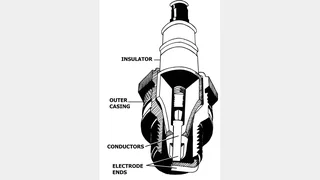
Finding the correct spark plug gap for your car starts with the right specification, not with guesswork. The gap is the precise distance between the center and ground electrodes at the firing tip. It strongly influences how reliably the ignition kernel forms and how completely the air-fuel mixture burns. Because engines differ by design, a single universal number does not apply. The usable guidance comes from underhood emission labels, owner’s literature, or manufacturer service data for the exact engine configuration. Even small deviations from that figure can change idle quality, misfire behavior, and fuel economy, so confirmation is worthwhile before installation.
Direct answer
The essential answer is to obtain the gap specification for your specific vehicle and powertrain from the manufacturer’s published service information, then compare that figure with the actual clearance measured at the plug. The specification may be printed on the vehicle emission control information label, included in the owner’s manual, or listed in repair data for the engine. If you are installing pre-gapped plugs, the factory preset is a convenient starting point, but it should still be checked because handling and shipping can disturb the electrodes.
The required value can also depend on the ignition system and the plug material. High-energy systems and fine-wire electrode designs often use a different clearance than older conventional plugs. Conditions that alter combustion pressure or mixture motion may make a slightly different setting appropriate, but only when supported by service guidance. Treat the gap as a tuning dimension rather than a fixed shape. A plug that is dropped, heavily carboned, or previously adjusted should be inspected carefully before the reading is trusted.
Identification and location
The first identification step is to match the plug and gap to the exact engine configuration in the vehicle, not to a similar trim or model year. Emission labels may carry a three-digit or four-digit engine family identifier that helps distinguish closely related engines. Service history can be useful here because an engine swap, ignition upgrade, or nonstandard plug set may change the correct specification. If the underhood label is missing or unreadable, the owner’s manual and the manufacturer’s service entry are the next most reliable references.
A useful inspection cue is the existing plug’s condition and markings. The porcelain insulator and metal shell may show a part number, while the old ground strap can reveal whether the engine tended to run hot or cold. However, that appearance is not a reliable source for the numerical gap. Manufacturer specifications should be tied to the vehicle’s application through the VIN, calibration code, or engine family where available. When an uncertain aftermarket plug is installed, identify it by marking and compare it against the correct listed part before adjusting anything.
How to proceed
Begin with a cool engine, the correct replacement plugs, a gap gauge suitable for the electrode style, and the confirmed specification. Wire-type gauges work well for many conventional plugs, while feeler gauges are more useful for wide or unfamiliar gaps. Check the existing ground strap carefully before bending it. Inspect a new plug straight from the box, because the protective sleeve can allow the ground electrode to shift. Measure at the point where the center electrode and ground strap are closest, using gentle contact rather than wedging the gauge through forcefully.
If adjustment is needed, use a tool that contacts the ground strap near its base, and move it in small increments before rechecking. Avoid prying against the center electrode or the ceramic insulator, since that can cause hidden damage that appears later as misfire or detonation. After setting the gap, recheck it from both sides and inspect the electrodes for alignment. Stop and obtain correct service information if the application is uncertain, the measured gap is far from the expected range, or the plug has been physically damaged.