How to Fix Parasitic Drain on a Car Battery
A car battery that keeps losing charge after sitting overnight usually has more than a tired battery—it has an unwanted current path that remains active when the key is off. This steady background load is called parasitic drain or parasitic draw. Finding and fixing it requires measuring current, checking battery terminals and system voltage, and tracing the draw to a circuit. The process is methodical rather than guesswork. A small draw supports memories and security systems, but an excessive draw will discharge the battery. Accurate testing separates normal standby loads from circuits that are truly staying awake too long.
Direct answer
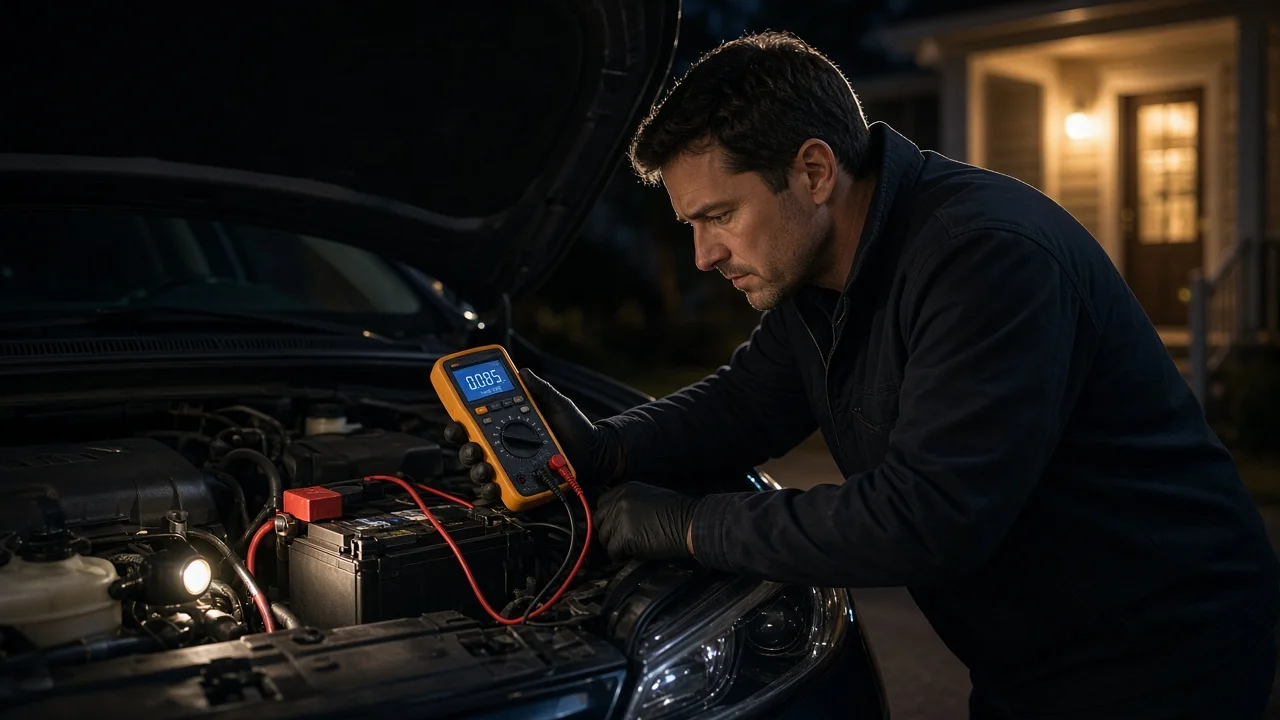
The essential fix is to identify the circuit drawing current after shutdown, then repair or disconnect the faulty component causing that draw. Begin by confirming the battery is charged and the terminals are clean and tight, because poor connections and a low state of charge can mimic a drain. Use a digital multimeter in the appropriate current range to measure parasitic draw after the vehicle has gone to sleep. Compare the reading against the vehicle’s expected normal draw rather than a single universal number, since modules, alarms, and telematics systems vary.
A reading that stays elevated after modules time out indicates an active circuit. You then narrow the location by checking voltage drop across fuses or by removing one fuse at a time while watching the meter. Manufacturer-dependent body-control logic means the same symptom can come from a glovebox switch, aftermarket accessory, trailer wiring, seat module, or infotainment system. The measurement shows excess current flow; it does not identify a failed part by itself. Use the wiring diagram to confirm what each fuse supplies before touching anything.
How to proceed
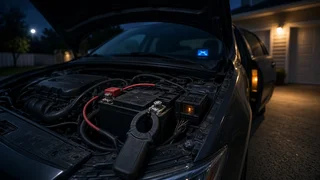
Park the vehicle in a safe, well-ventilated area and gather a digital multimeter, the owner’s manual or wiring diagram, and a memory saver if you want to preserve settings. Disable automatic lights, close doors, and secure latches so the vehicle can enter sleep mode. Wait for the specified shutdown period, which may be several minutes or longer on modern vehicles. Connect the meter carefully in series at the battery, or use an inductive current clamp rated for low DC readings. Avoid changing electrical load while the meter is attached.
Once the key-off draw is recorded, begin circuit identification without opening doors or waking modules. A practical approach is to measure the small voltage drop across each fuse and use its fuse rating and a fuse voltage-drop chart to estimate current. Pulling a fuse can wake a module and change the reading, so interpret changes cautiously. When the suspect circuit is found, check the wiring diagram and inspect that circuit’s loads for relays, aftermarket devices, or damaged wiring. Repair the underlying cause, then retest the total draw after allowing the vehicle to sleep again.
Before finishing, verify the charging output with the engine running to make sure the alternator is replenishing the battery. If the charging system is weak, repairing a drain alone may not keep the battery healthy. Recheck that terminal connections are secure and that the battery rests at a normal open-circuit voltage after charging. Then repeat the parasitic draw test after the same shutdown interval. The job is complete when the key-off current is within the manufacturer’s acceptable range and the voltage remains stable during a subsequent start and short run.
Understanding a problem
A battery that is dead only after one or two nights can point to several causes, and the battery itself should not be assumed bad. A glovebox light, trunk lamp, or underhood light that remains on is an easy visual check. Aftermarket alarms, remote starters, dash cameras, USB adapters, and phone chargers are frequent sources of unwanted draw. A relay that stays energized, a module not entering sleep mode, or a pinched wire can also create a hidden current path. Alternator diodes that leak current can drain the battery while the engine is off.
Use observation to separate causes. If the draw appears only after rain, inspect circuits exposed to moisture. If it started after an accessory was installed, disconnect that accessory first. A consistent draw that stops when one fuse is pulled points toward that branch, but a wiring diagram is needed to know all the connected components. A fault code is supporting evidence, not proof that a specific module has failed. Confirm by testing the circuit and checking manufacturer service information before replacing parts, especially on vehicles with networked body-control modules.