How to Estimate Your Car’s Trade-In Value
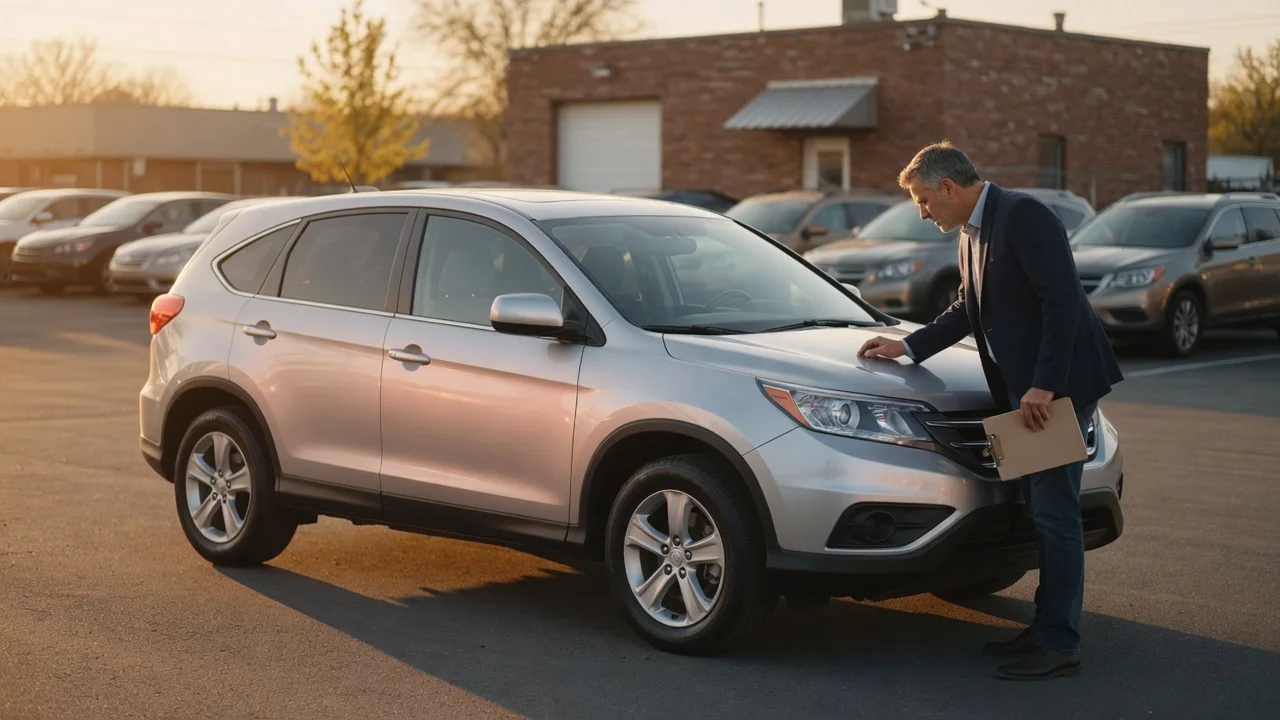
What trade-in value is
Trade-in value is the amount a motor dealer is willing to credit toward another vehicle when you hand over your current car as part of the same deal. It is a wholesale-style buying price, not the price the dealer will later ask a retail buyer to pay, and it is usually lower than what a private buyer might pay for the same car in similar condition.
An estimate is not a guaranteed offer. The figure that matters is a written appraisal on your specific vehicle, on a given day, from a buyer who will actually take it. Online guides, appraisal tools and advertised “we buy any car” ranges are starting points. They change with the information you enter, local demand, the dealer’s used-car mix and the condition the appraiser sees in person.
How trade-in compares with other prices
Several numbers get used around the same car, and mixing them up produces a misleading estimate.
Retail asking price: what a dealer typically advertises to the public after reconditioning, warranty provision and a margin. Private-party value: what a similar car might fetch sold directly to another motorist, with the seller handling advertising, viewings and paperwork. Trade-in or dealer purchase value: what a dealer may credit or pay to acquire the car quickly, then spend money preparing and holding it. Wholesale or auction value: a bulk-market floor that many dealer appraisals sit near, especially for cars the store does not want on its own forecourt.
If you only need a planning number, use a trade-in or dealer-purchase estimate, not a retail listing for a comparable car. A high advertised price on a similar model does not mean your car will attract that figure as a trade.
Identify the car before you price it
Valuation tools and appraisers price a unique specification, not a vague make and model. Two cars with the same badge can differ by thousands because of trim, powertrain, options and mileage. Look up the details from the registration document, the build plate or VIN decoder supplied with the car, the original window sticker or invoice, and the odometer, then enter those details consistently in every tool you use.
Model year, make, model and exact trim or equipment line; Engine size and type, fuel or power source, transmission and driven wheels; Factory options and packages that buyers pay extra for, such as leather, navigation, towing, sunroof, premium audio or advanced driver aids; Current odometer reading, in the unit the market uses; Body style, paint and interior colour if the tool asks for them; Registration or title status, including whether the title is clean, branded, salvage, rebuilt or flood; Service history in your possession and any outstanding safety recall or known fault
If you are unsure of the trim, do not guess a higher one. Overstating equipment is a common reason an online estimate collapses when a dealer inspects the car. When a field is unknown, treat the result as a range, not a point value.
Grade condition honestly
Condition is one of the largest adjustments after mileage and specification. Guides usually ask you to pick a band such as extra-clean, clean, average or rough. Appraisers then confirm that band on the forecourt. Grade the car as a buyer would, not as an owner who knows its history.
Outstanding: like-new appearance, complete records, no accident repair of consequence, tyres and brakes with substantial life left, no warning lights. Clean or good: normal wear for age and miles, minor stone chips or interior marks, full or near-full service history, everything working. Average: visible paintwork or interior wear, some incomplete history, tyres or brakes nearer replacement, small faults that do not stop the car being sold. Rough or poor: accident damage, rust, warning lights, worn interiors, mechanical faults, missing equipment, or a car that needs work before it can be retailed.
Walk around the car in daylight. Note dents, scratches, glass damage, tyre tread and uneven wear, interior stains or tears, odours, dashboard lights, and whether all keys, books, charging cables or locking wheel nuts are present. Incomplete keys, missing chargers on a plug-in vehicle, or a spare-wheel well with no spare or inflator are typical deductions. Unrepaired accident damage, flood exposure, odometer issues and a branded title can drop the car out of normal retail channels and into a much lower wholesale band. Specific deduction amounts vary by vehicle and market and are not fixed in this guide.
How published estimates are produced
Consumer valuation guides and dealer appraisal tools typically combine recent transactions for similar vehicles with adjustments for mileage, options, condition and region. Dealer software may also look at wholesale auction results and at how long comparable cars are taking to sell. The output is a modelled range, often shown separately for trade-in, private sale and typical retail.
Those models lag a fast-moving market and cannot see your car. A rare colour, a heavy option pack, a specialist conversion, a high-performance variant, or a car with a documented enthusiast service history may sit outside the average. The reverse is also true: a common colour and a high-mileage example of a plentiful model may come in below a national mid-point. Treat any single guide figure as one data point.
What usually moves the estimate
Mileage relative to typical use for that age, with very high or very low miles both needing a closer look. Condition, accident and repair history, and whether repairs were done to a retail standard. Title or registration brands, salvage, rebuilt, taxi, flood or lemon history, and unresolved finance on the vehicle. Local demand for that body style, fuel type and gearbox; diesel, manual, large petrol or niche electric models can be easier or harder to place depending on the market you are in. Time of year and model-year changeover, which can soften demand for outgoing stock. Reconditioning the dealer expects to fund: tyres, brakes, paint, interior, servicing and inspection. How well the car fits that dealer’s used-car programme; a store that does not retail your type of car may only offer a wholesale-disposal number. Outstanding manufacturer warranty, prepaid maintenance or transferable breakdown cover, which can support value when they remain with the car.
Legal rules on title brands, odometer disclosure, finance payoff and consumer rights differ by country and, in some places, by state or province. This article does not state a figure or a legal outcome for a particular jurisdiction. If the car has a branded title, unresolved finance, or an odometer or import complication, confirm the local position before you treat any estimate as realistic.
How to build a working estimate
Use the same specification in every source, then narrow the range with real-world checks rather than averaging unrelated numbers.
Collect the identifiers listed above and photograph the odometer, VIN, all body panels, interior, tyres and any damage. Run at least two independent consumer valuation guides or appraisal tools and record the trade-in or dealer-purchase range they give for your stated condition, not the retail range. Look at recent asking prices for matching year, trim, powertrain and similar miles in your area, then discount those listings toward wholesale. Asking prices are not sale prices. Order a vehicle history report if you do not already have one, and match it against what you will disclose. Undisclosed accident or title issues surface in a dealer check and reduce the offer. Get at least two firm appraisals: a franchised dealer who sells your next car, an independent dealer, and, where available, an instant-offer or online-buying service. Compare written numbers on the same day where you can, because used-car offers move. If you still have a loan, ask the lender for the exact 10-day or 15-day payoff. Subtract that payoff from the best written trade-in or purchase offer to see equity or negative equity. Sales tax treatment of a trade-in is set by local tax rules and should be confirmed where you buy, not assumed from another market. Decide whether the convenience of trading is worth the gap versus selling privately. The gap is the cost of a faster, simpler handover, not a hidden fee with a standard amount.
A usable estimate is a range between your lowest credible wholesale-style figure and your highest written offer, with a note of the condition and mileage you assumed. If those offers sit far apart, the car is either hard to grade from a description or sits in a thin market. In that case, an in-person appraisal on a clean car, with service records in the glovebox, is the next step.
What a dealer looks at in an appraisal
Expect a walk-around, an interior check, a test of lights and controls, a scan for warning lights, a look at tyre and brake wear, and a history check. Many dealers also take the car on a short road test. They are pricing what they can retail after work, or what they can send to auction, not what the car meant to you.
Present the car clean, with all keys, accessories and records. Cleaning does not create a higher guide category on its own, but dirt, personal items and a dead warning light you could have investigated make it easier for an appraiser to grade the car down. Do not repair on speculation unless a cheap, obvious fault would otherwise force a wholesale disposal; get the likely offer first if the work is expensive. Safety-related faults, including worn brakes, bald tyres or airbag lights, should be treated as roadworthiness issues, not only as price chips, and may require qualified workshop attention before the car is driven to an appointment.
Limits of any estimate, including this one
No guide can state what your car is worth without the exact vehicle, a current local market and an inspection. Typical percentage gaps between retail, private-party and trade-in are not reliable enough to quote here as rules of thumb, because they change with age, mileage, brand and demand. Instant online offers can expire, be reduced after inspection, or apply only if you buy another car from the same group. A high first number used to start a new-car deal can be offset elsewhere in the paperwork, so compare the net difference in the deal, not the trade-in line on its own.
If offers come in far below every guide, ask what the appraiser deducted and whether the car will be retailed or wholesaled. You can then decide to take the offer, sell privately, or spend money on documented repairs only when a second appraisal shows that work would be recovered. If you cannot identify the trim, the title status or the true mileage, stop and resolve those facts before treating any number as an estimate.