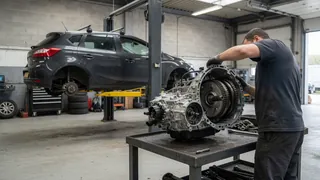
How to Drive a Dual-Clutch Transmission Car
Driving a dual-clutch transmission car means learning how the automated gearbox thinks. It combines the convenience of an automatic with the mechanical connection of a manual, but it does not creep, shift, or hold hills exactly like a conventional torque-converter automatic. Many of the jerky moments owners feel at low speed come from treating it like an old-school automatic. The goal is to adjust pedal timing, parking habits, and traffic behavior so the computer can preselect the next gear cleanly. This matters for smoothness and for avoiding unnecessary clutch wear in stop-and-go driving.
Direct answer
Drive a dual-clutch transmission car by being deliberate with the accelerator instead of creeping with light pedal pressure, especially in parking lots and uphill traffic. Because the dry or wet clutch packs engage automatically, hovering between zero throttle and part throttle can make the controller slip the clutch repeatedly, producing heat and hesitation. A cleaner technique is to release the brake, let the car begin moving naturally, and then apply throttle once the clutch has started to engage. This reduces the low-speed shunting that feels like a novice manual launch.
Shift behavior in a dual-clutch unit depends on whether the control software expects the next gear to be up or down. Smooth acceleration usually works well because the transmission preselects the higher ratio during the current gear. Sudden throttle reversal can confuse that prediction and force a longer shift as the controller swaps the preselected gear on the other clutch shaft. Understanding this helps explain why decisive, consistent accelerator inputs produce smoother progress than repeated on-off pedal movements. The same logic applies when passing, where a firm request for a downshift gives the mechanism a clear target.
How to proceed
Begin in a safe, open area and observe how the car moves with no throttle after you release the brake. Let it roll for a moment, then feed in throttle gently rather than stabbing the pedal. When stopping, press the brake firmly enough that the controller fully opens the clutch instead of holding it partially engaged. On a slope, use the parking brake or a brief hill-hold function rather than balancing the car with light accelerator pressure, because prolonged clutch slip can overheat the gearbox and create a burning smell or warning message.
For normal traffic, avoid creeping forward in long stop-and-go queues by leaving a small gap and then moving at a steady low speed. If the situation requires repeated inch-by-inch movement, use the brake decisively to create a full stop between movements. During downshifts for passing, press the accelerator in one clear motion and allow the transmission to complete the shift before adding more pedal. This approach respects the dual-clutch design and helps you distinguish normal mechanical engagement from clutch judder or transmission diagnostic codes that would require professional inspection.