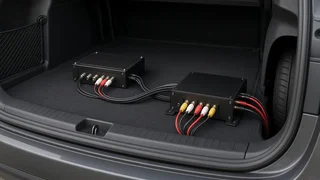
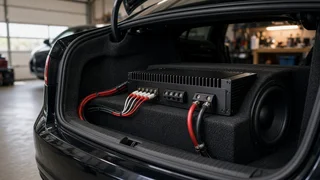
How to connect speakers to a car amplifier
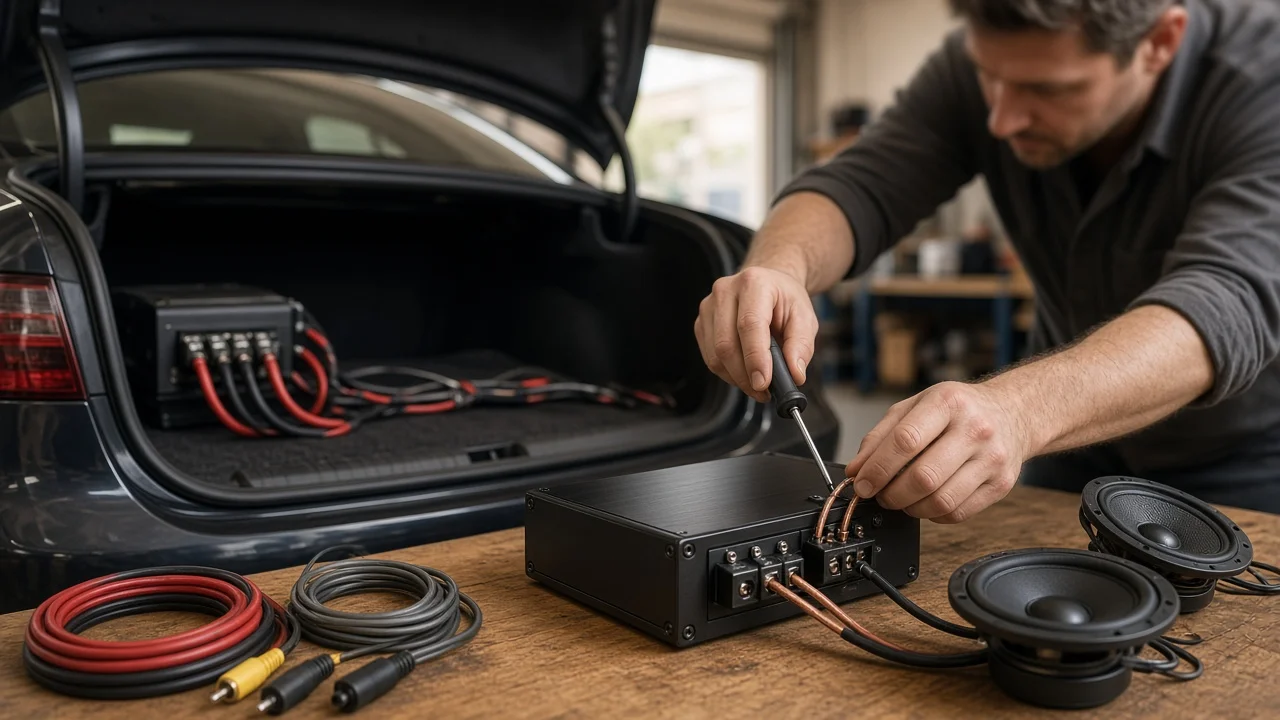
Wiring speakers to a car amplifier is a methodical job that turns an upgraded audio source into clean, controlled sound. The task centers on matching speaker wiring polarity, choosing a load the amplifier can handle, and routing signal and power conductors without damage. A head unit or other source feeds the amplifier, and the amplifier then drives each speaker through its outputs. Before cutting or crimping, gather the vehicle-specific details that affect access, mounting, and connection points, because an incorrect connection can cause distortion, overheating, or protection shutdown.
Direct answer
The essential answer is that you connect the amplifier outputs to the speaker terminals using the correct positive and negative wiring, while the head unit supplies the audio signal to the amplifier inputs. In a basic car audio setup, an aftermarket head unit or factory integration device sends a low-level or speaker-level signal to the amplifier. The amplifier then increases that signal and sends it to passive speakers through separate speaker wiring. The polarity at every connection must match, so the positive amplifier terminal goes to the positive speaker terminal and the negative terminal follows the same route.
Conditions such as an amplifier's power rating, the speaker impedance, and whether the vehicle has an existing factory amplifier affect the approach. For example, some vehicle integration jobs use high-level inputs from factory wiring rather than RCA cables, while others require a line output converter. Signal reception is not part of this connection, but antenna and signal routing can be disturbed if panels are removed carelessly. The speaker wiring should also be kept away from power cables when possible to reduce induced noise. Always treat a fault code or protection light as a sign to inspect the installation, not as proof that one component has failed.
How to proceed
Start by confirming that the audio source or head unit is off and the amplifier's power cable is disconnected from the battery during the initial connection. Identify the amplifier's speaker output terminals and the matching positive and negative conductors for each speaker. Run speaker wire from the amplifier location to each speaker, protecting the wire where it passes through metal openings. At the speaker, connect the marked positive wire to the positive terminal and the unmarked or negative wire to the negative terminal. Repeat this for every output and keep the left and right channels separated so that stereo information remains correct.
After the speaker connections are complete, attach the amplifier's input signal from the head unit or integration device, then secure the ground and power wiring according to the amplifier's connection layout. Check every terminal for stray wire strands and confirm that no speaker wire is pinched behind trim panels. Reconnect power only after the connections are visually verified. A practical completion check is to play quiet audio first, then increase the volume moderately while listening for obvious distortion, channel dropout, or amplifier protection shutdown. If a channel is silent or one side sounds thin, stop and check that channel's wiring and polarity before continuing.