How to connect a crossover to a car amplifier
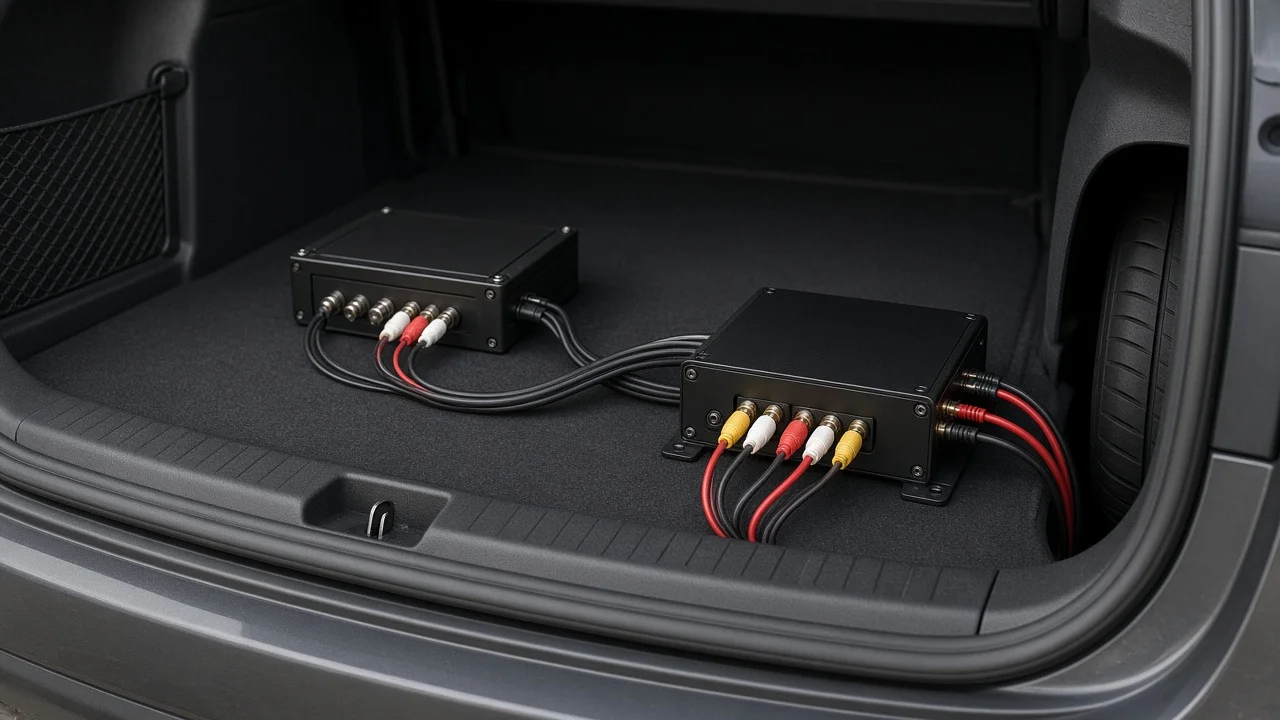
Connecting a crossover to a car amplifier shapes the signal each speaker receives, so a woofer no longer struggles with high frequencies and a tweeter is not fed damaging bass. The task is part of car audio amplification and begins with understanding what kind of crossover you have. The basic connection places the crossover between the audio source and the amplifier inputs, or between the amplifier and speaker wiring. Which method is correct depends on whether the crossover is active, passive, or built into the head unit or amplifier. A clean low-level signal path and secure wiring make the difference between a system that sounds controlled and one that distorts early.
Direct answer
The essential answer is that an active electronic crossover normally connects in line with the low-level RCA signal from the head unit to the amplifier inputs. The audio source feeds the crossover input, and the crossover outputs then drive separate amplifier channels or separate amplifiers for highs, mids, and bass. This arrangement filters frequencies before amplification, which reduces wasted amplifier power and gives each driver a more appropriate bandwidth. A passive crossover is different: it connects after the amplifier in the speaker wiring, between the amplified output and the individual drivers. Using the wrong location can send a full-range signal to a driver that cannot handle it.
Some car audio amplifiers include an internal crossover, in which case an outboard unit may be unnecessary or used only for a more flexible multi-way setup. If the head unit already has adjustable high-pass and low-pass filters, the external crossover may still add steeper slopes or a bandpass section for a midrange. The term crossover sometimes means a small in-line capacitor or coil on a coaxial speaker, but in a component system it usually refers to a network with separate woofer and tweeter outputs. Confirm the type before connecting, because active and passive units use different signal levels and wiring points.
How to proceed
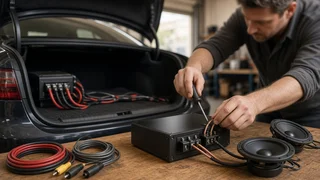
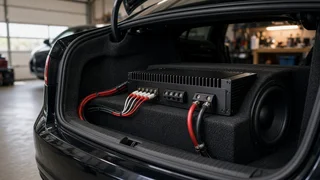
Begin by disconnecting the negative battery cable before working on amplifier or head-unit wiring, so an accidental short does not damage vehicle electronics. For an active crossover, connect the RCA outputs from the audio source to the crossover inputs. Then run one RCA set from the high-pass or front output to the amplifier channels driving the smaller speakers, and another set from the low-pass or sub output to a subwoofer amplifier. Keep signal cables away from power wiring and antenna leads to avoid induced noise. If the crossover has input level or output level controls, set them conservatively at first and use the amplifier gain as the final level adjustment.
For a passive crossover, connect the amplified speaker wiring from the appropriate amplifier channel to the crossover input. The labeled woofer output then goes to the midbass or woofer, and the tweeter output goes to the tweeter. Preserve polarity on every connection; a reversed conductor can create a cancellation around the crossover frequency. After wiring, check that each driver plays only its intended range at moderate volume, then raise the level gradually. If a tweeter sounds harsh or a woofer labors, recheck the filter settings and wiring before assuming the component itself is defective.