How to Check Vehicle Registration Status
The short answer
In the US, vehicle registration is handled by each state, so you check your registration status with the motor vehicle agency of the state where the vehicle is registered. Most people call this agency the DMV, but some states use other names, such as Bureau of Motor Vehicles, Motor Vehicle Division or a department of revenue or transportation. Depending on the state, you can usually check status through the agency's official online service, by phone, at an agency office, or through an authorized service location. You will typically need the license plate number, the vehicle identification number (VIN) or both.
Registration status tells you whether the vehicle is currently registered and legal to drive on public roads in that state, and it usually shows the expiration date. It is separate from vehicle title status, which shows ownership, and separate from driver's license status. If you are checking a vehicle you do not own, expect to see limited information: federal law, the Driver's Privacy Protection Act, restricts the release of personal information such as the owner's name and address from motor vehicle records.
Exact lookup methods, required details, processing times and fees differ by state and were not available for this guide. Confirm the specifics with your own state's motor vehicle agency.
Terms worth knowing
Registration: the state record that authorizes a specific vehicle to be operated on public roads, usually renewed on a set cycle. VIN (vehicle identification number): a 17-character code unique to each vehicle built for the US market since the early 1980s. It appears on the registration card, the title, insurance documents, the driver-side dashboard near the windshield and usually the driver-side door jamb. Registration card: the document issued by the state showing the vehicle, plate number and expiration date. Registration sticker or decal: the tag placed on the plate or windshield in many states to show the registration period. Temporary tag or permit: short-term registration often issued when a vehicle is bought from a dealer or while permanent plates are being processed.
What you need before you start
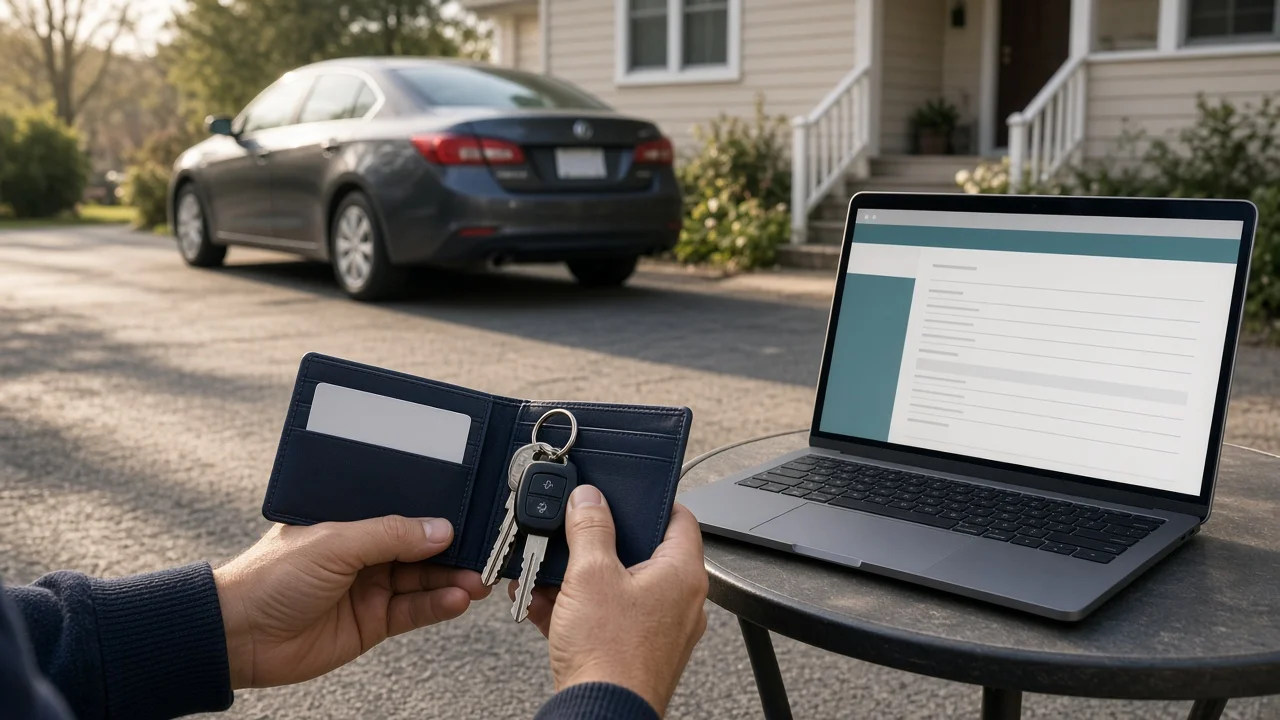
The license plate number, entered exactly as it appears, including letters that resemble numbers. The full VIN, copied from the vehicle or official documents rather than from memory. The state where the vehicle is registered, which may differ from where you live now. Any transaction or confirmation number if you recently renewed, registered or transferred the vehicle. Owner identification details if the state requires them for an owner lookup, such as a driver's license number or other identifiers the agency specifies.
Step-by-step: checking registration status
1) Check your documents first. Look at the registration card and any plate or windshield sticker for the expiration date. If the date has not passed and nothing has changed, the vehicle is likely current, but an online or official check confirms whether a suspension or hold has been placed since the card was issued. 2) Identify the correct agency. Use the motor vehicle agency for the state shown on the plate. Reach it through the state government's official website rather than a search ad, because some private sites charge for services the state provides directly. 3) Find the registration status or renewal service. Many states place status lookup within the online renewal process, a vehicle services page or a registration inquiry tool. If no online option exists, use the agency's phone line or visit an office. 4) Enter the vehicle details. Provide the plate number, VIN or other requested information. Double-check each character; a single error commonly returns no record or the wrong result. 5) Read the status and expiration date. Note whether the registration shows as current, expired, pending, suspended or on hold, and record the expiration date shown. 6) Act on any problem. If the status is anything other than current, follow the instructions shown or contact the agency to learn the reason and what is needed to clear it. 7) Keep proof. Save or print the confirmation page, or note the date, time and any reference number from a phone or in-person check.
Stop condition: if the result shows the registration as expired, suspended or revoked, do not drive the vehicle on public roads until the issue is resolved. Driving with invalid registration can lead to citations and other penalties under state law, and the consequences vary by state.
What each status usually means
Status | What it generally indicates | Typical next step; Current or active | The vehicle is registered and valid until the listed expiration date. | Confirm the date matches your card and sticker. Expired | The registration period has ended. | Renew through the state agency; check whether late fees or inspection requirements apply. Pending or in process | A registration, renewal or transfer has been submitted but not completed. | Wait for processing and keep temporary documents with the vehicle; follow up if it stays pending longer than the agency's stated timeframe. Suspended or revoked | The state has invalidated the registration, often for reasons such as an insurance lapse or unresolved violations, depending on the state. | Contact the agency to learn the cause and the steps to reinstate. Hold or block | Renewal is prevented until another requirement is met, such as unpaid tickets, tolls, taxes or a missing emissions or safety inspection, depending on the state. | Resolve the underlying issue with the office that placed the hold, then renew.
Status labels and their meanings are set by each state, so the wording on your result may differ from this table. Use the agency's own explanation where one is provided.
Tracking a new registration or renewal
If you have just renewed or registered a vehicle and are waiting for a card, sticker or plates, the same status lookup often shows whether the transaction was processed. Some states also let you track mailed items with a confirmation or transaction number. Keep the payment receipt and any temporary registration in the vehicle until the permanent documents arrive.
When a vehicle is bought from a dealer, the dealer often submits the registration paperwork and issues a temporary tag. If the temporary tag is close to expiring and the state still shows no completed registration, contact the dealer first, then the state agency. Private-party purchases usually require the buyer to register the vehicle directly with the state, so a status check on a newly bought private-sale vehicle may show the previous owner's registration or no current registration.
Checking a vehicle you do not own
Some states offer limited public lookups that confirm whether a plate or VIN has a valid registration without revealing who owns it. Access to owner names and addresses is restricted to permissible uses defined by federal and state privacy law, such as certain legal, insurance or law enforcement purposes, and typically requires a formal request to the agency.
Commercial vehicle history reports based on the VIN can show past title events, reported accidents and odometer records, but they are not a substitute for an official registration status check. If you are buying a used vehicle, ask the seller for the current registration card and title, and confirm the VIN on those documents matches the VIN on the vehicle.
How to confirm the result is correct
The plate number and VIN shown in the result match the vehicle and your documents. The status reads current or active, with no holds or suspensions listed. The expiration date matches your registration card and sticker, or reflects a renewal you recently completed. You have saved a confirmation, receipt or reference number for your records. If anything does not match, contact the state agency directly to correct the record before relying on it.
Gaps in this guide
No state-specific details were available for this article, including exact lookup tools, phone numbers, fees, late penalties, processing times or inspection rules. These vary by state and change over time, so treat the steps above as a general framework and rely on your state motor vehicle agency for the requirements that apply to your vehicle.