Vehicle registration status: how to check it and what the result means

The short answer
In the US, a vehicle's registration status is the official record, held by the state where the vehicle is registered, of whether the vehicle is currently authorized for use on public roads. To check it, contact that state's motor vehicle agency. Most states let you do this through the agency's online service, by phone or at an office. You will usually need the license plate number, the vehicle identification number (VIN), or both. Your own registration card and plate or windshield sticker show the expiration date on record, but only the state agency can confirm the current status, including any suspension or hold.
Registration is handled at the state level, not federally. Procedures, required details and the agency's name all vary by state. Depending on the state, the agency may be called the DMV (Department of Motor Vehicles), BMV, MVD or something else, and some states route registration through county offices. The steps below describe the general process. Your state's agency is the authoritative source for its exact requirements.
Key terms
Registration: the state record that links a vehicle to its registered owner and authorizes it for road use for a set period. It is separate from the title, which records legal ownership. VIN (vehicle identification number): the unique code assigned to the vehicle. It usually appears on the dashboard near the windshield, on the driver's door jamb, and on the title, registration and insurance documents. Renewal: extending the registration for another period before or after it expires. Hold or block: a flag on the record that prevents renewal until an issue is resolved.
How to check registration status step by step
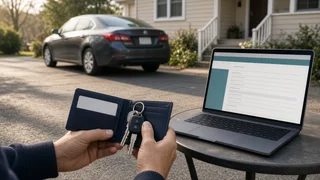
1) Identify the state where the vehicle is registered. This is the state that issued the plate, which may not be the state where you live now. 2) Gather the identifiers. Have the plate number and the full VIN ready. Some services also ask for the owner's name, a driver's license number or a code from a renewal notice. 3) Check your documents first. The registration card or certificate and the sticker show the expiration date the state issued. If that date has passed, the registration has likely lapsed, but confirm with the agency. 4) Use the state agency's official service. Look for a registration status, renewal or vehicle record option on the agency's official website, or call or visit an office. Enter or provide the plate number and VIN exactly as they appear on your documents. 5) Read the result. Note the status, the expiration date and any message about holds, required inspections, insurance or unpaid amounts. 6) Act on what you find. If the record shows a problem, follow the agency's instructions or contact it directly to resolve the issue.
What the common status results mean
States word these differently, but results generally fall into the categories below. The specific causes and consequences depend on state law, so treat this as a general guide.
Status | General meaning | Typical next step; Active or current | The registration is valid through the listed expiration date. | Note the expiration date and plan your renewal. Expired | The registration period has ended without renewal. | Renew through the state agency. Some states apply late fees or other requirements. Suspended or revoked | The state has withdrawn authorization, often because of an insurance lapse, unresolved violations or other compliance issues. | Find out the reason from the agency and complete its reinstatement requirements. Hold or block on renewal | Renewal is prevented until an issue is cleared. Examples can include a required emissions or safety inspection, unpaid tolls or tickets, or missing insurance information, depending on the state. | Resolve the listed issue, then renew. Pending or in process | A registration or renewal has been submitted but not yet fully processed. | Keep your receipt and check again later. No record found | The details entered did not match a record. | Recheck the plate and VIN for typing errors and confirm you are using the correct state's service.
How to verify the result
Confirm that the VIN in the record matches the VIN on the vehicle itself, not just the one on your paperwork. Check that the plate number and the vehicle description, such as make and model year, match the vehicle. Compare the expiration date in the record with the date on your registration card and sticker. If you have just renewed, keep the confirmation or receipt until the new card and sticker arrive, and check the record again once processing is complete. If anything conflicts or seems unclear, contact the state agency directly. Its record is the authoritative one.
Checking a vehicle you do not own
Access to registration records is more limited when the vehicle belongs to someone else. The federal Driver's Privacy Protection Act restricts the release of personal information from state motor vehicle records, and states add their own rules. An online status check may require details that only the owner has, and owner information is generally not disclosed to the public. If you are buying a used vehicle, ask the seller to show the current registration and title, and confirm that the VIN on those documents matches the vehicle. Third-party vehicle history services based on the VIN can report title and history information, but they are not a substitute for the state's own registration record.
What this guide does not cover
No state-specific evidence was available for this guide. It does not give fees, grace periods, renewal deadlines, penalties, processing times or agency contact details, because these differ by state and can change. Check those details with the motor vehicle agency in the state where the vehicle is registered.