How Tight Should a Serpentine Belt Be? Tension and Alignment
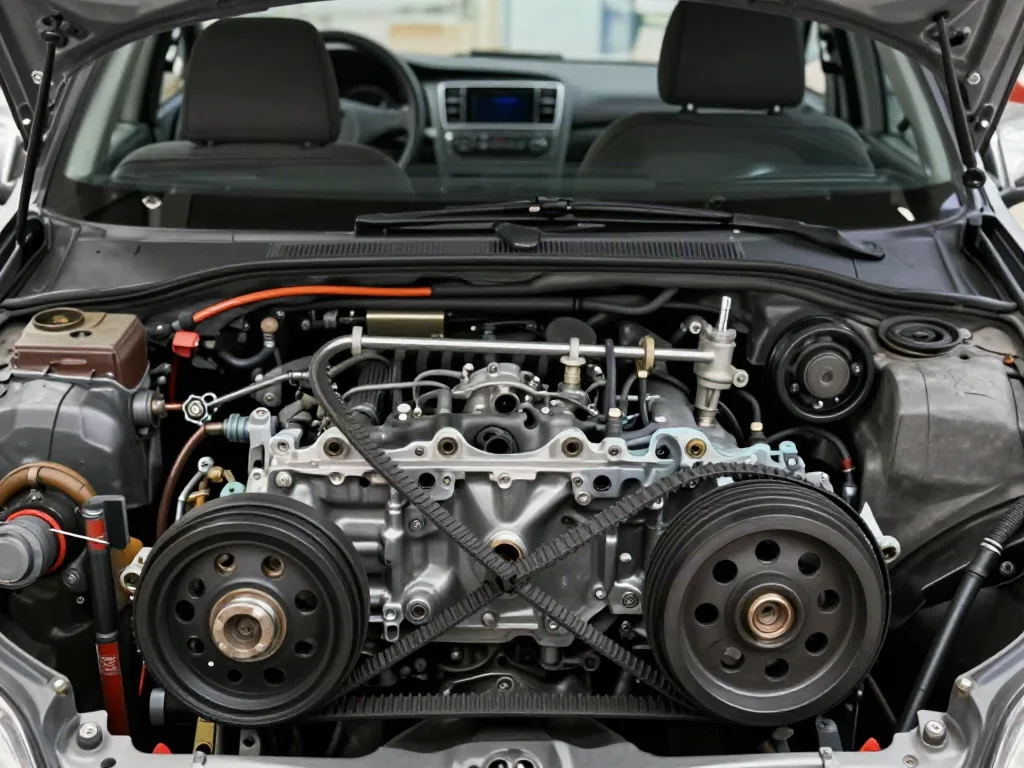
A serpentine belt should be as tight as the vehicle's belt tension specification requires, not as tight as a general rule of thumb suggests. How to adjust a serpentine belt depends on whether the drive uses an automatic belt tensioner or manual belt adjustment, and on correct belt routing. Pulley alignment also matters; a serpentine belt alignment tool can show offset or angular error, but it does not replace a specified tension check.
Correct Belt Tension Starts With the Vehicle Specification
The question of how tight a serpentine belt should be is vehicle-specific. Belt tension depends on the engine, the accessory-drive layout, belt width and construction, and the service procedure that applies to that drive. There is no universal tightness value that fits every serpentine layout. Thumb pressure, a half-turn twist, or a general span-deflection rule cannot reliably establish correct tension because span length, belt stiffness, pulley diameter, and whether the drive uses a spring tensioner all change how a belt feels by hand.
Finding the belt tension specification starts with year, model, engine, and accessory configuration, because a different compressor, power-steering pump, or idler layout can change both routing and the prescribed reading. Any published tension figure also depends on the prescribed instrument, such as a belt tension gauge of the type the procedure names, the span or pulley location where the measurement is taken, and whether the belt is new or already seated. Using a different tool, a different span, or a belt that has not been run in can produce a reading that does not match the intended condition.
How an Automatic Tensioner Maintains Belt Tension
An automatic belt tensioner uses a spring-loaded arm and pulley to keep load on the belt as temperature, engine speed, and belt stretch change. The arm moves to take up small length differences so the drive does not rely on a fixed mount position for everyday tightness. On these layouts there is generally no routine manual tension adjustment. The tensioner's release feature exists to unload the arm so the belt can be removed or installed; moving that arm is not a tightness setting and does not replace the designed spring force.
Where a tensioner travel indicator is fitted, its marks show arm position relative to a designed range, not standalone proof that spring force is healthy. Those marks must be read with the vehicle procedure, because a belt that is too long, too short, or routed over the wrong pulley can park the arm at an unexpected point even when the tensioner itself is intact. When tension looks wrong, incorrect belt length, routing errors, a seized or weak tensioner, and pulley binding all need confirmation rather than a guess that the belt simply needs to be tighter.
What Manual Serpentine Belt Adjustment Requires
How to adjust a serpentine belt on a manual layout begins with confirming that the drive actually uses manual belt adjustment. Many later-model accessory drives do not; they rely on the automatic tensioner instead. On a true adjustable drive, tension is typically established by moving an accessory mount or an adjustable idler so the belt span is loaded, then securing that position. That motion is not interchangeable with prying on a spring tensioner. Until the service information shows an adjustable mount or idler for that engine, treating the belt as something to tighten by hand is the wrong approach.
Once the drive is confirmed as adjustable, the work still requires the specified measurement method, the locking-fastener torque named in the procedure, and a verification check after the mount is secured. Insufficient tension can let the belt slip on the ribs, which may show as noise, heat, or lost accessory drive. Excessive tension can overload accessory bearings and the crankshaft damper. If the specification, a suitable belt tension gauge, access to the adjuster, or the verification steps cannot be confirmed, professional service is the safer path rather than improvising tightness.
What a Laser Belt Alignment Tool Can Reveal
A compatible serpentine belt alignment tool projects a line or spots from a pulley groove or face so pulley offset and angular misalignment can be compared across the drive. Pulley alignment problems can walk a belt toward an edge, scuff ribs, or throw the belt off even when tension is in range. The inspection belongs with the engine off and cool, and with unintended starting prevented according to that vehicle's guidance. Keep the tool and hands away from a running belt drive; a spinning pulley can fling a fixture or draw clothing into the ribs.
Tool setup must follow the instrument's instructions and account for pulley geometry, how fully the belt is seated in the grooves, and whether the chosen reference is a ribbed groove or a machined face. Pulley faces are not necessarily designed to sit in one plane, so an apparent laser mismatch needs interpretation against the intended geometry rather than a demand that every face line up. Alignment readings also do not measure belt tension and do not by themselves prove a bent bracket, a worn bearing, or a defective tensioner; those conclusions still need a vehicle-specific inspection.
Safe Observations and Signs That Need Professional Testing
With the engine off and cool, useful observations include edge fraying, uneven rib wear, a belt that has walked toward one flange, and oil or coolant on the ribs. Record those findings rather than wiping them away before anyone inspects the drive. Squealing, chirping, and visible wear can come from contamination, glazing, pulley drag, a worn tensioner, misalignment, or low tension, so the noise cannot by itself establish how tight the belt should be or prove a pulley alignment fault. Those sounds are clues for testing, not a diagnosis of a single failed part.
Skip belt dressing, improvised tightening with a pry bar, and any reach into an operating accessory drive. Those habits can hide wear, overload bearings, or catch a hand in the pulleys. Professional testing may include specified tension measurements, a serpentine belt alignment tool check, and assessment of pulleys and the tensioner for drag, play, or travel outside the intended range. If belt trouble comes with overheating, a sudden heavy steering feel, or a belt coming off, stop safely and arrange assistance; which accessories are lost depends on that vehicle's drive layout.