How a Battery Conductance Tester Works
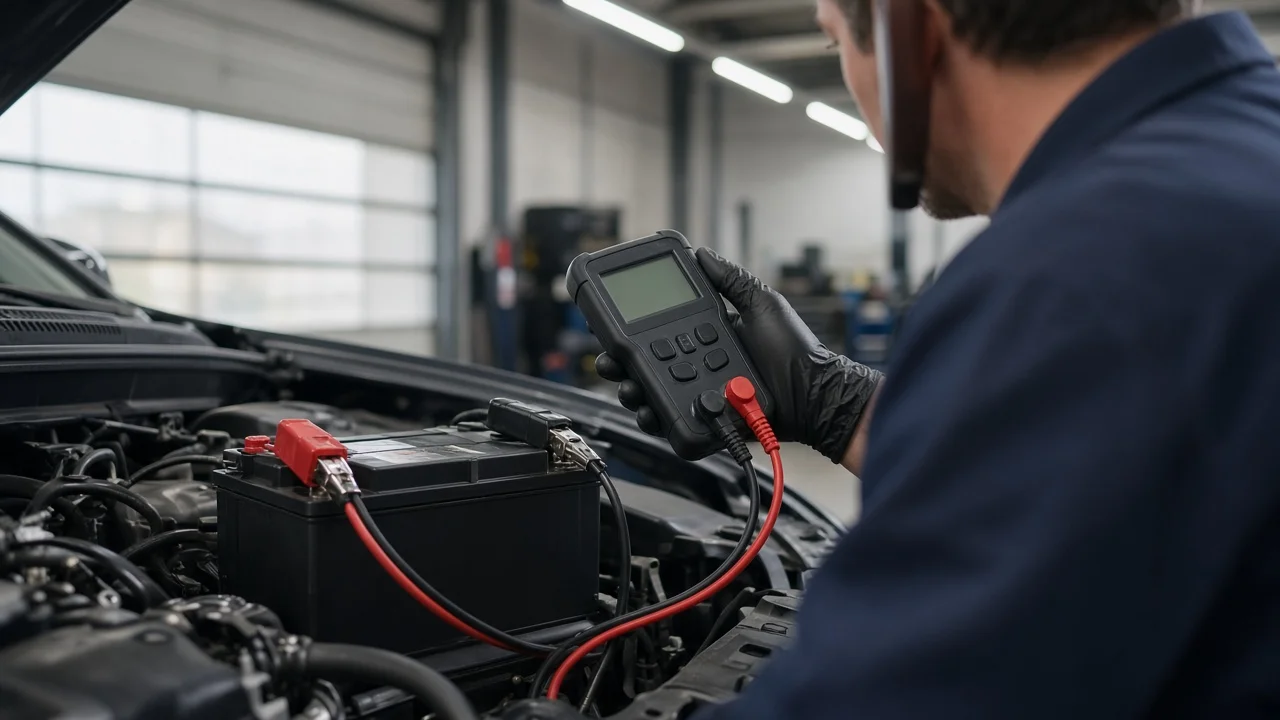
A car battery can show a full resting voltage yet still fail to crank the engine. How a battery conductance tester works matters because the tool reads something a voltmeter alone cannot see: the battery's internal ability to pass current. A conductance tester measures the battery condition by applying a small alternating signal and interpreting the electrical response. This gives technicians and owners a quick way to judge plate condition, terminal health, and cranking ability without putting the battery under a heavy load.
Essential answer
A battery conductance tester measures the battery condition by evaluating how easily an alternating current moves through the internal cell structure. The instrument calculates conductance, which is the inverse of resistance, and compares that value with reference data for the battery's size and rating. A healthy battery with ample active plate area conducts well and produces a high reading. Sulfation, internal corrosion, or a failing cell creates a higher-resistance path and lowers the displayed conductance.
The result is typically expressed as a condition rating, a percentage of expected performance, or an estimated cold cranking amp value. Unlike a simple open-circuit voltage check, the tester reveals whether the battery can deliver real current under load. It is an indirect measurement, however, and works best when the battery is at a reasonable state of charge, the terminals are clean, and the instrument's reference profile matches the battery under test.
How it works
Inside the tester, a microprocessor generates a small, low-frequency alternating signal that is injected through the battery. The tool measures the resulting voltage and current response at the battery terminals. Because conductance changes with the amount of chemically active plate surface, a strong battery allows the signal to pass readily, while a battery with sulfated plates or corroded internal straps shows greater opposition and a lower conductance value.
The instrument then compensates for battery temperature and compares the measured conductance with stored baselines for that battery group or rating. This allows the tool to express condition as a meaningful pass or fail indication. The system voltage is still important because the tester is not a charger and cannot recover a deeply discharged battery. Conductance testing works best after a basic charging and connection check establishes that the battery is in a testable state.
Strengths, limitations and suitability
The main strengths are speed, safety, and repeatability. A conductance tester produces a result in seconds without the heat, spark risk, or battery drain associated with a traditional high-current load test. It is particularly useful for screening several vehicles, checking a battery before purchase, or confirming that a suspected failure is internal rather than a loose connection. Many testers also read resting voltage and charging output, making them practical for quick electrical system checks.
The core limitation is that conductance is an estimate, not a direct measurement of ampere-hour capacity or reserve time. Accuracy depends on the internal reference tables matching the battery's chemistry, size, and rating. A deeply discharged but otherwise recoverable battery may give a misleading fail if tested before recharging. A shorted cell usually produces a dramatic low-conductance warning, but the result is still evidence to interpret alongside voltage, load behavior, and visible terminal condition.
Procedure
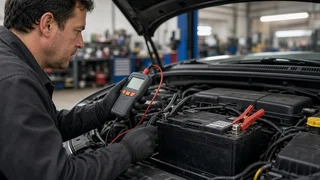
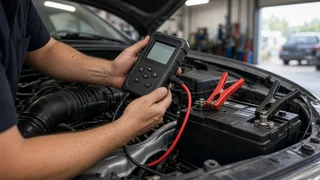
Begin with the ignition off and the key removed. Inspect the battery case, posts, and cable ends for corrosion or looseness, since resistance at the battery terminals can corrupt the measurement. Connect the tester leads directly to the lead posts rather than remote jump points or clamp bolts. If the device asks for a cold cranking amp rating or battery standard, enter the number printed on the battery label so the internal reference calculation is appropriate.
Start the test and keep the leads steady while the unit samples the alternating signal. The display usually returns a conductance value, a state-of-health estimate, or a simple good, marginal, or replace recommendation. If the same tool offers a starter or charging test, follow its prompts for cranking or fast-idle operation. Record the result together with the battery temperature and any symptom, then retest a low-reading battery after confirming it is charged and the terminals are clean.
Diagnosing a problem
A low conductance result points to reduced plate area, internal corrosion, or a high-resistance path inside the battery, but it does not by itself prove that the battery is the cause of a vehicle complaint. Check the battery terminals first, then observe system voltage during cranking. A large voltage drop combined with slow cranking and low conductance supports a weak battery. A good conductance reading with a sharp cranking voltage drop shifts suspicion to the starter circuit or cable connections.
If the battery fails immediately after charging, remove the surface charge by turning on the headlights briefly or allowing the battery to rest, then retest. A battery that passes conductance testing but repeatedly returns discharged may be affected by parasitic draw or a charging output problem rather than an internal defect. Compare the tester's estimated cranking amp value with the printed battery rating and retest after correcting any connection, charging, or temperature issue that could skew the result.