Highway interchanges
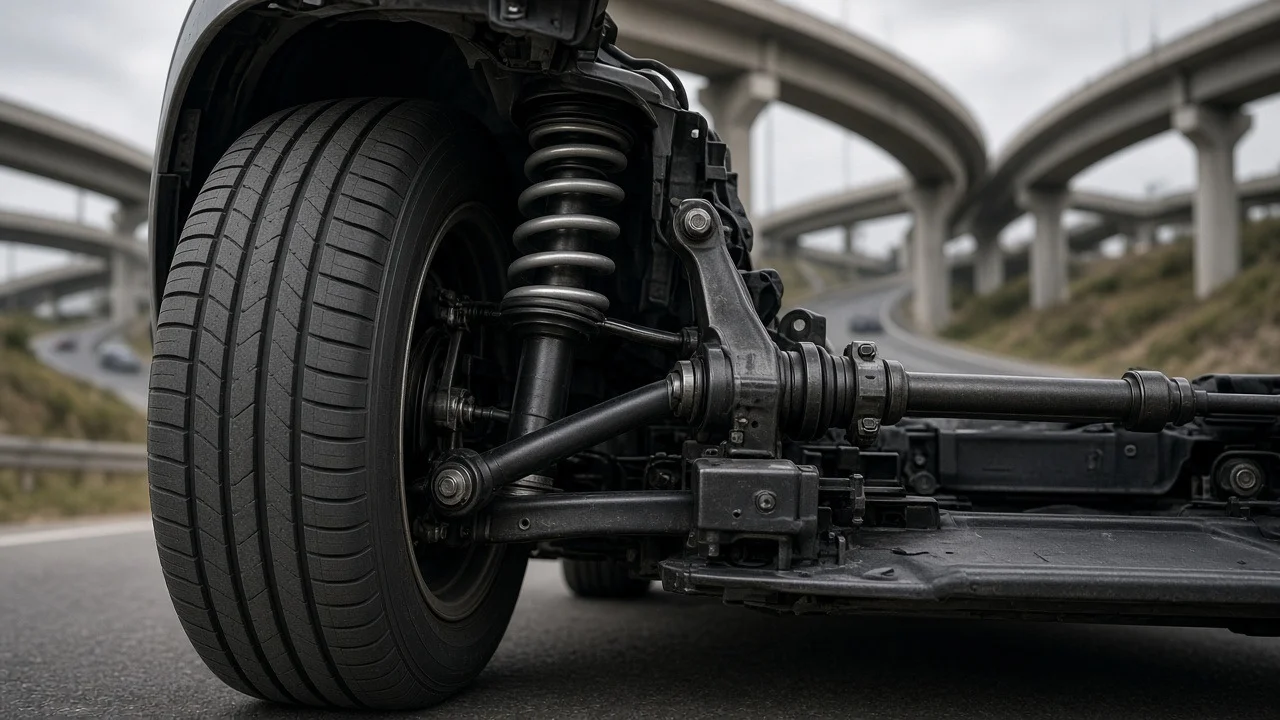
A highway interchange is a road junction that lets traffic move from one limited-access roadway to another without crossing opposing lanes at grade. In driving, it replaces a traditional intersection with ramps, loops, and grade separations so vehicles can merge, diverge, or continue at speed. Understanding the layout helps you choose the correct lane, read overhead signs, and manage the right of way when entering or leaving a freeway. Different interchange designs distribute merging, weaving, and turning movements in specific ways.
Essential answer
An interchange on a highway is a grade-separated junction where connecting ramps carry vehicles between roads that do not meet directly. The main routes pass over or under one another, so drivers never face cross traffic or a signal while staying on the highway. Ramps handle the turning movements, and acceleration or deceleration lanes let vehicles adjust speed away from through lanes. This design keeps freight, commuter, and long-distance traffic flowing while reducing the conflict points found at ordinary intersections.
The scope changes with the interchange form. A diamond uses four ramps and local road junctions, while a cloverleaf carries all left turns through looping ramps without stopping. A stack interchange elevates directional connectors above the main lines. In driving, the essential idea remains the same: recognize the maneuver early, move into the indicated lane, and yield or merge according to pavement markings and posted signs.
How it works
Interchanges work by separating traffic vertically and then reconnecting it through one-way ramps. When you exit, a deceleration lane gives you space to slow without braking in the through lane. When you enter, an acceleration lane lets you match the speed of nearby traffic before merging. The ramp geometry controls how sharply you can turn, while the merge area determines how much time you have to find a gap. This sequence reduces the sudden speed changes that cause rear-end collisions.
Driver attention determines how well the design functions. Overhead guide signs usually show the exit number, destination, and lane arrangement well before the split. Road markings such as solid lines, gore striping, and painted arrows indicate where lane changes are prohibited or allowed. Maintaining a steady following distance gives you room to read the signs and react. Visibility and road conditions also matter, especially on curved ramps where speed should already be reduced before the turn begins.
Strengths, limitations and suitability
A well-designed interchange supports high traffic volume and keeps through movement predictable, but it also creates concentrated decision points. The main strength is the removal of cross traffic and signal delay on the highway. The limitation is that merging, weaving, and exiting are compressed into short stretches. Drivers who enter too slowly or exit too late force others to brake. Interchanges therefore reward route knowledge, sign reading, and early lane positioning more than ordinary roads do.
Suitability depends on the driver and setting. An unfamiliar cloverleaf can be demanding because a driver may need to exit, loop, and re-enter while watching for vehicles merging from the opposite loop. A simple diamond is easier for local access but places turning movements on the crossroad. The interchange type works best when drivers treat the ramp speed as advisory, check mirrors and blind spots before merging, and avoid making last-second lane changes across the gore.
Procedure
Approach an interchange by identifying the exit number and destination at least half a mile ahead. Move into the correct lane when the overhead sign first appears, then hold your position without passing on the right. On the deceleration lane, brake smoothly after clearing the through lane, not before. Guide signs typically repeat the destination near the exit, and a yellow or black sign with a reduced speed gives an advisory limit for the ramp curve.
When entering a highway, use the acceleration lane to gain speed while scanning the side mirror and checking the left blind spot. Signal early, but wait for a safe opening before crossing the dashed merge line. Do not stop at the end of the ramp unless traffic is stopped. After merging, match the flow speed and leave enough following distance. If you miss an exit, continue to the next interchange rather than reversing or crossing the painted gore.
Diagnosing a problem
A common problem is arriving at an exit while still in the left lane of a crowded freeway. In that situation, a last-second lane change creates a side-swipe risk. The observable warning is a solid lane line or gore striping approaching quickly. If you cannot reach the exit safely, the least disruptive choice is to stay on the highway, take the next interchange, and return to the intended route. Treat the missed exit as a routing error, not a reason to stop or back up.
Another issue is merging onto a highway where the acceleration lane is short or visibility is limited by a barrier. If entering traffic cannot see the main line clearly, reduce the speed difference early and check the mirrors repeatedly. Vehicles already on the highway have the primary right of way; entering drivers must adjust. Persistent difficulty with judging gaps or ramp curves may indicate a need for more conservative speed choices or practice during lower-traffic hours.