High rise trailer hitch ball

Choosing a high rise trailer hitch ball starts with one practical question: will the raised ball platform bring the coupler to a near-level towing attitude on your particular truck, SUV, or utility trailer? The answer depends on receiver height, suspension stance, and the trailer’s loaded tongue position. A taller ball mount can correct a nose-down trailer, but it also changes leverage at the receiver. This guide explains how to evaluate rise, shank fit, weight ratings, and coupler compatibility before you buy, so the setup carries the intended payload without guessing.
The direct answer
A high rise trailer hitch ball is appropriate when the tow vehicle’s receiver sits low relative to the trailer coupler, or when a lifted truck or tall rear suspension leaves the ball too far below the trailer tongue. The raised ball mount positions the ball closer to the coupler height, reducing the angled load path that can shift tongue weight and make the trailer track poorly. The correct rise is not a single universal dimension; it is the difference between the receiver opening height and the coupler height with the trailer loaded and level.
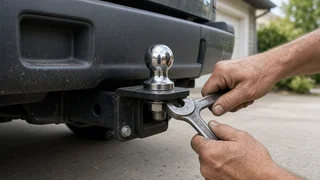
Before buying, verify the ball’s shank diameter against the ball mount hole, usually 3/4 inch or 1 inch on common light-duty and medium-duty mounts, and confirm the coupler’s nominal ball diameter, typically 2 inches or 2-5/16 inches. Check the mount’s gross trailer weight and tongue weight capacity, and compare those numbers with the trailer’s loaded weight and measured tongue load. A high rise mount also changes the effective lever arm acting on the receiver, so stay within the vehicle’s receiver and axle rating for the load and configuration.