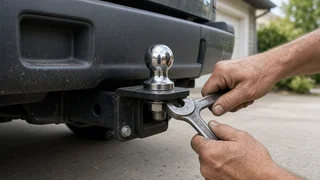
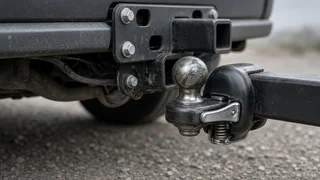
How High Should a Trailer Hitch Ball Be
Setting the trailer hitch ball at the wrong height can make a trailer sway, drag, or transfer weight unevenly across the tow vehicle. The correct measurement depends on the loaded trailer coupler height, not on an arbitrary universal number. When the loaded tow vehicle and trailer sit level on flat ground, the ball should support the coupler so the trailer frame remains parallel with the pavement. This creates stable handling, balanced tongue weight transfer, and safer braking. A tape measure, level ground, and an understanding of your loaded configuration give the most useful answer for your specific truck, SUV, or utility trailer.
Essential answer
The trailer hitch ball should be high enough that the loaded trailer rides level, with its coupler resting securely on the ball and the trailer frame roughly parallel to the ground. In practice, this often places the top of the ball between roughly the height of the loaded coupler and about one inch above it, but the decisive measurement comes from your actual setup. Measure the coupler height after the tow vehicle is loaded with passengers, cargo, and a full fuel tank, and after the trailer is loaded for travel. The ball height is then matched to that loaded coupler measurement rather than guessed from an empty truck bed or an unloaded utility trailer.
When the ball is too tall, the trailer tongue angles upward and the rear axle may carry less of the trailer's tongue weight, which can encourage sway and reduce rear tire grip. When the ball is too short, the coupler slopes downward and the rear of the tow vehicle may squat excessively, placing too much load behind the rear axle and lightening the front wheels. A level trailer also keeps cargo from shifting toward the rear, helps the trailer brakes work evenly, and preserves ground clearance at the back of the trailer. Because payload, suspension sag, and the trailer's own spring condition all change the loaded height, checking the measurement with the actual load is more reliable than using a fixed number for every vehicle configuration.