Green Corrosion on Car Battery Terminals: What It Means and What to Do
The short answer
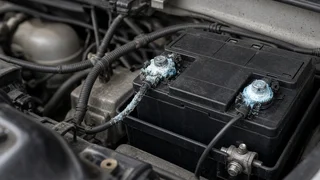
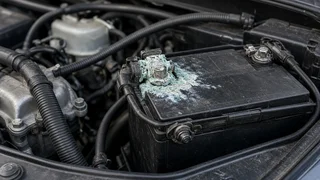
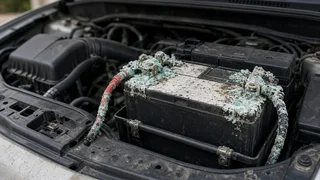
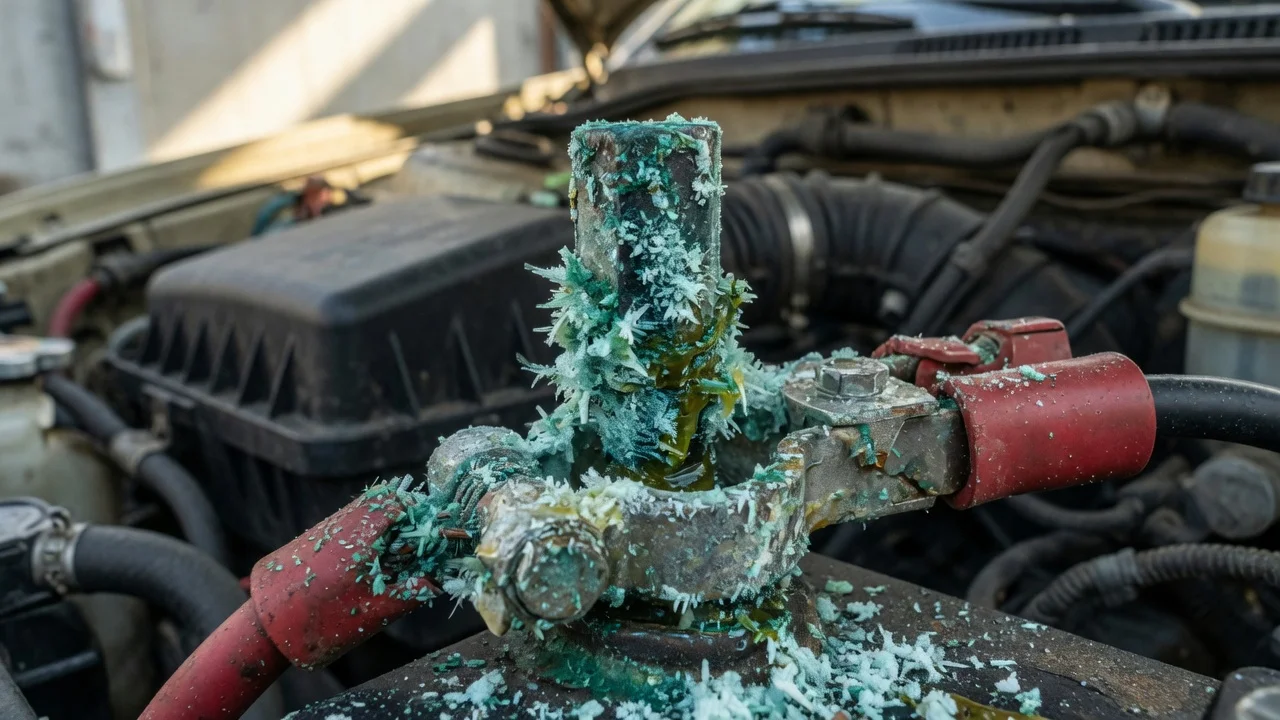
Green or blue-green crust on a car battery terminal is generally a sign of copper corrosion. Battery terminals and clamps themselves are typically lead or lead alloy, but the cables, wire strands and some clamp hardware contain copper. When sulfuric acid vapor or electrolyte from a lead-acid battery reaches that copper, it forms copper-based corrosion compounds, commonly identified as copper sulfate, which show up as green or bluish deposits. White or grayish buildup, by contrast, is more often associated with lead sulfate on the lead parts.
The corrosion itself is not usually an emergency, but it should not be ignored. It adds electrical resistance at the connection, can eat into the cable over time and may be a symptom of a battery or charging issue rather than just a cosmetic problem.
Why green corrosion forms
Acid vapor venting from the battery during normal charging, especially on conventional flooded lead-acid batteries with vent caps. Electrolyte seeping around a terminal post seal, or from a cracked or damaged case. Overfilling a serviceable battery, which can push electrolyte out of the vents. Moisture and road grime trapping acid residue around the clamp. Copper wire exposed where cable insulation has cracked or split near the clamp.
Sealed designs such as AGM (absorbent glass mat) batteries are generally less prone to venting than flooded batteries, but corrosion can still appear if a seal fails or the battery is overcharged. How likely corrosion is therefore depends on the battery type fitted, which varies by vehicle, model year and any replacement battery installed since the car was new.
Does it matter which terminal is affected?
A widely repeated rule of thumb holds that corrosion on the positive terminal suggests overcharging and corrosion on the negative terminal suggests undercharging. This is informal guidance rather than a reliable diagnostic test, and no supporting evidence was supplied for this article. A more dependable approach is to have the battery and charging system tested if corrosion keeps returning after cleaning.
Signs the corrosion is causing problems
Slow or labored engine cranking. Intermittent no-start or clicking when the key is turned or the start button is pressed. Flickering lights or electrical faults that appear when the engine is started. Corrosion that has spread under the cable insulation, making the cable stiff, swollen or discolored beyond the clamp.
If corrosion has travelled up inside the insulation, cleaning the clamp alone may not restore a good connection, and the cable or terminal end may need replacement.
How to deal with it safely
Battery corrosion contains acid residue, so wear gloves and eye protection and avoid touching your face or clothing while working. Check the owner's manual first, because battery location, disconnection order, and any reset steps after reconnection differ between vehicles. Hybrids and electric vehicles also carry high-voltage systems; the advice here applies only to the conventional 12-volt battery, and any high-voltage components should be left to qualified technicians.
With the ignition off, disconnect the negative cable first, then the positive. Neutralize the deposits with a solution of baking soda and water; fizzing indicates acid being neutralized. Scrub the posts and clamps with a battery terminal brush or a stiff non-metallic brush. Rinse with a small amount of clean water, keeping liquid away from vent openings, then dry thoroughly. Inspect the cables and clamps for damage before reconnecting. Reconnect the positive cable first, then the negative, and tighten the clamps securely. Optionally apply a thin coat of terminal protectant, dielectric grease or anti-corrosion felt washers to slow recurrence.
When to look beyond cleaning
If green corrosion returns quickly, the battery case is cracked or bulging, or there is visible liquid around the posts, the underlying cause is likely a leaking battery or a charging system fault rather than ordinary venting. In those cases, having the battery, alternator output and cables checked is the sensible next step. Specific test thresholds and replacement intervals depend on the battery and vehicle, and none were supplied here, so rely on the battery manufacturer's or vehicle maker's specifications.