Graco Grows4Me Rear-Facing Installation: What to Know
The short answer
The Graco Grows4Me is a 4-in-1 car seat, which means one seat is designed to move through several stages as a child grows. Rear-facing is the first stage, used for infants and young toddlers. Like most convertible and all-in-one seats sold in the US, it is installed rear-facing with one of two methods: the vehicle's lower anchors (part of the LATCH system) or the vehicle's seat belt. Generally you use one method, not both at once, unless the seat's manual explicitly allows it.
An important qualification: no verified product documentation was available for this article. Model-specific details, including weight and height limits for rear-facing use, the lower-anchor weight limit, recline settings, and which belt path to use, are not given here. Confirm them in the manual and on the labels that came with your seat, because these details can differ between production versions.
What 4-in-1 means for rear-facing use
In this category, the four modes are typically rear-facing with a harness, forward-facing with a harness, high-back booster, and backless booster. Only the rear-facing mode is covered here. Rear-facing setup usually has its own recline position and its own belt path. The belt path is the route the seat belt or lower anchor strap takes through the seat's shell. Using the forward-facing path or recline while the seat faces the rear is a common installation mistake.
General rear-facing installation steps
The steps below reflect widely published child passenger safety principles. They are not a substitute for Graco's instructions for this specific seat.
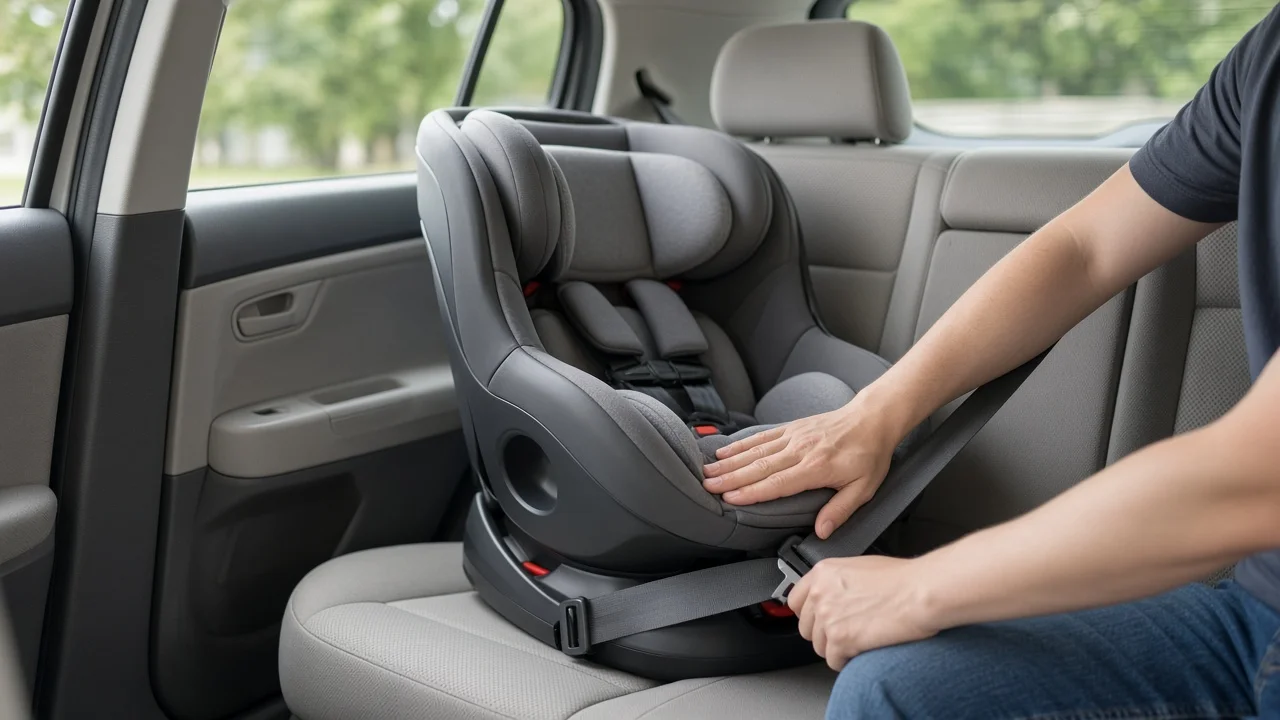
Read both manuals first: the car seat manual and your vehicle owner's manual. The vehicle manual shows which seating positions have lower anchors and whether a center position can be used. Set the seat to the rear-facing recline position and check the recline indicator once the seat is in the vehicle. Route either the lower anchor connectors or the vehicle seat belt through the rear-facing belt path only. If you use the seat belt, lock it as described in the vehicle manual. Most modern seat belts lock when you pull the webbing all the way out. Press down into the seat while tightening, then check for movement at the belt path. The commonly cited standard is less than one inch of side-to-side or front-to-back movement. Recheck the recline indicator after tightening, because tightening can change the seat's angle.
Lower anchors or seat belt?
Both methods are considered equally safe when done correctly. The better choice is the one that gives a tight, correctly angled installation in your vehicle. Lower anchors have a combined weight limit, covering the child plus the seat. Once that limit is reached, you switch to a seat belt installation. This article cannot state the Grows4Me's lower-anchor limit; it should be printed on the seat's labels and in its manual.
Top tether when rear-facing
Many car seats sold in the US do not use the top tether in rear-facing mode, but practice varies by manufacturer. Check the Grows4Me manual before attaching a tether while the seat faces the rear. Also check how the manual says to store the unused tether strap.
Harnessing the child rear-facing
Shoulder straps should come from slots at or just below the child's shoulders, which is the general rule for rear-facing seats. The chest clip should sit at armpit level. The harness should be snug enough that you cannot pinch a fold of webbing at the shoulder. Bulky coats can compress and leave the harness loose, so remove them before buckling.
Gaps to confirm before relying on this guide
No confirmed evidence was available on the Grows4Me's rear-facing weight and height range, lower-anchor limit, recline options, belt-path markings, vehicle-specific fit, expiration period, or recall status. The seat's labels, the manual, and Graco's customer support are the authoritative sources for these details. A certified child passenger safety technician can also inspect the installation in your own vehicle.