Fuel Rail Pressure Sensor Circuit: Wiring Fault Diagnosis
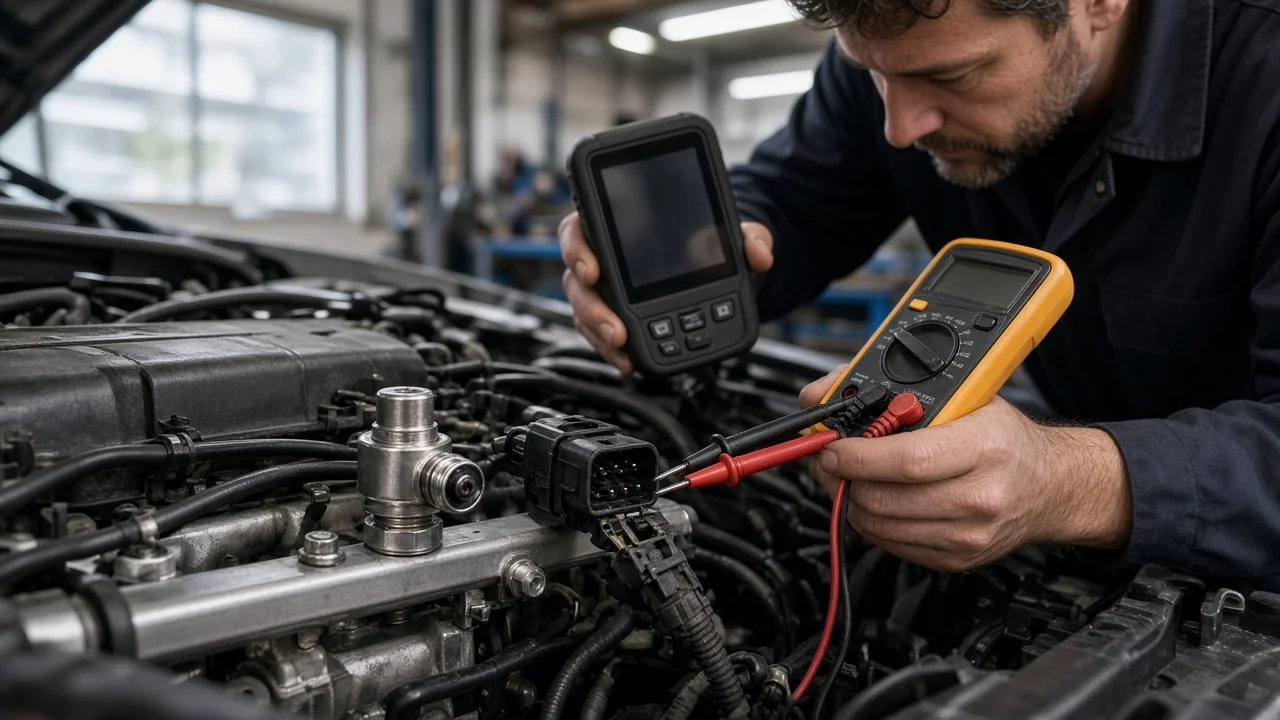
A fault in the fuel rail pressure sensor circuit means the engine computer no longer trusts the signal from the sensor that reports pressure in the fuel rail. The cause can be the sensor, its wiring and connector, the computer's reference supply, or a genuine fuel delivery problem. This guide explains how to separate an electrical fault from a real pressure problem, which checks are safe for an owner, and when the job needs a technician with specifications and proper tools.
Establish the symptoms
Start with the exact trouble code, not just the check engine light. The generic codes in this family are P0190 for a general circuit fault, P0191 for range or performance, P0192 for a low input, P0193 for a high input and P0194 for an intermittent or erratic signal. Many vehicles also add manufacturer-specific codes. Write down every stored and pending code, because a circuit low or high code points toward wiring or the sensor, while a range or performance code can also mean the fuel pressure really is wrong. If your scan tool shows freeze frame data, record the engine temperature, speed, load and rail pressure at the moment the code set.
Next, note how the car behaves and when. Common complaints include long cranking or a no-start, stalling, hesitation, rough running and a sudden loss of power when the engine computer switches to a protective reduced-power mode. Record whether the problem appears cold or hot, in rain or after washing the engine, over bumps, or only at higher load. Also list recent changes: a fuel filter or fuel pump replacement, injector work, a battery change, collision repair, or signs of rodents under the hood. Problems that follow wet weather, vibration or recent work on the engine bay are a strong hint toward a harness or connector fault.
Distinguish plausible causes
Wiring and connector faults are the most common explanation for circuit codes. Typical findings include corroded or loose terminals, a connector lock that never clicked home, a harness rubbed through against a bracket or hot component, and wires chewed by rodents. An intermittent code, a fault that changes when the harness is moved, or a P0194 erratic signal all support a wiring cause. A code that stays solid and repeatable no matter what you do weakens it somewhat, although an open circuit can also be steady.
Other candidates need different evidence. Most of these sensors use three wires: a reference voltage, a ground and a signal back to the engine computer. On many engines the reference is shared with other sensors, so several sensor codes appearing together suggest a shorted reference circuit or a computer supply problem rather than a bad rail sensor. A failed sensor usually gives an implausible reading even with good wiring. Genuine low pressure from a weak fuel pump, a clogged fuel filter, a faulty regulator or a leaking injector more often sets range or pressure codes, and may come with lean fuel trim readings. Engine configuration matters too: port-injected gasoline engines run relatively low rail pressure, while gasoline direct injection and diesel common-rail systems run far higher pressure, and on some designs the sensor is not sold separately from the rail.
Checks in a useful order
Begin with safe observations, engine off and cool. Find the sensor using your service information, then inspect the connector and the harness along its route for damage, corrosion, missing clips or contact with hot or moving parts. Make sure the connector is fully seated. Do a leak check by sight and smell only: look for wet spots or staining around the rail, lines and injectors, and note any fuel odor. Do not loosen fittings or remove the sensor to look. Confirm the battery and charging system are healthy, since low system voltage can distort sensor readings. If you have a scan tool with live data, compare the reported rail pressure with the engine off and key on, at idle, and against the desired or commanded value if the tool shows it.
The following tests require tools and manufacturer specifications. With a digital multimeter, a technician back-probes the connector to confirm the reference voltage, checks the ground for excessive voltage drop and watches the signal voltage change with engine operation. A wiggle test, moving the harness while watching live data or the meter, often catches intermittent breaks. Continuity and short-to-ground checks back to the engine computer usually mean unplugging the computer and using a wiring diagram. A mechanical fuel pressure gauge applies mainly to low-pressure systems with a proper test port. The high-pressure side of direct injection and diesel systems must not be opened or gauged by an owner; that work belongs with a qualified technician using the correct procedure and equipment.
Interpret the findings
Each result narrows the field but rarely proves the answer alone. Visible damage or corrosion that, once repaired, clears the code and keeps it from returning across the conditions that triggered it confirms a wiring fault. A missing or incorrect reference voltage points to the circuit or computer supply, and checking whether other sensors on the same reference also lost voltage helps decide which. Correct reference and ground with an implausible signal, such as a reading far from expected with the engine off, makes the sensor itself a stronger suspect.
If the circuit tests good and live data shows pressure lagging behind the commanded value, especially under load, the sensor may be telling the truth and the problem lies in fuel delivery. That calls for pressure and volume testing of the fuel pump and fuel filter, injector diagnosis and fuel trim review before buying parts. Replacing the sensor because a code mentions it is a common and expensive mistake when the real fault is a chafed wire or a weak pump. Fuel additives are not a proven repair for either a wiring fault or a mechanical pressure problem.
Urgency and next action
Stop driving and do not restart the engine if you smell raw fuel, see fuel dripping or wetness around the rail or lines, or notice smoke from the engine bay; have the vehicle towed. Also treat stalling in traffic, repeated loss of power and frequent no-starts as reasons to park the car until it is diagnosed, because they can leave you stranded in an unsafe spot. No one can promise how far a vehicle with this fault can safely be driven, since the outcome depends on the cause and on how the engine computer responds to a bad signal.
Give the repair shop the information that shortens diagnosis: all codes with their freeze frame data, the conditions when symptoms appear, any live data readings you captured, and recent work on the fuel or electrical systems. Include the engine configuration and fuel type, whether gasoline port injection, gasoline direct injection or diesel, since this determines the test procedure and the pressures involved. With that record, a technician can confirm the cause before replacing the sensor, harness, pump or other parts.