What Is a Fuel Rail? Distribution, Pressure, and Leak Checks Explained
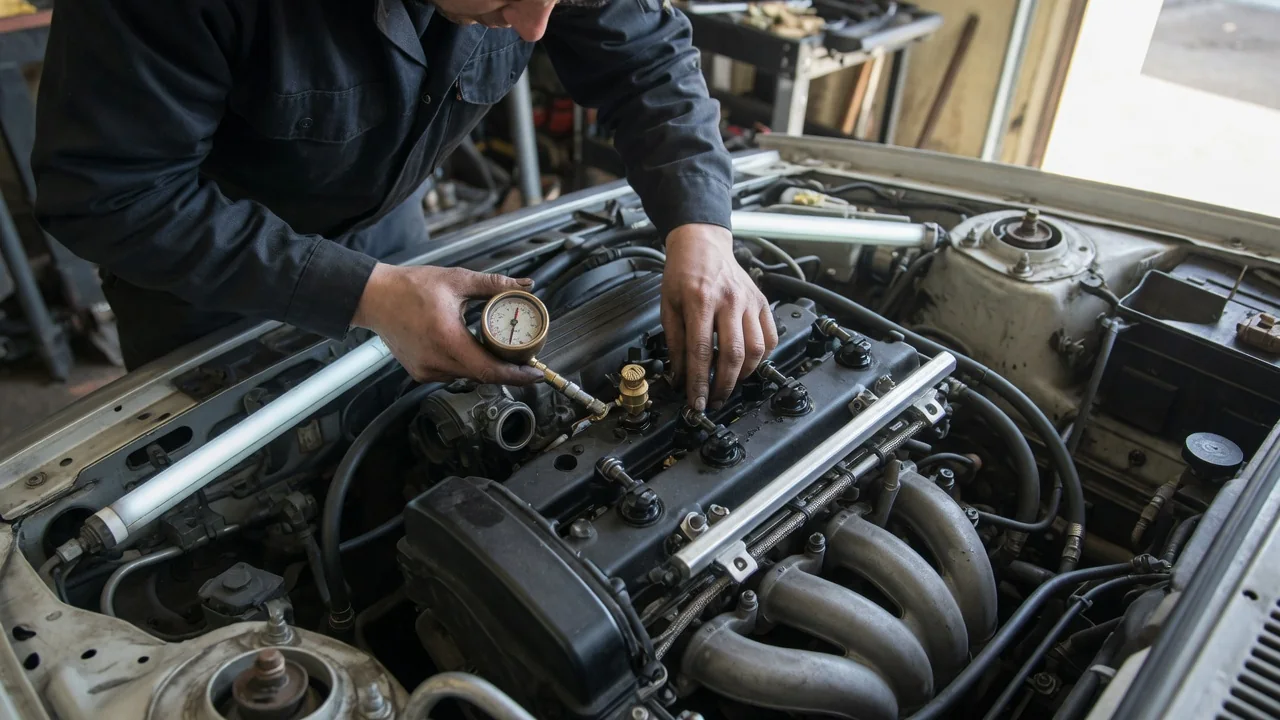
A fuel rail is the pipe or manifold that carries pressurized fuel to an engine's injectors. If you have wondered what a fuel rail is and why it matters, the short answer is that it works as both a distribution channel and a small pressurized reservoir. It keeps every injector supplied with fuel at a controlled pressure. Understanding the engine fuel rail function helps explain several fuel system symptoms and why leaks around it deserve prompt attention.
Distribution: How the Fuel Rail Feeds Each Injector
In a fuel-injected engine, fuel leaves the tank through a supply line and arrives at the fuel rail, which is usually mounted on or near the intake manifold or cylinder head. The rail has a series of ports or cups, one for each injector. Each injector seats into its port and is typically sealed with one or more O-rings, while clips or brackets hold the injector and rail assembly in position. Once fuel enters the rail, it fills the internal passage along its full length, so every injector draws from the same supply. Because the rail holds a volume of fuel rather than feeding injectors through individual lines straight from the pump, it helps smooth out the brief pressure dips that occur each time an injector opens. That buffering effect is a large part of why the rail exists: the engine control module can only meter fuel accurately if each injector sees a steady, consistent supply.
Layouts differ by engine design. An inline engine generally uses a single rail running along one side of the head, while a V-type engine often has two rails, one per cylinder bank, connected by a crossover tube or hose. Port fuel injection places the injectors in the intake runners, so the rail sits on the intake manifold. Direct injection places the injectors in the combustion chamber, so the rail is mounted closer to the cylinder head and is built to handle much higher pressure. Rails are made from materials such as steel, aluminum, or, in some port-injection designs, composite plastic, depending on the pressure involved and the manufacturer's packaging requirements.
Pressure: Holding Fuel Ready for Precise Injection
An injector delivers fuel by opening for a precisely timed interval. The amount of fuel that passes during that interval depends heavily on the pressure difference across the injector, so the engine control module relies on rail pressure being where it expects. In older return-type port systems, a pressure regulator is often mounted on the rail itself. It allows excess fuel to flow back to the tank and frequently references intake manifold vacuum so the pressure difference across the injectors stays consistent as engine load changes. In returnless systems, the regulator is commonly located in or near the fuel tank, or the pump speed is controlled electronically based on a rail pressure sensor, so only a single supply line runs to the rail. Some port-injection rails also include a pulsation damper that absorbs pressure ripples created by injector operation.
Direct-injection systems add a second stage. A low-pressure pump in the tank feeds a mechanically driven high-pressure pump, which is often driven by the camshaft, and that pump supplies the rail at pressures far above those used in port injection. These rails normally carry a pressure sensor that reports to the engine control module, and many include a relief or limiting valve to protect the system. In both port and direct systems, the rail is designed to hold residual pressure for a while after the engine is shut off. That stored pressure helps the engine start quickly and reduces fuel vaporization when the engine is hot.
Leak Checks: Recognizing and Confirming Fuel Rail Problems
A leak at or around the fuel rail can show up in several ways. A raw fuel smell in the engine bay or cabin is a common warning sign, as is visible wetness or staining near injector bases, rail fittings, or crossover lines. Loss of residual pressure can cause extended cranking after the vehicle sits, because the system must rebuild pressure before the engine fires. Internal or external leaks may also contribute to lean or rich running, misfires, or stored diagnostic trouble codes related to fuel trim or rail pressure. None of these symptoms point exclusively to the rail, since pumps, regulators, injectors, and lines can produce similar effects, which is why confirmation matters before replacing parts.
A basic check starts with a visual inspection while the engine is off and cool, looking for wet spots, dried fuel residue, cracked hoses, or damaged connectors at the injector seals, rail joints, sensor fittings, and regulator. Many port-injection rails have a test valve where a fuel pressure gauge can be connected to read operating pressure and to see whether pressure holds after shutdown; a steady drop suggests a leak somewhere in the system. On direct-injection engines, a scan tool reading of the rail pressure sensor compared with the desired value is a common starting point, since the high-pressure side is not suited to simple gauge testing. Fuel is flammable and the system stays pressurized, so work should be done in a ventilated area away from ignition sources, with the system depressurized according to the service manual before any fitting is opened.
Practical Implications and Limits
For owners, the main takeaway is that the rail itself is a fairly simple part, but the seals, fittings, and components attached to it are where problems often appear. Any job that disturbs the rail, such as injector replacement or intake manifold removal, usually calls for new O-rings or seals and correct fastener torque, because an improperly seated injector can leak fuel or draw in air. Fuel smells should not be ignored or masked, even if the engine seems to run normally, since a leak near hot engine components is a fire risk.
General explanations also have limits. Rail design, operating pressure, regulator location, the presence of a test port, and the correct depressurization procedure all vary by engine, so the specific values and steps must come from the service information for the vehicle in question. Some manufacturers specify that certain high-pressure lines or fittings on direct-injection systems be replaced rather than reused once loosened, and those systems generally require more care and equipment than port-injection setups. When symptoms are unclear or the high-pressure side is involved, professional diagnosis is often the safer and more cost-effective route.