Ford Ranger Check Engine Light: Causes and Diagnostic Next Steps
What a Ford Ranger Check Engine Light Means
The check engine light means the powertrain control module has detected a condition that affects emissions, engine operation, or a monitored component. It does not identify a failed part by itself. On many Ford Rangers the same warning may appear as a service engine soon indicator depending on model year and market. A steady light usually allows continued limited driving, while a flashing light indicates an active misfire that can damage the catalytic converter and calls for reduced load and prompt professional diagnosis.
Start With Observable Checks Before Replacing Parts
A diagnostic trouble code is evidence to investigate rather than proof that a specific sensor or component has failed. Before buying parts, record the code and note when the light appeared, whether idle is rough, and whether fuel economy or driveability changed. The same code can have several causes, and the correct repair depends on the generation, engine, and market specification of the Ranger.
Loose or Damaged Fuel Cap
On model years equipped with an evaporative emissions monitor, a loose, cracked, or missing fuel cap can allow vapor to escape and trigger an evaporative system code. Tighten the cap until it clicks and check the seal for cracking or contamination. Clearing the code should be done only after the condition is corrected; if the underlying leak remains, the light is expected to return.
Oxygen Sensors and Catalyst Efficiency
Oxygen sensor codes can indicate a sensor that is slow to respond, a wiring or connector problem, an exhaust leak, or a fueling fault that changes the exhaust gas mixture. A catalyst efficiency code should not be treated as automatic proof that the catalytic converter is defective. The control module compares upstream and downstream oxygen sensor readings, so a fault in either sensor, an exhaust leak, or an engine misfire can produce a similar result.
Ignition Misfire
A misfire code identifies the cylinder or cylinders where combustion is incomplete but not the cause. Worn spark plugs, a failed ignition coil, a damaged coil boot, poor compression, or a fuel injector issue can all produce a misfire. If the light is flashing, reduce acceleration and load and have the vehicle diagnosed before continuing to drive.
Mass Airflow Sensor and Induction Leaks
A contaminated mass airflow sensor or an unmetered air leak after the sensor can create lean fueling codes, hesitation, or stalling. Inspect intake tubing, clamps, and vacuum lines for cracks or disconnection. Cleaning a mass airflow sensor may resolve contamination, but only if the code and airflow readings support that diagnosis.
Diagnostic Next Steps
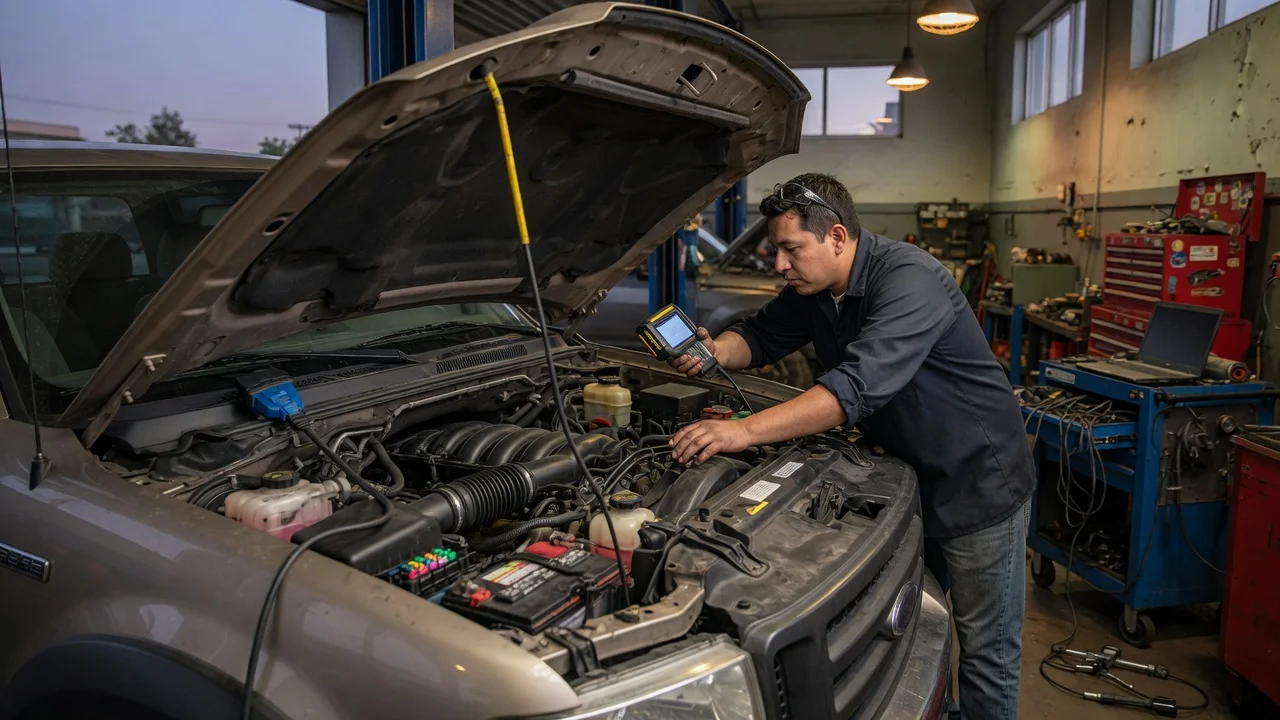
Read all stored and pending codes with a compatible scan tool; record freeze frame data if available. Note the exact code format and which powertrain system it references before looking up possible causes. Inspect the fuel cap, intake plumbing, vacuum lines, and visible wiring for obvious external faults. Use live data to check fuel trims, oxygen sensor switching, coolant temperature, and misfire counters where supported. Confirm whether the concern is present only when cold, only when hot, under load, or at idle.
When a specific repair is planned, check the applicable Ford service information for the model year, engine, and market to confirm torque values, fluid specifications, and test procedures. A single code can have different test paths across four-cylinder, V6, and diesel Rangers, so variant-specific guidance matters.
When to Stop Driving or Seek Professional Diagnosis
Stop driving or seek immediate diagnosis if the check engine light is flashing, the engine overheats, oil pressure drops, coolant or fuel leaks are visible, or there is a strong fuel odor. Persistent misfire, severe power loss, or repeated code return after a completed repair also warrant professional evaluation. Evidence gaps remain for exact failure rates and repair costs by engine because these vary with model year, condition, and local service pricing.