Ford Ranger Check Engine Light: Causes and Next Steps
What the check engine light means
A Ford Ranger check engine light is the malfunction indicator lamp (MIL). It comes on when the powertrain control module (PCM) detects a fault that can raise emissions or disrupt engine management. On U.S.-market Rangers from the 1996 model year onward, and on later global Rangers with OBD-II or EOBD, that lamp is tied to stored diagnostic trouble codes (DTCs). The light reports a monitored problem. It does not, by itself, prove that a named part has failed.
Exact monitors, messages, and powertrains vary by model year, generation, engine, and market. Compact North American Rangers (through 2012), the T6-based midsize Ranger sold in North America from 2019, and global T6 Rangers use different gasoline and diesel engines. Treat any cause list as a starting map, then confirm with a code scan for that truck.
Steady lamp versus flashing lamp
How the lamp behaves is the first diagnostic split. A steady amber engine-outline lamp usually means a detected fault that should be read soon. If the truck otherwise idles and drives normally, short trips to a scanner or shop are typically still possible. A flashing lamp generally means an active misfire that can overheat the catalytic converter. Ease off the throttle, avoid high engine speed and heavy loads, and get the codes read without continued hard driving.
Lamp behavior Typical meaning Immediate action; Steady MIL Stored or pending emissions-related fault Note drivability, check the fuel cap, scan for DTCs soon; Flashing MIL Active misfire with catalyst-damage risk Reduce load; arrange diagnosis; stop if the engine shakes hard or power collapses; MIL plus red warnings Possible oil pressure, overheat, or braking fault in addition to the MIL Stop as soon as it is safe and treat those warnings as urgent
Stop driving and seek service if the engine will not stay running, there is a strong fuel smell, the temperature gauge climbs into the hot range, or a low oil-pressure warning appears with the MIL. Those conditions sit outside a routine check-engine diagnosis.
Plausible causes and what each check indicates
Most Ranger MILs come from the same OBD families used on other light trucks: evaporative emissions (EVAP), oxygen or air-fuel sensors, catalyst efficiency, misfire, airflow or manifold-pressure sensing, fuel trim, and, on engines so equipped, exhaust-gas recirculation (EGR). Diesel Rangers in markets that sell them can also light the MIL for aftertreatment monitors such as a diesel particulate filter (DPF), NOx sensors, or related exhaust hardware. A code names a monitor or circuit to investigate. It is not proof the replacement part in the code title is failed.
Fuel filler cap loose, cracked, or missing: a common EVAP leak source. A cap that does not click or seal can set a small-leak or cap-off code. Tightening or replacing the cap may allow the monitor to pass after several complete drive cycles; only a scan confirms the code and whether it has cleared. Oxygen (O2) or air-fuel ratio sensor codes: slow response, heater-circuit faults, or implausible readings. These sensors also react to exhaust leaks, wiring damage, and true mixture problems, so live data and connector condition matter before replacement. Catalyst efficiency below threshold: often a follow-on code after misfire, rich running, or a damaged converter. Confirm upstream faults are fixed before condemning the converter. Misfire (random or cylinder-specific): spark plugs, ignition coils, wiring, injectors, compression, or fuel quality. A flashing MIL with a misfire code is the condition that most clearly warrants reduced load and prompt diagnosis. Mass air flow (MAF) or manifold absolute pressure (MAP) and related intake faults: dirty sensors, unmetered air from vacuum leaks, or failed sensors that drive incorrect fueling. EVAP purge valve, vent valve, or canister issues: codes for large leak, small leak, or incorrect purge flow. A smoke test or commanded-purge test distinguishes a cap problem from a hose, valve, or tank fault. Fuel-trim and mixture codes: vacuum leaks, restricted air filter, weak fuel delivery, or contaminated fuel. Short-term and long-term fuel trim on a scan tool show whether the PCM is adding or subtracting fuel. Diesel aftertreatment (where fitted): DPF restriction, NOx-sensor, or related codes. Forced regenerations and aftertreatment tests belong with a shop that has the correct scan software for that engine.
This article does not have generation-specific failure-rate data, technical service bulletins, or a ranked list of the most common DTCs for each Ranger engine. Those details are year- and market-dependent and should come from the scan results and the service information for that VIN.
What to check next
Work from what you can observe, then read the stored codes. Do not skip the scan and replace parts from a generic cause list.
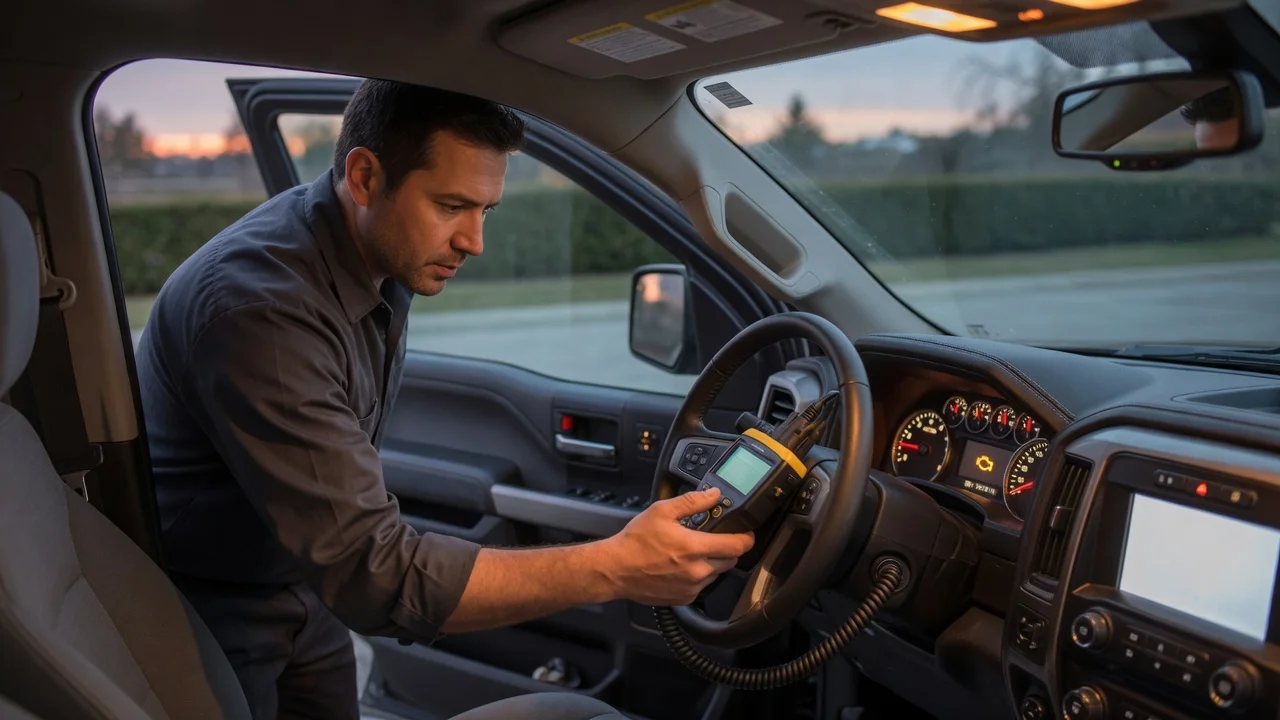
Record whether the lamp is steady or flashing, when it first appeared (cold start, after refueling, under load), and any change in idle, power, smell, or fuel use. Confirm the fuel cap is present and fully seated. Inspect the cap seal and filler neck for cracks or debris. Look under the hood and under the truck for obvious vacuum-hose splits, exhaust leaks ahead of the sensors, loose electrical connectors, and fluid leaks. Check that the engine oil and coolant are at a normal level and that the temperature gauge is in its usual range. Have the DTCs read at the 16-pin OBD-II connector, typically under the dash on the driver’s side on OBD-II Rangers. Write down every code, pending code, and freeze-frame snapshot (engine speed, load, coolant temperature, fuel trim) before clearing anything. Use those codes to choose the next test: cap and smoke test for EVAP leaks, live O2/fuel-trim data for mixture faults, misfire counters and ignition/fuel checks for misfire, and catalyst or aftertreatment tests only after upstream faults are addressed. If the lamp flashes, the engine runs roughly, codes point to misfire or catalyst damage, or you cannot interpret the data, stop parts-swapping and have a technician diagnose the circuit and monitor involved.
Clearing codes without a repair can turn the lamp off temporarily. It also erases freeze-frame data that shows the conditions when the fault set. If you clear codes to see whether they return, record them first. Some EVAP and catalyst monitors need a complete drive cycle, and the lamp may stay off until the PCM runs those monitors again.
When professional diagnosis is required
A basic OBD-II reader is enough to capture standard powertrain codes on most Rangers. Later trucks, diesel aftertreatment, and some body or gateway modules may need manufacturer-level software to run bidirectional tests, forced regenerations, or module relearns. Seek professional diagnosis when the MIL flashes, when misfire or catalyst codes persist after obvious faults are fixed, when there is a fuel leak or overheating, or when the same code returns after a part replacement. Tightening values, sensor part numbers, and reset procedures are model-year and engine specific; use the service information for that Ranger rather than a generic figure.