Ford Focus Spare Tire Pressure
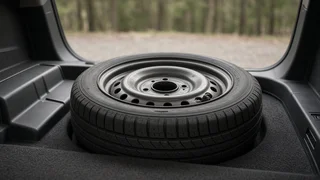
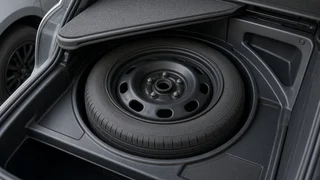
A temporary spare is a short-range tire, not simply a smaller version of the road tires fitted to a Ford Focus. Its narrow construction, compact outside diameter, and stowage design change the way inflation pressure should be judged. Many drivers ask about Ford Focus spare tire pressure after opening the trunk and finding a space-saver wheel that looks visibly underinflated. That appearance is often normal because the compact spare is built to carry the vehicle at higher internal stress than a standard tire. The correct service setting comes from the vehicle placard or owner’s manual for the spare, and it is usually different from the pressure used in the four primary tires.
Essential answer
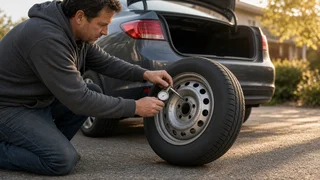
The correct starting point for Ford Focus spare tire pressure is the value printed on the tire information placard or in the owner’s manual for the compact spare. A space-saver spare commonly requires significantly higher inflation pressure than the standard road tires. The higher setting helps the narrow tire support the vehicle’s weight over a smaller contact patch without overheating at moderate speeds. Because the spare has a reduced tire size and load capacity, it should be checked before installation rather than after a roadside stop has already added heat and raised the internal reading.
When a compact spare is installed, it operates with a different load index and speed rating from the primary tires. The elevated inflation pressure is part of that temporary design. Lower pressure would allow excessive sidewall flex, heat buildup, and reduced stability. After using the spare, return it to the specified pressure before stowing it again. A cold reading, taken before the vehicle has been driven more than a short distance, gives the most useful comparison. Drivetrain compatibility also matters: avoid using a compact spare at speeds or distances beyond the vehicle and tire maker’s stated temporary-use limits.