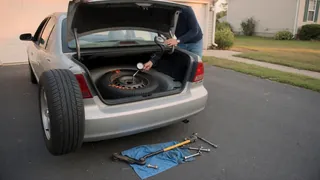
How Often to Check Spare Tire Pressure
A spare tire is only useful if it carries enough air when the road tire fails. Many drivers check four rolling tires regularly but forget the compact spare, temporary spare, or full-size spare stored under the load floor or beneath the truck bed. Because air gradually escapes through the tire body, valve, and wheel seal, a forgotten spare can be flat exactly when it is needed. Checking inflation pressure on the same schedule as the vehicle placard inspection gives a realistic way to keep the spare roadworthy without turning maintenance into an inventory of every tire size and position.
Essential answer
Check spare tire pressure at least once a month and before any long trip or heavy load. The spare loses inflation pressure through normal temperature changes and slow permeation even when it never touches the pavement. A temporary spare also needs its higher specified inflation pressure, which is commonly different from the pressure used in regular tires. Use the pressure listed on the vehicle placard or tire information label, not the maximum number molded into the sidewall. Monthly checking fits routine fuel stops and catches seasonal air loss before it leaves the spare unusable.
A spare should also be checked whenever the four service tires are inspected, such as during a rotation or when tread depth and wear are being measured. The spare’s pressure can drop more than expected in cold weather because a smaller air volume responds sharply to falling temperature. If the spare is mounted under the vehicle, road splash and corrosion around the valve can create additional slow leaks. The important point is consistency: a brief pressure check with a reliable gauge confirms the spare will support the vehicle long enough to reach a repair shop or safer stopping place.
Diagnosing a problem
If the spare looks low, measures far below the placard value, or has a loose or cracked valve stem, treat the air loss as a warning rather than proof of a ruined tire. A slow leak can come from a damaged valve core, a bead that is not fully seated, corrosion on an older steel wheel, or a puncture that only opens under load. Add air to the specified pressure and recheck after a short interval. If the pressure falls again, inspect the tire for foreign objects, cuts, sidewall bulges, and rust around the rim flange before assuming the tire itself has failed.
A temporary spare that cannot hold pressure for even a short period should not be used to drive at highway speed. The compact design already carries a reduced load index and speed rating, and low inflation makes its handling and heat buildup worse. A full-size spare with a slow leak may be repairable depending on the puncture location, but the temporary type is usually replaced when the tire body or valve cannot seal reliably. When a spare cannot maintain pressure after a proper fill, have the wheel and tire inspected before relying on it.