Ford F-350 Automatic Locking Hub Fitment: What Determines a Match
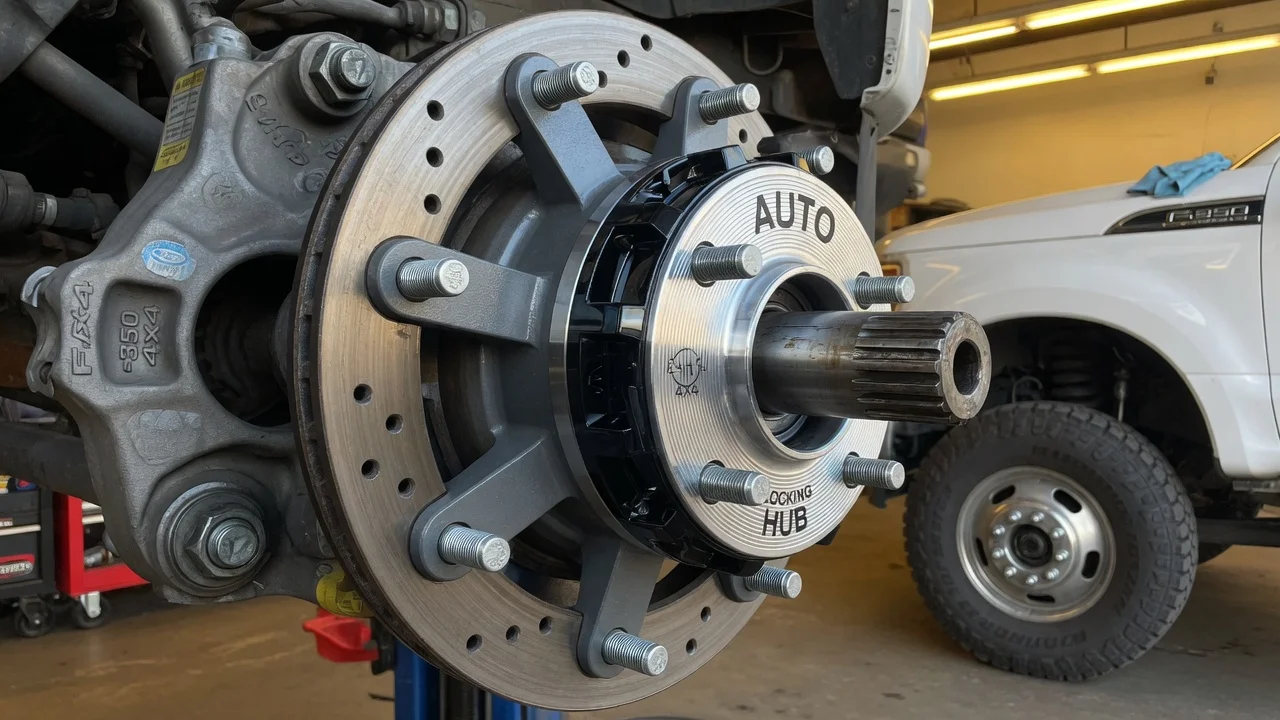
Automatic locking hubs on a Ford F-350 connect the front wheels to the front axle when four-wheel drive is engaged and let the wheels turn freely in two-wheel drive. The F-350 name alone does not tell you whether a given hub fits your truck. Model year, front axle design, wheel-end construction and the way the four-wheel-drive system controls the hubs all decide compatibility. This guide explains how to narrow down the right part before you buy or swap anything.
Short Answer: Fitment Depends on the Exact Truck
An F-350 auto locking hub fits only the trucks it was engineered for. Ford has built the F-350 across several generations with different front axles, wheel-end assemblies and hub control methods. A hub that is correct for one model year can be wrong for another, even when the two look similar. To match a part reliably, first identify your vehicle configuration: model year, cab and drivetrain, single or dual rear wheels, front axle, and whether the truck uses a vacuum-controlled or mechanically engaged automatic hub. Then check that information against a parts catalog listing for your VIN, or against the original part number on the hub you are replacing.
If your truck has manual hubs now, automatic hubs may not bolt straight on. Depending on the generation, the truck may also need the control hardware, seals and vacuum routing that factory auto-hub trucks were built with. Be cautious with any claim of universal fit, and confirm against the manufacturer specifications for your specific truck.
How Automatic Locking Hubs Work
In two-wheel drive, the front wheels turn on their bearings while the front axle shafts and differential stay largely still. This reduces drag and wear on front driveline parts. When four-wheel drive is selected, the hub must lock the axle shaft to the wheel so the front axle can deliver torque. A manual hub does this when you turn a dial at the wheel. An automatic hub does it without you leaving the cab.
Automatic hubs on F-350 trucks have used different designs depending on the era. Older mechanical designs engage internally when the axle shaft starts turning under power. They release when the truck is shifted out of four-wheel drive and driven or reversed a short distance. Later Super Duty trucks with electronic shift-on-the-fly use hubs controlled by a vacuum signal from the four-wheel-drive system. Many of these hubs also have a manual override position on the hub cap, so the owner can lock them by hand.
Vacuum-controlled hubs depend on a sealed path from the spindle to the hub. A leak anywhere in that path, such as a cracked line or a worn seal, can stop the hubs from engaging automatically even when the hub itself is undamaged.
What Changes the Fitment Answer
Model year and generation matter most. F-350 trucks built before the Super Duty platform and the various Super Duty generations do not share a single front wheel-end design, and some changes happened partway through a generation. Some front ends use serviceable wheel bearings with a separate hub. Others use a sealed hub and bearing assembly that the locking hub attaches to. The hub's spline count, its mounting pattern to the wheel-end and its internal length must all match the axle shaft and spindle on your truck.
Drivetrain options also matter. Single and dual rear wheel trucks, different front axle ratings and different four-wheel-drive packages can each change which wheel-end and hub were installed at the factory. A truck built with a manual-shift transfer case and manual hubs may lack the vacuum supply, solenoid and wiring that automatic vacuum hubs rely on. Some owners of vacuum-hub trucks go the other way and convert to manual hubs. That conversion is a separate fitment question with its own parts list.
Previous repairs can change the picture too. If the service history shows replaced wheel-end assemblies, axle shafts or aftermarket hubs, the parts on the truck may no longer match the original build. Confirm what is actually installed rather than relying only on the VIN.
What You Can Do Before Buying
Start by identifying the truck. Note the VIN, model year, cab, rear wheel configuration and transfer case control, whether that is a dash switch or a floor lever. Look at the existing hub cap. A dial marked Auto and Lock, a dial marked Free and Lock, and a plain cap each point to a different setup. If a part number is stamped or cast on the hub, write it down. Photograph the hub, the fasteners holding it to the wheel-end and any vacuum fittings at the spindle.
Use that information to check fitment in a catalog that searches by VIN or full configuration, and compare the listed hub type with what is on the truck. If you are replacing a failed automatic hub with the same type, matching the original part number is the simplest path. If you want to add automatic hubs to a truck that has manual ones, ask the supplier exactly which additional components your build needs for the conversion. Also confirm that the truck's four-wheel-drive controls can operate the new hubs.
If the current hubs are not engaging, inspect the system before assuming the hub has failed. On vacuum-controlled trucks, check that the vacuum lines are connected and not cracked, and see whether the hubs engage when set to the manual Lock position, if the hub has one. Stop using four-wheel drive until you find the cause if you hear grinding, hear clicking under power, or notice that the front driveline never turns in four-wheel drive. For front axle and wheel-end service, follow the inspection points and maintenance schedule in your owner's manual rather than a generic interval.
Limitations and When to Get Help
This guide cannot confirm fitment for a specific truck. The correct hub depends on the exact build and on any changes made since the truck left the factory. The guide also does not list part numbers, spline counts or torque values. Those must come from manufacturer specifications or service information for your VIN. Heavy towing, snow plowing and frequent off-road use put more load on wheel-end parts, so describe your operating conditions when you discuss replacement options with a parts supplier or shop.
Get professional help in any of these situations: the wheel-end needs disassembly, a bearing or spindle shows damage, you cannot trace a fault in the vacuum or electrical side of the four-wheel-drive system, or you are planning a manual-to-automatic conversion. A technician familiar with Ford trucks can confirm which components are installed, test the hub control system and install the hub to the correct specifications. As a next step, gather your VIN and photos of the current hubs, and use them to confirm the exact part before you order.