Ford F-150 Trailer Brake Controller: Factory, Aftermarket and Setup
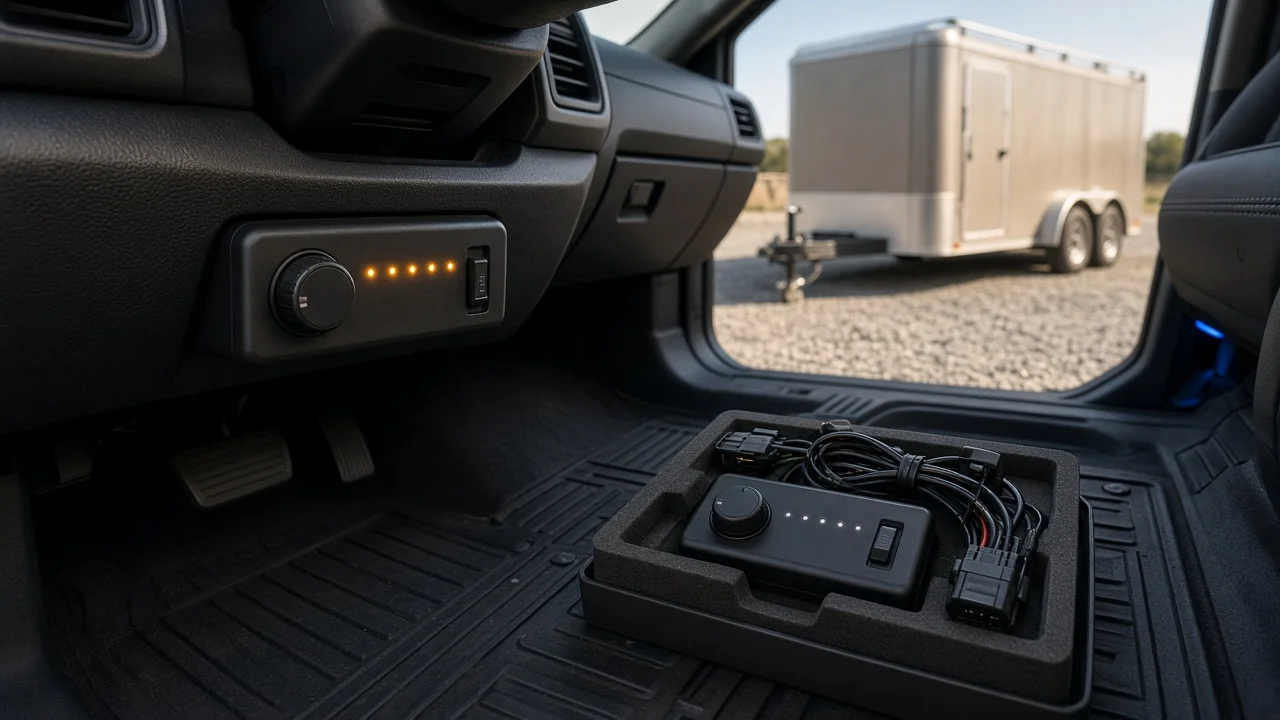
A trailer brake controller lets your F-150 apply the electric brakes on a trailer at the same time as the truck's own brakes. A Ford F-150 may have a factory integrated controller, wiring ready for an aftermarket unit, or neither. Which one you have depends on model year and options. This guide explains how to tell which applies to your truck, how the controller works, what changes the answer, and how to set it up and check it safely. It applies whether you drive a 2010, 2015 or 2018 truck.
The short answer for F-150 owners
An F-150 towing a trailer with electric or electric-over-hydraulic brakes needs a working brake controller in the cab. Starting with the 2009 model year, Ford offered an integrated trailer brake controller as a factory option on many F-150s, often grouped with towing packages. A truck with this controller has a gain adjustment and a manual trailer brake control on the instrument panel, and controller information appears in the cluster display. A truck without it usually gets an aftermarket electric trailer brake controller. This unit mounts under the dash and connects through a vehicle-specific plug-in harness.
Trucks built with a factory tow package typically have a connector under the dash, near the steering column, for an aftermarket unit, so no wire splicing is needed. Trucks without the tow package may lack that connector or the brake output circuit to the rear seven-pin socket, which makes installation more involved. Trailers with hydraulic surge brakes do not use a cab-mounted controller at all.
How a trailer brake controller works
When you press the brake pedal, the controller sends an electrical signal through the brake circuit of the seven-pin connector to the magnets in the trailer's drum brakes. Each energized magnet is pulled against the spinning drum, and that drag works a lever that pushes the brake shoes outward against the drum. A stronger signal makes the trailer brake harder.
Ford's integrated controller uses information from the truck's own braking system to match its output to how hard you are braking. Aftermarket units come in two types. Proportional units use an internal motion sensor to match output to how quickly the truck is slowing. Time-delayed units ramp up to a preset level over a set time, regardless of how hard you stop. Proportional units generally give smoother and more consistent stops, while time-delayed units are simpler and cheaper. Both types have a gain setting, which caps maximum output, and a manual control that applies only the trailer brakes. The manual control is useful for testing and for helping to settle trailer sway.
What changes the right setup
Model year and trim matter. Controller location, display messages and menu options differ between the 2009–2014, 2015–2020 and 2021-and-later generations, and between trims within one year. Harness connectors for aftermarket controllers also vary. Confirm vehicle fitment for your exact year, cab and options rather than assuming a part for a 2012 F-150 will fit a 2016 or 2017. Adding the factory module to a truck that was not built with it may require extra parts and dealer-level programming. Check with a Ford dealer or an experienced installer that the retrofit is possible before buying parts.
The trailer also changes the answer. Electric drum brakes are the most common setup. Electric-over-hydraulic systems need a controller that supports them, and some controllers have a dedicated mode for them. Trailer weight, load and road conditions affect the correct gain. A setting that suits an empty utility trailer will be too weak for a loaded camper, and the camper's setting will be too aggressive for the empty trailer. Legal requirements for trailer brakes and breakaway systems vary by state and trailer weight, so check the rules wherever you tow.
Setting up and checking the controller
Hook up the trailer, make sure the seven-pin plug is fully seated, and confirm that the controller recognizes the trailer. Ford systems display a message when no trailer is detected. Set the gain according to your owner's manual or the controller instructions. A common method is to drive on a dry, level, traffic-free surface at about 20 to 25 mph and apply the manual control fully. Raise or lower the gain until the trailer brakes are strong but stop just short of locking the wheels. Repeat the adjustment whenever the load changes significantly.
If the controller reports a fault or the trailer brakes feel weak, first check the connections. Inspect the truck socket and trailer plug for corrosion, bent pins or damaged wiring, and check the fuses listed in your owner's manual. Then check the trailer itself. Worn shoes, worn magnets, damaged wiring or poorly adjusted drum brakes reduce braking even when the controller output is correct. Compare trailer brake parts against the manufacturer's wear limits.
Towing also puts extra load on the truck's own brakes. If you tow regularly, inspect brake pads, brake rotors and calipers more often. Replace pads before the friction material reaches the wear limits in Ford service information, and keep brake fluid at the specified level and service interval. A properly adjusted trailer brake controller reduces the load on the truck's brakes, but it does not make up for worn truck brakes.
Limitations and when to get help
This guide covers general principles. Exact controller behavior, display messages, fuse locations, harness part numbers and gain recommendations depend on your F-150's model year and configuration and on the controller or trailer manufacturer. Treat your owner's manual and vehicle-specific service information as the final reference.
Stop towing and have the system inspected if any of these happen: the trailer pushes the truck during stops, it pulls to one side, its brakes lock repeatedly, or the controller shows a persistent fault. The same applies if the truck's brake pedal or warning lights behave abnormally. A brake specialist or dealer can test controller output, trace wiring faults, and confirm that both truck and trailer brakes are within specification.