F-150 trailer sway control problems

Trailer sway on an F-150 can transform a stable highway tow into a nerve-wracking drive, yet the warning message or unexpected intervention often leaves owners unsure whether the truck is protecting them or masking a deeper setup issue. The factory electronic stability system watches yaw, steering, and braking inputs to reduce dangerous oscillation before it grows. Understanding how that correction feels, when it activates, and what conditions provoke it helps separate normal operation from a genuine fault. Weight distribution, speed, hitch setup, and component condition all influence what the driver experiences.
Essential answer
F-150 trailer sway control problems usually present as a dash message, a sudden reduction in power, or selective brake application while towing. The behavior is not automatically proof of a failed module. The system reacts to motion sensors detecting side-to-side trailer movement, and many complaints trace back to trailer loading, tire pressures, crosswinds, or an improperly matched hitch rather than an electronic defect. A high center of gravity, excessive speed for conditions, or too little tongue weight can all make the correction cycle feel abrupt and repetitive.
The truck’s sway logic works only when the trailer is wired correctly and the vehicle knows a trailer is connected. When the trailer brake controller, wheel speed sensors, steering angle sensor, or stability control module sends inconsistent information, the system may disable itself and post a warning. Drivers should first review the complete towing setup—including gross vehicle weight rating, combined weight rating, payload, axle rating, and tongue weight for the specific F-150 configuration—before assuming the electronics have failed.
Diagnosing a problem
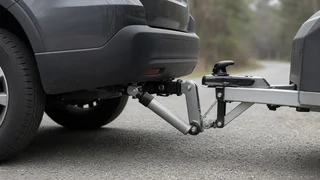
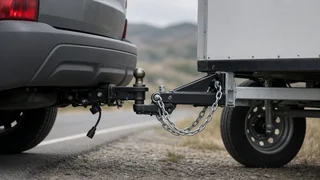
A useful first step is to note exactly when the warning or intervention occurs. If it appears only in gusty conditions, on sweeping downgrades, or when passing large trucks, the system is likely responding to real yaw inputs rather than suffering an internal fault. Loading the trailer with 10 to 15 percent of its weight on the tongue, keeping heavy items low and centered, and confirming tire pressures on both truck and trailer often change the behavior significantly. A trailer that feels twitchy even at moderate speed suggests an incompatible hitch setup or inadequate tow vehicle rear axle loading.
When the message appears immediately after connecting a trailer or during ordinary straight-line driving, inspect the seven-way connector, trailer wiring, and brake controller settings for corrosion or loose terminals. A stored fault code is a diagnostic clue, not a confirmed component failure; manufacturer-dependent codes require vehicle-specific interpretation. Because the stability system can unexpectedly brake individual wheels, reduce speed gradually and avoid abrupt steering if sway develops. If the warning disables the feature or the truck repeatedly brakes without visible trailer movement, stop the combination in a safe location and seek professional diagnosis before continuing.