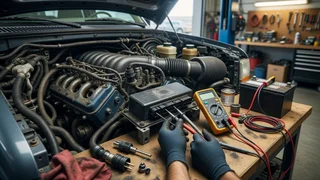
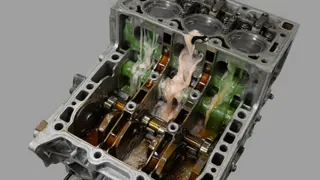
Ford 7.3 oil in coolant
Oil showing up in the coolant of a Ford 7.3L diesel usually means two fluid systems that should stay separated are now crossing. The result can be a milky or brownish film in the degas bottle, sludgy residue under the radiator cap, or a rising level in the overflow tank. Because engine oil pressure is typically higher than cooling system pressure in many running conditions, the leak often moves from the lubrication side into the coolant passages. This is not a single-part diagnosis; it is a sign that points toward a limited group of joints where oil and coolant run close together.
Essential answer
Oil in the coolant on a 7.3L Power Stroke is usually contamination moving through an internal breach rather than a normal operating condition. The most commonly understood sources are the oil cooler, which carries both engine oil and coolant, and, depending on the model year and configuration, failures around cylinder head gaskets, engine front covers, or the interfaces of factory oil-to-water heat exchangers. What you are seeing is often emulsified oil collecting at the highest point of the cooling system, such as the degas bottle or radiator cap area. The contamination may appear as tan sludge, floating droplets, or a slick that clings to hoses.
The finding is useful because it narrows the inspection toward shared boundary points. On a Power Stroke, the oil cooler sits in the valley area and can allow pressurized oil to enter the coolant when a gasket fails or a housing develops an internal leak. Coolant can also enter the oil, producing a gray or milky appearance on the dipstick, but the cooling system often shows the contamination first because oil is pushed toward the lower-pressure coolant side. Before assuming the worst, inspect the degas bottle for oil film, check for cooling system pressure that stays high after shutdown, and note whether the transmission fluid, if routed through a cooler in the radiator, is being confused with engine oil during inspection.