7.3 Diesel Glow Plugs: How to Choose the Right Set
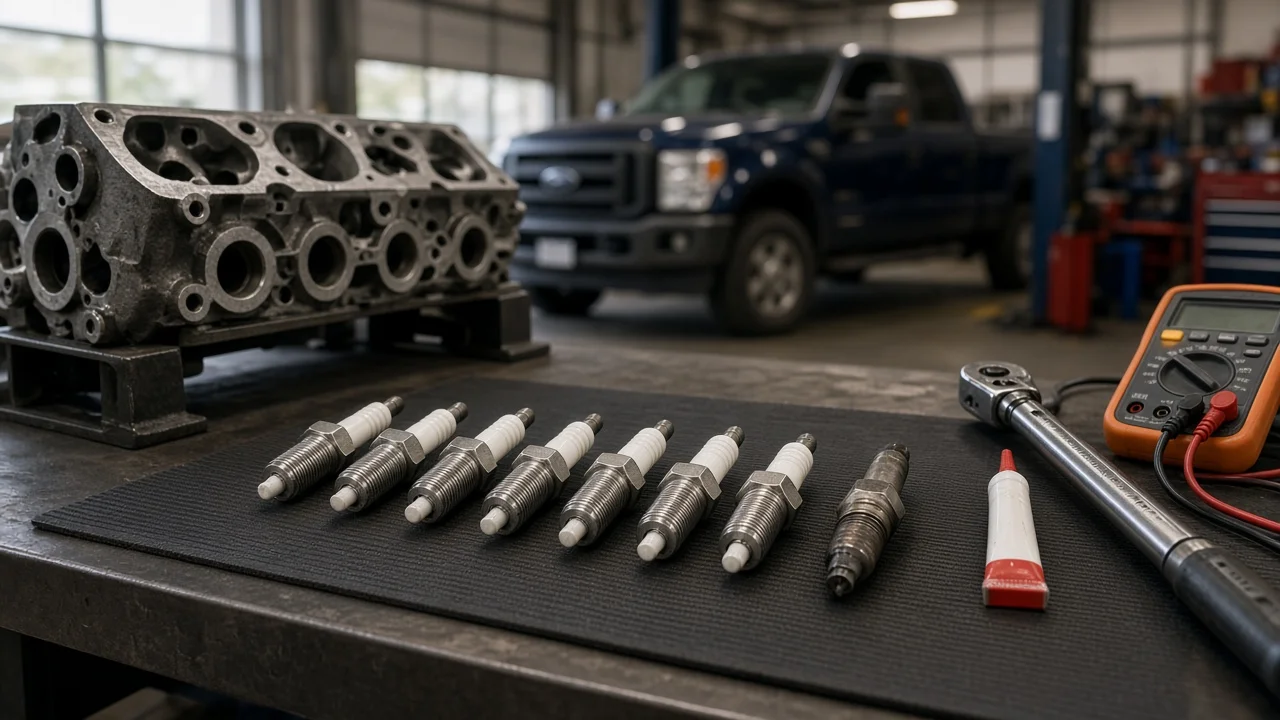
A cold 7.3 Power Stroke that cranks for a long time, clatters and blows white smoke often prompts a glow plug order. The right plugs depend on which 7.3 you own, how the truck is used and whether the plugs are actually the problem. This guide covers how to confirm the need, match the part to the engine, judge brand claims, budget for the job and narrow the choice for a set of eight plugs.
Define the job the product must do
Glow plugs on a 7.3 diesel do one narrow job. They heat the combustion chamber so compression ignition happens reliably when the engine is cold, and once the engine is warm they contribute almost nothing. Start with how the truck is used. Some trucks lean on the glow system far more than others: a pickup parked outside through northern winters, a plow truck that must start at dawn, or a van with no access to a block heater. A truck that lives in a heated garage or plugs in overnight needs much less from it. Your climate and parking situation decide how much durability and cold-start performance you should pay for.
Next, confirm the plugs are the likely cause. The classic symptoms are long cold cranking, rough running and heavy white smoke for the first minute that clear as the engine warms. A hard start when the engine is already warm points elsewhere. On these engines, several other faults can mimic a glow plug problem. They include weak batteries (the truck uses two), low high-pressure oil for the HEUI injectors, low fuel pressure from a tired fuel pump or regulator, a restricted fuel filter, gelled fuel and a failing injector. Replacing eight plugs will not correct any of those, so rule them out before spending money.
Check compatibility
The 7.3 name covers two different engines. The 7.3 Power Stroke is a direct-injection V8 used through the 2003 model year in Ford F-Series and Super Duty pickups, Excursions and E-Series vans. The earlier 7.3 IDI is an indirect-injection engine with its own glow plugs and controller. Their plugs are not interchangeable, so search catalogs by exact engine, model year and vehicle rather than a generic diesel label.
Fitment comes down to thread size, reach, tip length and electrical rating for the 12-volt system. Tip length matters because the heating tip sits in the combustion chamber. A plug that protrudes too far risks contact with the piston or injector spray, and one that is too short heats poorly. On the Power Stroke, the plugs connect through the under valve cover harness, which passes through the valve cover gasket. A glow plug relay switches power to all eight plugs, four on each bank. The PCM sets glow time largely from engine oil temperature. The dash wait-to-start light runs on its own timer, so the light going out does not prove the plugs heated. Any plug you buy must be listed for this relay-and-harness system.
Features that affect the choice
Most 7.3 glow plugs use a metal sheath with a heating coil and a control coil that limits current as the tip heats. Construction quality decides how consistently they reach temperature and how long they survive repeated cycles. Useful evidence includes: • a catalog listing tied to your engine; • published dimensions that match the original; • a matched set of eight; • a clear warranty; Labels such as rapid heat, extreme duty or performance carry little weight here. The PCM and relay control how long the plugs are energized, not the plug itself.
The trade-off that matters most is consistency of resistance and heat rate. Mixing brands, or old and new plugs, can leave one cylinder cold while its neighbors fire normally. A set that draws much more current than the original design can stress the relay and harness. Owners have also reported plug tips swelling after overheating, which can be triggered by a relay that sticks on and makes later removal difficult. Factory-equivalent plugs from established suppliers are the conservative choice. A cheaper set makes sense only when its specifications clearly match and the seller stands behind it.
Limitations and ownership costs
On the Power Stroke the valve covers come off to reach the glow plug connections. The real cost therefore includes valve cover gaskets with their pass-through connectors, several hours of labor, and possibly a new under valve cover harness if its terminals are corroded or brittle. Pickups give reasonable access, while vans are considerably tighter. Old plugs can seize in the head, and a broken plug or tip may mean head work. Remove them patiently with the correct deep socket, and follow the service manual for thread preparation and torque. Use anti-seize only where the plug manufacturer allows it, and never on the heating tip.
Glow plugs also have firm limits. They will not fix a failed relay, a damaged harness, low battery voltage, a weak fuel pump, a clogged fuel filter or a worn injector. Anti-gel additives can help keep winter diesel flowing, but they are not a proven repair for any glow system or injection fault. Changing plugs does not require opening the fuel system. Never loosen fuel or oil lines on a running or freshly run engine: the 7.3 feeds fuel to the heads under pressure and drives its injectors with high-pressure oil. If you service the fuel filter at the same time, do it with the engine off, follow the service procedure and expect some spillage. Afterward, run the engine, do a leak check around the plugs and valve covers, and confirm the system cycles on the next cold start.
Build a practical shortlist
Before comparing prices, write down the engine (Power Stroke or IDI), model year, and whether the vehicle is a pickup, Excursion or van. Then test the existing system: check battery condition, confirm the relay clicks and delivers voltage, and measure each plug and harness circuit against the service specification. Even if only one or two plugs have failed, replacing the full set is common practice. The rest share the same age and wear, and a matched set heats evenly.
Keep candidates that meet every item on this checklist: • listed specifically for your engine and year; • dimensions and tip length matching the original; • rated for the 12-volt relay-controlled system; • sold as a matched set of eight; • backed by a written warranty; • from a supplier with consistent catalog data; Then add the parts that complete the job: valve cover gaskets, plus a relay or under valve cover harness if testing showed a problem there. That leaves a short list based on fit and evidence rather than marketing claims or unverified rankings.