Find Brake Drum Wear Limits
The short answer
A brake drum's wear limit is a maximum inside diameter. As the drum wears or is machined, its braking surface moves outward and the inside diameter grows. Once the diameter reaches the stated limit, the drum should be replaced rather than reused or resurfaced.
The limit is usually marked on the drum itself, often labeled as a maximum or discard diameter. Treat that marking as the primary reference for the drum fitted to the vehicle. The vehicle's service documentation is the secondary reference, and it is the one to use if the marking is missing or unreadable.
The correct value depends on the specific drum. It can differ by model year, generation, axle, brake size, trim, market and drum manufacturer. No vehicle-specific figures are given here because none were supplied, and a generic number could be wrong for your drum.
How a drum limit differs from a rotor limit
Disc brake rotors have a minimum thickness, because they get thinner as they wear. Drums work the opposite way. Their limit is a maximum diameter, because wear enlarges the bore. If you look up a figure, make sure it is a drum diameter specification and not a rotor thickness or a brake shoe lining thickness.
Where to find the marking on the drum
Manufacturers usually cast or stamp the limit into the drum. The exact position varies with the drum design and the manufacturer, so check these areas:
The outer face of the drum, often near the center or hub area; The outer edge or rim of the drum; The inner lip or open edge, which is visible once the drum is removed
Wording varies. Common forms include "MAX DIA," "DISCARD DIA" and "MAX ID," followed by a number. The figure may be in millimeters, inches or both, so check the unit before comparing it with a measurement.
Rust, brake dust and road grime can hide cast lettering. Cleaning the area with a wire brush often makes the marking readable. Some drums, including some aftermarket replacements, may carry a figure that differs from the original equipment drum. In that case, use the marking on the drum actually installed.
Markings that are easy to confuse
Discard or maximum diameter: the size at which the drum should be retired. Machining or refinish limit: a separate figure some service literature gives for the largest diameter a drum may be machined to. It is typically smaller than the discard figure, so that some wear allowance remains after resurfacing. Part numbers, casting codes and date codes: other numbers cast into the drum that are not wear limits. Look for the diameter label next to the figure.
If the drum shows only one figure and the documentation does not mention a separate machining limit, check the service manual or ask the drum supplier before resurfacing a drum that is already close to the marked value.
Checking a drum against its limit
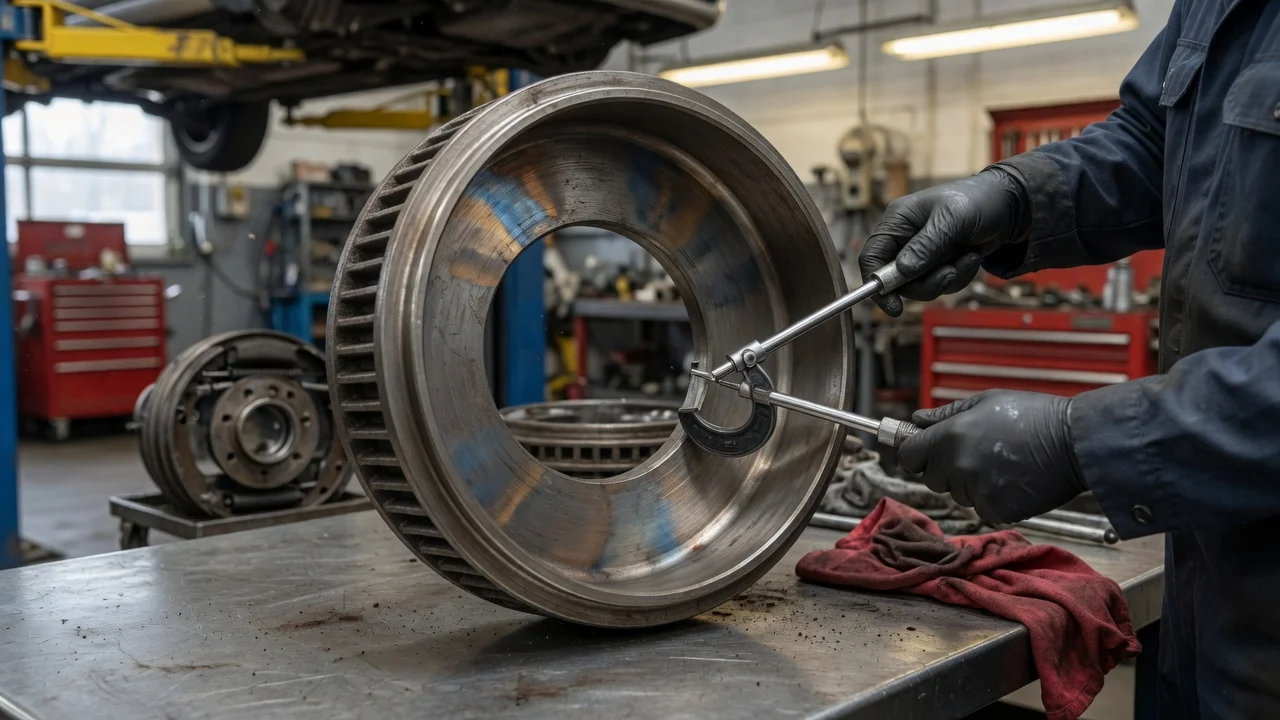
Finding the limit only helps if you compare it with an accurate measurement. The usual tool is a brake drum micrometer, also called a drum gauge, which measures the inside diameter across the braking surface. A standard caliper or tape measure is not precise enough for this check.
Remove the drum and clean the braking surface. Measure the inside diameter at several points around the circumference. Measure at more than one depth across the friction surface, because wear is not always even. Use the largest reading for comparison with the marked limit. Note large differences between readings. They can indicate an out-of-round or tapered drum, which may need attention even if the drum is under the limit.
If the largest reading is at or beyond the marked diameter, replace the drum. If the reading is under the limit but the drum needs resurfacing, remember that machining removes material and increases the diameter. Plan the cut against the machining limit, if one is specified, rather than against the discard figure.
Other reasons a drum may need replacing
The diameter limit is not the only check. A drum may still be unfit for use if it is cracked, heavily scored, or shows heat damage such as hard spots or heat checking. Service documentation for the vehicle usually describes the inspection criteria. Have a qualified technician assess any drum with visible damage.
What is not covered here
No model-specific diameters, tolerances or marking locations were available for this guide. To get a figure for a particular vehicle, read the marking on the installed drum and confirm it against the service manual for that model year, axle and brake configuration, or against the drum manufacturer's specifications.