Sports Cars for Families: What Actually Works and What to Check Before Buying
The short answer
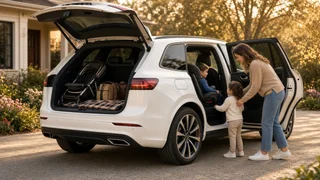
A sports car can work for a family, but usually not in its most traditional form. A strict two-seater cannot carry a parent and a child seat together with a second passenger, and most rear-facing child seats must not be installed in front of an active passenger airbag. For most families, the realistic options are performance versions of four-door sedans, wagons, hatchbacks or SUVs. Another option is a 2+2 coupe, meaning a coupe with two small rear seats, used for occasional trips or with one young child.
Three conditions change the answer most. The first is how many children you have and what car seats they use. The second is whether this will be your only vehicle or a second car. The third is how often you need to carry adults, strollers or luggage at the same time as children. A second car that handles short trips with one child gives you far more choice than a sole vehicle that must manage school runs, holidays and grandparents.
Which type of performance car suits which family
Vehicle type | Typical fit for families | Main trade-off; Two-seat sports car | Only as a second car for one adult and one older child | No rear seats; child seat placement limited by airbag rules and the vehicle's own guidance; 2+2 coupe | Occasional use with one or two small children | Rear seats are often tight, and two doors make fitting a child seat awkward; Performance sedan | Daily family use with up to two or three children, depending on seat sizes | Trunk opening may limit stroller fit; firmer ride than standard versions; Performance wagon or hatchback | Daily use where cargo flexibility matters | Availability varies by market and model year in the US; Performance SUV or crossover | Larger families or heavy cargo needs | Higher weight and center of gravity reduce the sports-car feel compared with lower vehicles
What to check before you buy
Child seats and the rear seat
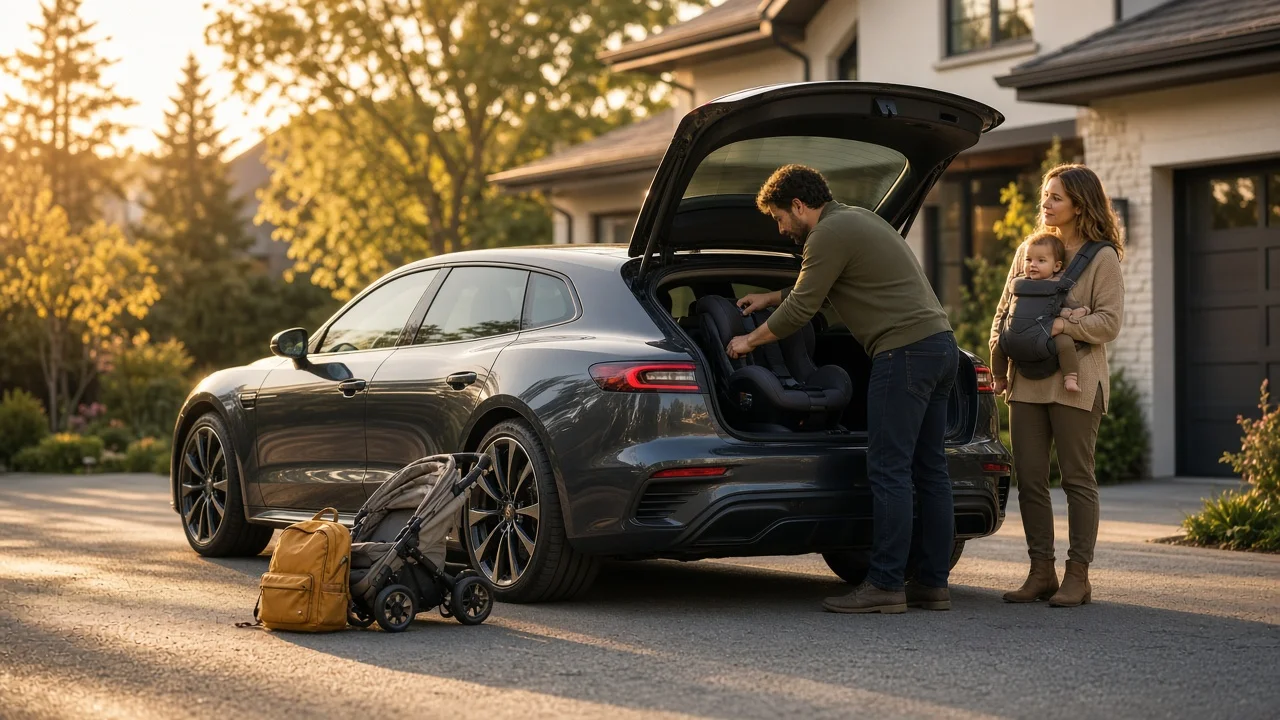
Confirm which rear seating positions have lower anchors and top tether points (the LATCH system used in the US), and how many child seats can be anchored at once. Install your actual child seats during the test drive rather than relying on brochure descriptions. Sculpted sport rear seats can stop a seat base from sitting flat. Check whether a rear-facing seat leaves enough room for the front passenger once both are in place. In any car where a child might ride in front, read the owner's manual on passenger airbag behavior and child seat placement for that exact model year. Check whether older children can buckle themselves in and whether booster seats fit beside each other.
Access and practicality
Door count: two-door cars require tipping the front seat forward, which is harder with a child seat or a sleeping child. Rear door opening size and roofline height, which affect how easily you can lift a child in. Trunk or cargo opening shape, not just total volume. Test whether your stroller fits, folded, in one motion. Whether the rear seats fold for longer items. Low ride height affects loading children, and it can mean scraping on steep driveways or speed bumps.
Safety ratings
Look up crash-test results from the IIHS and NHTSA for the specific model year and body style you are considering. Low-volume sports cars are sometimes not tested at all, so a missing rating means no data rather than a good or bad result. Ratings can differ between a coupe and a sedan sharing a name, and can change when a model is redesigned. Also check which driver-assistance features are standard and which belong to optional packages on the trim you are buying.
Ride, tires and everyday comfort
Performance versions often use stiffer suspension and low-profile tires, which can make long trips less comfortable for passengers and more likely to cause motion sickness in some children. Some cars offer adaptive dampers, meaning suspension that can switch between firmer and softer settings. If a car has them, test both modes on rough roads. Many performance cars come on summer tires, which are designed for warm, dry and wet roads but not for snow or near-freezing temperatures. If you live where winters are cold, budget for a second set of tires or all-season tires.
Running costs
Insurance: performance trims frequently cost more to insure than standard versions of the same car, so get quotes on the exact trim before committing. Tires: wide, soft performance tires tend to wear faster and cost more to replace. Fuel: check whether the engine requires or only recommends premium fuel. Brakes and maintenance: larger performance brakes and specialized parts can raise service costs; ask a dealer or independent shop for typical service pricing on that model. Resale and depreciation vary widely by model; check current listings for comparable used examples.
How to test drive with your family in mind
Bring your child seats, stroller and at least one child if possible. Time how long it takes to install each child seat and to load and unload a child. Ride in the back yourself on a rough road section to judge comfort and noise. Drive with the full family load to see how the car feels with real weight aboard. Check visibility over the shoulder with child seats installed, since tall seats can block rear windows in cars with small glass areas.
Why the exact version matters
Performance models often share a name with ordinary versions while differing in seats, suspension, tires, wheels and sometimes rear-seat layout. Some sport seats change rear legroom, some trims drop a middle rear seat, and some body styles are sold only in certain years or markets. Confirm every space, seating and safety detail for the specific model year, trim and powertrain you plan to buy, using the manufacturer's specifications and the owner's manual. Do not rely on a different version of the same model.
What this guide does not cover
This guide offers no specific model recommendations, prices, measurements or crash-test scores, because no verified data for particular vehicles was available. Use the checks above to compare shortlisted cars, and confirm figures directly with manufacturers, rating agencies, insurers and dealers before you buy.