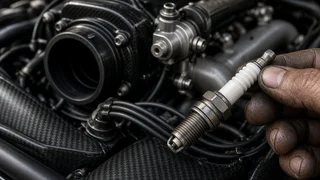
F1 Car Spark Plugs

A Formula 1 spark plug looks like a familiar component, but it operates in an environment no road engine ever sees. The question usually comes from viewers noticing how quickly a modern F1 power unit fires and how small each combustion chamber is. Those observations reflect real engineering differences: extremely high cylinder pressures, rev ranges that climb toward regulated limits, and tightly packaged engine bays. Understanding the role of the plug means looking past the basic electrical arc and seeing it as part of the ignition system, the fuel mapping, and the thermal control of a racing engine. That context shapes why a Formula 1 plug is not simply a hotter or smaller version of a consumer part.
Essential answer
An F1 car spark plug is a purpose-built racing ignition component designed to fire consistently under combustion pressures, temperatures, and engine speeds far beyond normal passenger vehicle conditions. It has to initiate combustion many times per second while surviving aggressive boost, lean or rich mixture shifts, and intense cylinder heat. Although it performs the same basic job as any spark plug, its materials, electrode layout, and thermal behavior are matched to a restricted-displacement turbocharged hybrid power unit rather than to a street engine.
The essential distinction is reliability under load. In a Formula 1 engine, a misfire is not just a drivability issue; it can destabilize the turbine, waste energy recovery, and create damaging knock or heat soak. The plug must therefore resist fouling when the engine is idling in the pit lane, yet also avoid becoming a hot spot during sustained full-throttle running. Engineers treat it as a sensor-shaped thermal bridge, pulling heat from the ceramic nose into the cylinder head while still keeping the electrode hot enough to stay clean. Any discussion of an F1 plug has to account for that balance rather than focusing on gap size or reach alone.