Exporting a Car from Canada: What the Process Involves and What Changes the Answer
The short answer
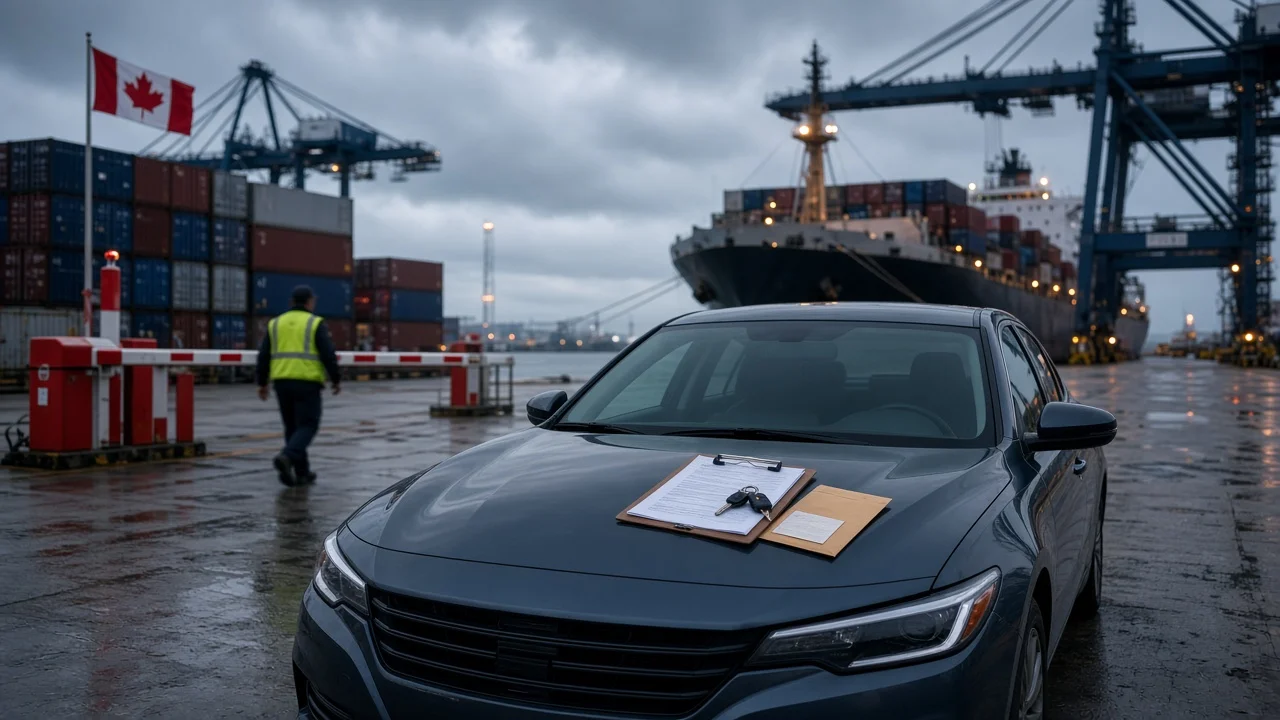
Exporting a car from Canada means legally removing a vehicle from the Canadian market and moving it to another country, whether you drive it across the border or ship it overseas. The Canadian side mainly concerns proof of ownership, freedom from liens, reporting the export to the Canada Border Services Agency (CBSA) where required, and closing out the provincial registration. The other half is the destination country's import approval. That half is often the more demanding one, and it decides whether the car can actually be registered and driven after it arrives.
Leaving Canada and being accepted elsewhere are two separate approvals. A vehicle can be cleared to leave Canada and still be refused, heavily taxed or left unregistrable at its destination, so plan both sides before you commit to shipping.
What the Canadian side usually involves
• Proof of ownership: the provincial registration or ownership document in the exporter's name, plus a bill of sale if the car was recently bought. • Lien clearance: any registered security interest, such as an unpaid car loan or lease, must be discharged, or the lender must consent in writing before the car leaves the country. • Export reporting: depending on the vehicle's value, its destination and whether it falls under controlled or sanctioned goods rules, an export declaration may be required. Declarations are typically filed through CBSA's Canadian Export Reporting System (CERS). • Presentation for inspection: CBSA can examine vehicles and documents at the border or port. Because stolen-vehicle exports are a recognized enforcement priority in Canada, expect the vehicle identification number (VIN) and paperwork to be checked. • Provincial deregistration: plates and registration are handled under the rules of the province where the car is registered, which differ from province to province.
Qualifications that change the answer
Destination is the biggest variable. For a car going to the United States, the Canadian export side is usually simpler than for overseas shipments. On the US side, the importer must show that the vehicle meets American safety and emissions requirements, including declarations to the Department of Transportation and the Environmental Protection Agency at entry. Many Canadian-market vehicles are built to closely matching standards, but compliance is confirmed per model and model year, often with a letter from the manufacturer. Similarity alone is not proof.
For overseas destinations, each country sets its own rules on vehicle age, emissions, safety equipment, customs duties and registration fees. Readers moving a car to Russia or Belarus face a further constraint: Canada maintains sanctions against both countries that restrict exports of many goods. Whether a particular vehicle is covered depends on the current regulations and the vehicle itself, so check this before any purchase or shipping arrangement is made.
Who owns the car and how it entered Canada also matter. A vehicle owned outright by a private individual is the simplest case. Financed or leased cars need the lender's involvement. Commercial exporters may face additional reporting and tax considerations. A vehicle brought into Canada only temporarily by a non-resident is generally expected to leave under the terms of that temporary entry rather than through a standard export.
What this overview cannot confirm
No verified figures were available for this guide. It does not state value thresholds for export declarations, advance-notice periods, fees, duties, processing times or shipping costs, and these can change. Confirm current requirements directly with CBSA for the export, with your provincial vehicle registration authority for deregistration and lien searches, and with the customs and vehicle-registration authorities of the destination country before arranging transport.