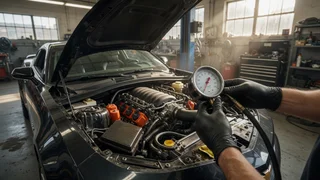
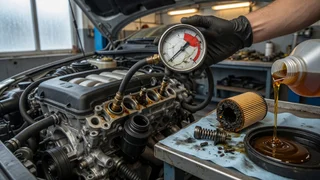
Engine oil pressure: normal values
When a driver sees an oil pressure warning or simply wants to know what the gauge should read, the question usually comes down to whether the engine is protected. Oil pressure is not one universal number; it changes with engine speed, temperature, and wear. A healthy system builds enough force to push lubricant through tight bearing clearances without starving the top end. Reading those values correctly helps distinguish normal warm-up behavior from a developing restriction, low level, or pressure loss that deserves attention before damage occurs.
Essential answer
Normal engine oil pressure varies with operating conditions, so a useful answer is a range rather than a single digit. At idle on a fully warm engine, many passenger vehicles show pressure low enough to keep the warning light off while still maintaining flow, often measuring in the lower portion of the gauge scale. As engine speed rises, pressure should climb steadily because the fixed-displacement pump turns faster and moves more oil against internal restrictions such as bearing clearances and filter media.
Cold starts produce the highest readings because thick oil resists flow and the pressure relief valve may open to cap the maximum. Once the lubricant reaches operating temperature and thins out, the gauge settles to its warm baseline. The key interpretation is not memorizing one value but watching for a consistent relationship: pressure rises with rpm, drops slightly as the engine warms, and remains stable under steady load. Sudden drops, flickering warnings, or pressure that no longer rises with rpm are signs the system is losing its ability to protect the rotating assembly.