Camaro Oil Pressure: What Normal Looks Like and When to Worry
The short answer
There is no single correct oil pressure figure for every Chevrolet Camaro. The acceptable range depends on the generation, model year and engine, because four-cylinder, V6 and V8 Camaros have used different engines, oil pumps and gauge designs over the car's production history. The reliable reference for a specific car is the owner's manual or the factory service information for that exact year and powertrain. No manufacturer specifications were supplied for this guide, so it does not list numeric pressure values. Treat any single number you see quoted for 'the Camaro' with caution unless it names the year and engine.
In any Camaro, a low oil pressure warning light or message while the engine is running is a reason to pull over safely and shut the engine off. Oil pressure is what pushes lubricating oil between moving engine parts such as crankshaft and camshaft bearings. Running without adequate pressure can damage those parts quickly.
Why readings change during normal driving
As a general principle for engines with a pump driven by the engine, oil pressure is not meant to stay fixed. These general patterns are not Camaro-specific test findings.
Engine speed: pressure generally rises as rpm increases and is lowest at a warm idle. Oil temperature: cold oil is thicker and usually produces higher readings right after a cold start. Pressure normally settles lower once the engine reaches operating temperature. Oil viscosity: oil thinner or thicker than the grade specified for the engine can shift readings and may affect protection. Oil level: a low crankcase level can cause pressure to drop or flicker, especially during hard cornering, braking or acceleration.
A low reading at a hot idle that recovers when engine speed rises can be normal for some engines. Whether it is acceptable for your car depends on the minimum figures in that engine's service specifications.
Gauge versus warning light
Depending on year and trim, a Camaro may show oil pressure as an analog gauge, a digital readout in the driver information display, a warning lamp, or a combination of these. Factory gauges are driven by an electronic sender or sensor, and they are not necessarily precise instruments. Some are designed mainly to show whether pressure is present and roughly stable. If the dash reading looks wrong but the engine sounds and runs normally, the sensor, its wiring or the gauge itself may be at fault. That cannot be assumed without testing, however.
What to do about a low or erratic reading
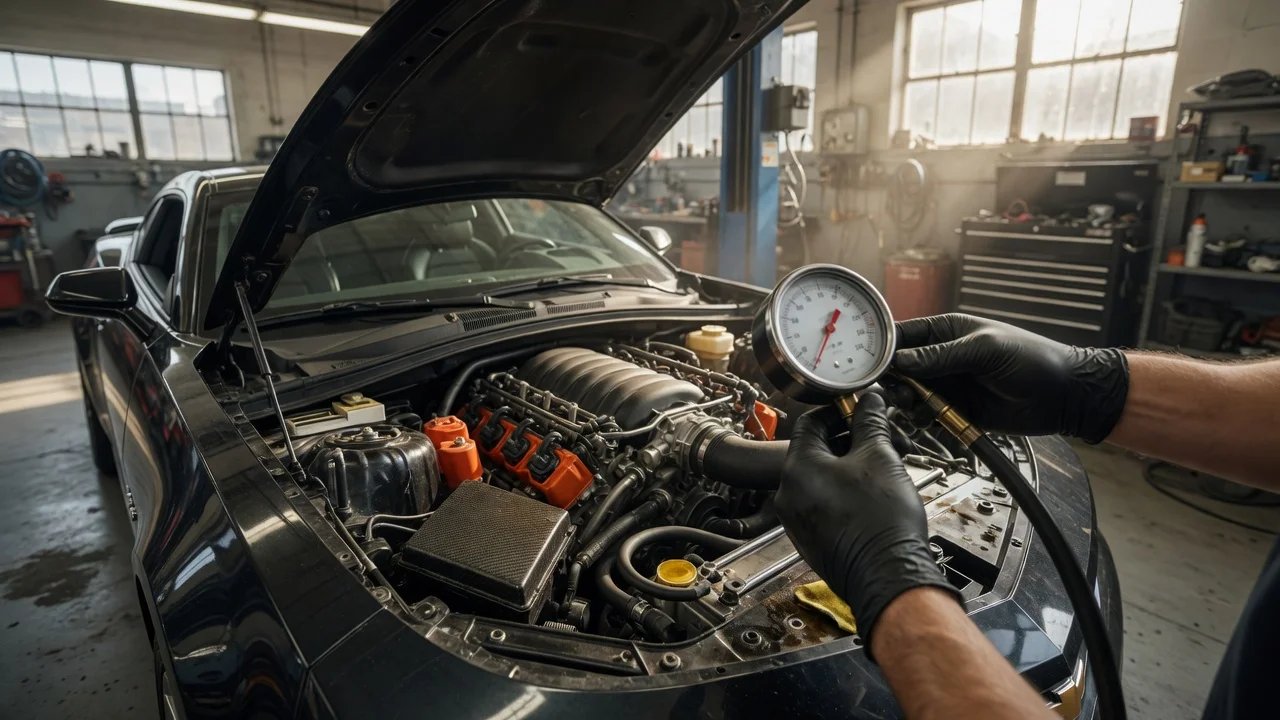
Stop the engine promptly if a low-pressure warning appears while driving, or if you hear new knocking or ticking. Check the oil level on level ground with the engine off, and confirm the oil grade matches the owner's manual. Do not keep driving to see if the warning clears; restarting and driving with genuinely low pressure risks bearing damage. Have pressure verified with a mechanical test gauge installed at the engine. This separates a faulty sensor or gauge from a real lubrication problem. If actual pressure is low, a technician will typically look at oil level and condition, the oil filter, the pump pickup, the pump itself and internal wear such as worn bearings.
Information gaps
This guide does not include factory minimum or typical oil pressure values for any Camaro generation or engine. It also does not cover documented sensor failure patterns or recalls related to oil pressure, because no source data covering these points was provided. To judge whether a specific reading is acceptable, compare it against the published specification for your car's model year and engine code, measured at the stated engine speed and temperature.