Edge CTS3 Transmission Relearn: Support and Procedure
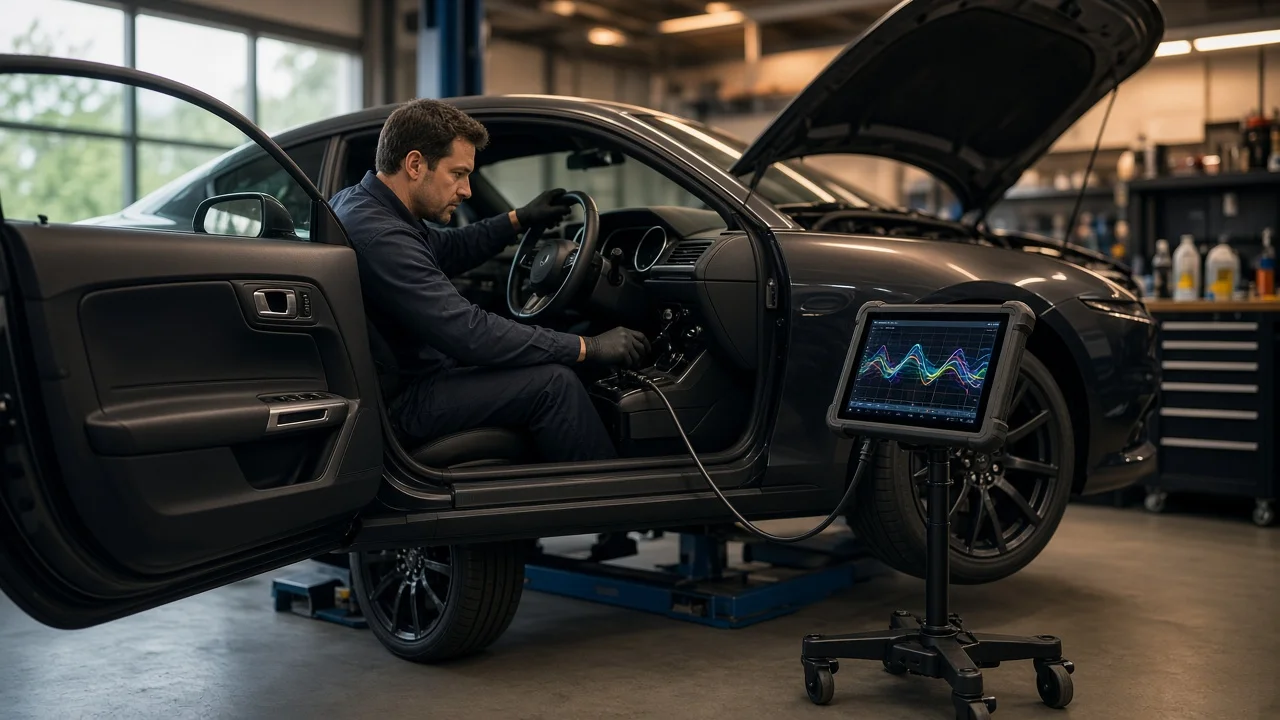
If you own an Edge CTS3 and your truck shifts oddly after a tune, a transmission service or a part replacement, you may wonder whether the handheld can run a transmission relearn. The short answer depends on the device version, its software, and the exact vehicle and transmission it is connected to. This guide explains what a relearn does, what affects whether the CTS3 can trigger one, and how to proceed when it cannot.
Can the Edge CTS3 Perform a Transmission Relearn?
The CTS3 is primarily a monitor and, depending on the version, a programmer for supported diesel and gas trucks. It can read and clear diagnostic codes, display live data and, on programmer versions, load or remove tunes. Do not assume it has a dedicated transmission adaptive reset or relearn command for every application. Whether such a function appears depends on the vehicle profile and the software installed on the unit. Check the device's menus while it is connected to your vehicle and has current updates installed. If no transmission-specific reset or learn option appears, treat the function as unsupported for that truck rather than improvising with code clearing.
Flashing a tune or returning to stock with a programmer can, on some platforms, clear stored adaptive values as part of the process. That is not the same as a guided relearn, and it does not guarantee the transmission will relearn correctly without the proper driving procedure.
What a Transmission Relearn Actually Does
Modern automatic transmissions are controlled by a module that adjusts clutch fill pressure and shift timing to account for wear, fluid condition and driving style. These stored corrections, often called adaptive values or adapts, keep shifts consistent as components age. A relearn takes one of two forms. Either the values are reset to a baseline and the module rebuilds them during driving, or a scan tool commands the module through a guided routine that learns clutch volumes under controlled conditions.
A reset alone erases the learned history. The module then needs a series of shifts under specific conditions to rebuild accurate values, typically with warm fluid, light to moderate throttle, and repeated upshifts and downshifts through each gear. Until that happens, shifts can feel firm, soft or slightly delayed. That is expected during adaptation and is not by itself a sign of a new fault.
Factors That Change the Answer
The transmission type matters most, because different transmission families use different learning strategies. Some learn passively during normal driving after a reset, while others need a procedure commanded by a scan tool. For example, the Ram 68RFE is commonly associated with a quick learn routine performed with a capable scan tool. Many GM units use adaptive pressure learning that can be reset and then relearned through driving. Ford trucks often rely on resetting adaptive tables followed by a drive cycle. Exact steps vary by model year and calibration.
Fitment between the CTS3 and the vehicle also matters, because the device only offers functions coded for the year, engine and transmission it recognizes. A truck with a swapped transmission, a replacement module or an aftermarket transmission controller may not respond the same way. Service history counts as well. The repair procedure often requires a relearn after a valve body, solenoid or module replacement, while a relearn after a simple fluid change may be optional or unnecessary.
The fluid specification can quietly undermine any relearn. If the wrong fluid is in the transmission or the level is incorrect, the module learns around the problem and the shifts may never settle. Before relearning, confirm the correct fluid and check the level using the method specified for that transmission.
What You Can Do as an Owner
Start by identifying exactly what you have: the CTS3 version, its software state, and the truck's model year, engine and transmission. Connect the device with the ignition in the state its instructions call for. Look through its diagnostic and special function menus for any transmission reset or learn entry. Read and record any stored diagnostic codes before clearing anything, because those codes are evidence a technician will want to see.
If a supported reset exists, follow the on-screen prompts exactly, including any conditions for fluid temperature, gear selector position and engine state. Afterward, warm the transmission and drive with gentle, steady throttle through all gears. Repeat normal upshifts and coasting downshifts over several trips. Avoid hard launches and towing at first so the module learns from consistent inputs.
If your vehicle exposes transmission temperature and current gear, watch them on the CTS3 live data screen while driving. Note whether harsh shifts, flare or slipping improve over several drives, stay the same or get worse. Shift behavior that improves gradually suggests normal adaptation. A shift that worsens or sets new codes points to a mechanical, hydraulic or electrical problem, and a relearn cannot correct that.
Limitations and When to Get Help
A relearn is a calibration step, not a repair. Harsh engagement, slipping or a transmission warning can come from low fluid, a failing solenoid, a wiring fault, a worn clutch pack or a torque converter issue. A code or symptom alone does not confirm which part has failed. Clearing adaptive values can also mask a developing problem for a while, which makes later diagnosis harder.
If the CTS3 offers no transmission relearn for your truck, the usual next step is a professional-grade scan tool or dealer equipment. This is especially true where the manufacturer requires a commanded procedure after module or valve body work. Bring your recorded codes, a description of when the problem occurs and your service history. Repair options can range from a guided relearn and a fluid correction to component testing, and the choice should follow a confirmed diagnosis.