E4OD Transmission Cooler Line Routing Diagram
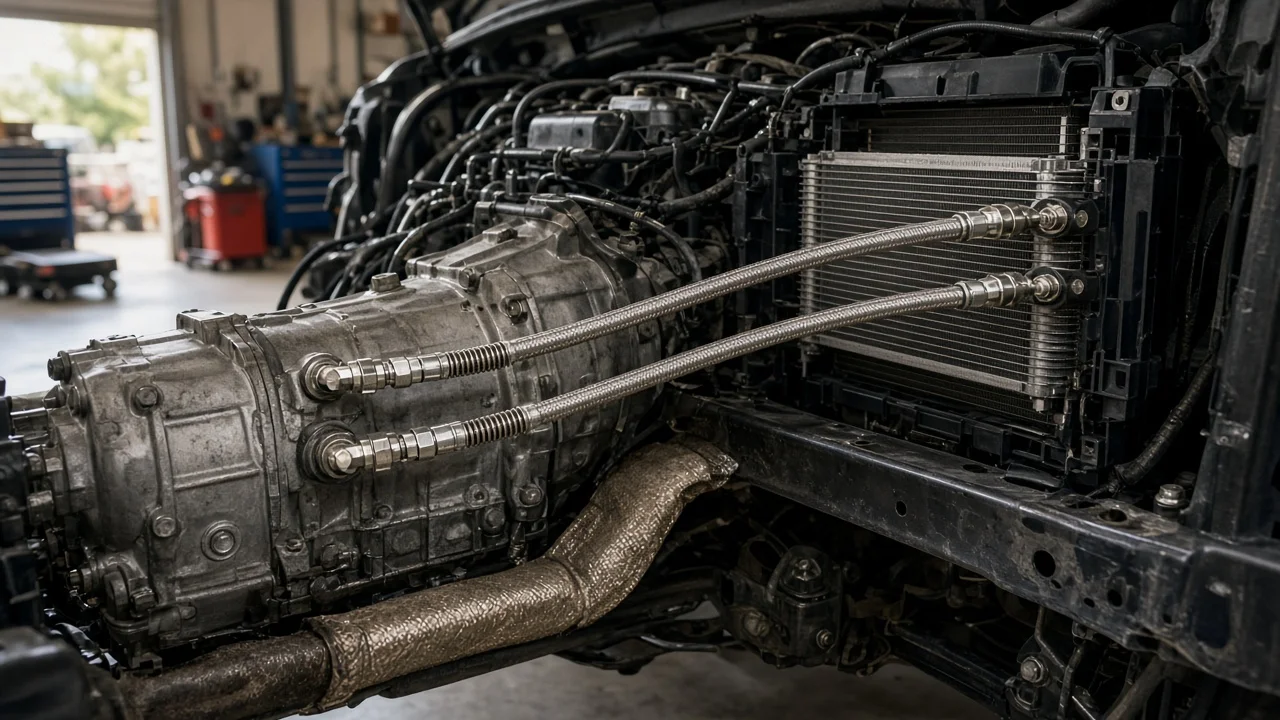
Owners looking for an E4OD cooler line diagram usually need to reconnect lines after radiator work, a transmission swap or a leak repair, and want to know which line goes where. The E4OD is Ford's electronically controlled four-speed overdrive automatic, used in full-size trucks, Broncos and vans from the late 1980s through the late 1990s. The basic circuit is simple, but the exact routing depends on engine, drivetrain, cooler package and model year. Treat any generic diagram as a guide, not a final answer.
The short answer on E4OD cooler line routing
The cooler circuit is a single loop. Two steel lines leave fittings on the right (passenger) side of the transmission case. They run forward along the frame and engine area and connect to the cooler tank built into the radiator, usually through quick-connect fittings. Fluid leaves the transmission through the outlet, or "to cooler," line, passes through the radiator's internal cooler, and comes back through the return line. Trucks with a factory towing package or an aftermarket cooler usually have an auxiliary air-to-oil cooler in front of the radiator. It is typically plumbed in series, most often on the return side after the radiator tank, so the fluid is cooled twice before it reenters the case.
The question that matters most is which fitting is the outlet and which is the return, and position alone is not a safe guide. Rebuilt units, replacement lines and adapter fittings can differ from the original arrangement, and published drawings don't always match a given truck. Before you finalize the hookup, confirm the direction of flow on the vehicle as described below, or check the factory service manual for your exact model year.
How fluid moves through the cooler circuit
The torque converter generates most of the heat in an automatic transmission, especially under load, while towing and in stop-and-go driving. Hot fluid is sent out through the cooler outlet. In the radiator tank, it gives up heat to the surrounding engine coolant. In an auxiliary cooler, air passing through the fins carries heat away. The radiator cooler also helps warm the fluid in cold weather, because engine coolant reaches operating temperature faster than transmission fluid does.
In many automatic transmissions, including Ford designs of this era, the returning fluid also feeds the lubrication circuit for gears, bushings and bearings. That makes a reversed, kinked or blocked line more than a cooling problem: restricted flow can reduce lubrication as well as raise temperature. The E4OD's powertrain computer also reads a transmission fluid temperature sensor and can change shift behavior and converter clutch operation when the fluid runs hot. As a result, an overheating problem may first show up as a change in how the truck shifts.
What changes the routing on your truck
Engine choice is the biggest factor. Gasoline and diesel versions place the radiator, fan shroud and accessories differently, so line lengths, bends and clip points are not interchangeable even when both ends look alike. Two-wheel-drive and four-wheel-drive trucks may route the lines differently around the transfer case and front axle. E-series vans follow a different path again because of how the engine is packaged under the cover between the front seats.
Cooler equipment also changes the answer. Trucks with a factory tow package typically have an auxiliary cooler and extra line sections, while trucks without one run straight to the radiator. Previous owners may have added an aftermarket cooler, bypassed the radiator tank, replaced steel sections with rubber hose, or fitted a radiator with fittings in a different location. Some setups include an in-line bypass valve or filter. The transmission type matters too: the E4OD was eventually replaced by the 4R100, which differs in places. Confirm the exact unit from its identification tag or the truck's build information before buying lines, so fitment matches your vehicle.
Practical steps for reconnecting or checking the lines
Record what is there before removing anything. Photograph both ends, note how each line is clipped to the frame, and label the lines with tape. Check the service history for radiator replacement, transmission rebuilds or added coolers, since any of these can explain routing that doesn't match a diagram. Inspect each line for rubbed-through spots, crushed sections, corroded steel, cracked hose and loose clamps. Look for wetness at the case fittings and at the radiator quick-connects.
To confirm flow direction, a common shop method is to disconnect one line at the radiator and place the line end coming from the transmission into a clean container. Start the engine in Park for only a few seconds. If that line pushes fluid, it is the outlet; if it doesn't, repeat the test with the other line. Shut the engine off promptly, reconnect, and top up with fluid that meets the specification on the dipstick or in the owner's manual. A Mercon-family fluid is typical for this transmission, but follow your vehicle's documentation. A healthy circuit delivers a strong, steady stream. Weak flow points to a restriction somewhere in the circuit, but it does not prove which component is at fault.
When reinstalling, use the correct quick-connect fittings and retaining clips. Keep the lines away from exhaust components and moving parts, and replace any rubber section with hose rated for transmission fluid and the pressures involved. After a test drive, recheck the fluid level using the procedure in the owner's manual and look again for leaks at every connection.
Limitations and when to get help
A generic diagram cannot account for every engine, drivetrain and cooler combination, or for modifications made over decades of service. Have the truck inspected by a transmission shop before driving it hard or towing if any of these apply: • the flow test is unclear; • the fluid is dark or smells burnt; • the transmission slips; • diagnostic codes related to fluid temperature or shifting are stored; Overheating, slipping and harsh shifts can come from several causes, from a blocked cooler to internal wear. A symptom alone does not confirm a failed part.
The most reliable routing reference is the factory service manual or a parts catalog matched to your vehicle identification number, since these show the exact line sections and fittings for your build. A shop can also flow-test or flush the cooler and lines. Once a mechanic has confirmed which components actually need attention, they can advise on repair options such as replacing the radiator, adding an auxiliary cooler or installing new lines.