Dual ball trailer hitch
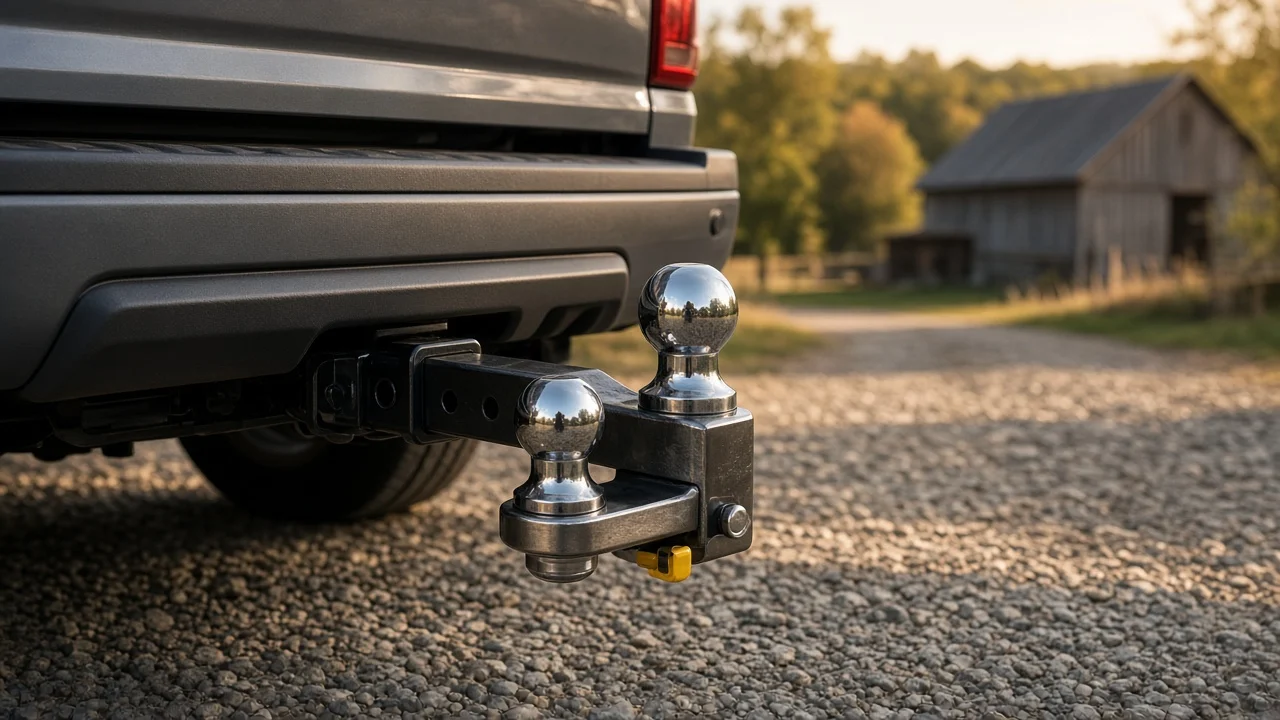
A dual ball trailer hitch solves a practical towing problem: running trailers with different coupler sizes without swapping the ball mount every time. This design pairs two hitch balls, typically 1-7/8 inches and 2 inches or 2 inches and 2-5/16 inches, on one shank or head. For shoppers comparing a dual ball trailer hitch with a double ball mount trailer hitch, the real decision comes down to the rated capacity, ball size configuration, and whether the mount fits the receiver and trailer tongue. Capacity limits matter because the lower-rated ball and the shank together determine what the assembly can safely pull, not just the largest ball.
The direct answer
A dual ball trailer hitch is worth buying when you regularly tow two trailers that use different coupler diameters. Instead of keeping separate ball mounts and changing them at the receiver, this single component keeps both ball sizes immediately available. The practical benefit is faster hookup and fewer loose parts in the truck bed or garage. However, the assembly only works well when the two ball sizes match your actual trailer couplers and the mount's drop or rise positions both trailer tongues at a level height.
The condition that changes the answer is weight. Any hitch ball has a maximum gross trailer weight and tongue weight, and a dual ball mount cannot safely exceed the rating of its lowest-capacity ball. If both trailers fall within the lower rating, the design is convenient. If one trailer is close to the mount's structural limit, a dedicated single-ball mount rated higher may be the safer choice. Shoppers should also confirm the receiver tube size, because a 2-inch shank will not fit a smaller receiver without an adapter that carries its own capacity penalty.