Driving uphill in slow-moving traffic
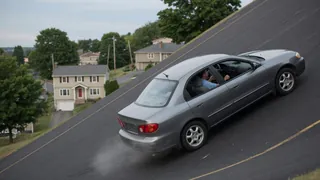
Driving uphill in slow-moving traffic changes how a vehicle behaves and how a driver should respond. Gravity constantly pulls against the car, while stop-and-go movement reduces airflow and increases demand on the clutch, torque converter, brakes, and cooling system. For many drivers, the concern is not reaching highway speed but controlling the vehicle smoothly between short advances. The challenge involves more than pressing the accelerator; it requires reading road conditions, preserving visibility, managing following distance, and understanding how the drivetrain reacts when the vehicle is nearly stopped on a grade. This guide explains the essential answer for handling that situation safely and predictably.
Essential answer
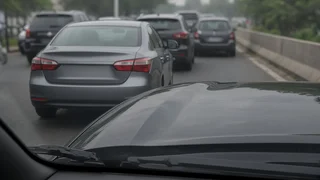
The essential answer is that driving uphill in slow-moving traffic requires deliberate throttle, brake, and clutch or gear management to avoid rollback, excessive heat, and driver fatigue. The grade itself works against forward movement, so every launch from a standstill demands slightly more torque than the same launch on flat ground. Drivers should keep a usable gap, observe road markings as lanes may narrow or bend near the crest, and avoid riding the clutch or holding the vehicle with throttle alone. Driver attention matters because the car ahead may stop abruptly, and visibility over the hood is reduced when the nose points upward.
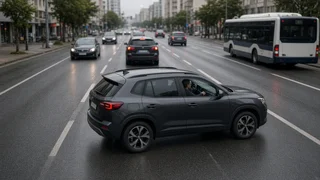
On a steep grade, right of way does not eliminate the need to coordinate with surrounding vehicles. Road markings and signage often indicate truck lanes, passing restrictions, or reduced shoulders, and these cues affect where smaller vehicles should position themselves. In crawling traffic, sudden acceleration is less useful than smooth modulation; a gentle sustained throttle reduces wheel spin and driveline shock. If the vehicle has a manual transmission, avoid slipping the clutch for long periods because that generates heat and wear. With an automatic, steady brake pressure prevents creep while preserving full control when the queue moves again.