Driven 10W-30 Break-In Oil: When It Fits and What to Check First
The short answer
A Driven break-in oil in the 10W-30 grade suits a freshly built or rebuilt engine when two things are true. First, the engine builder, camshaft manufacturer or service manual calls for a 30-weight oil, and a 10W cold rating fits your climate. Second, the specific Driven product you are looking at is labeled for break-in use rather than for ongoing service. If both hold, it is a sensible first fill. If your builder or cam supplier names a different viscosity or a specific product, follow that instruction instead.
The answer changes for a new factory vehicle. Manufacturers typically fill new engines at the factory and specify ordinary oil that meets a listed standard for the break-in period. A dedicated break-in oil is generally not needed there, and it may not carry the approvals the warranty requires.
What break-in oil is designed to do
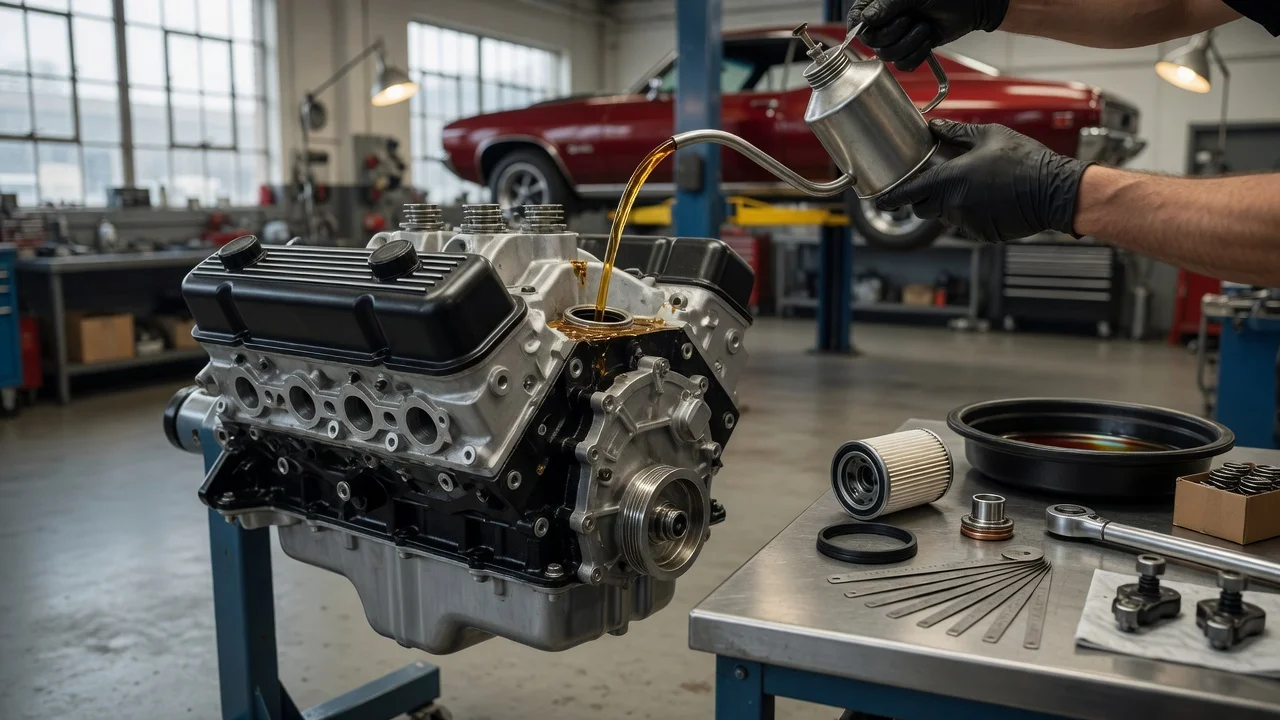
During the first hours of running, a rebuilt engine has two jobs to finish. The piston rings must wear in against the cylinder walls to form a good seal. On engines with flat-tappet camshafts, the cam lobes and lifters must also mate together without scuffing. A flat-tappet cam uses lifters that slide directly on the lobes. A roller cam uses lifters with rollers, which put much less load on the lobe surface.
Break-in oils are formulated for that window. They usually avoid friction modifiers that could slow ring seating. They typically carry a high level of ZDDP (zinc dialkyldithiophosphate), an anti-wear additive that protects heavily loaded sliding parts such as flat-tappet lobes. That additive balance helps during break-in, but it is not ideal for routine long-term use.
Reading the 10W-30 grade
The 10W part is the cold rating. The W stands for winter, and a lower number means the oil flows more easily at a cold start. The 30 is the viscosity at normal operating temperature. A 10W-30 therefore behaves like a 30-weight oil once the engine is warm, but it is somewhat thicker at a cold start than a 5W-30. For break-in on a running engine that is brought up to temperature, the hot rating usually matters most. In cold conditions, though, the cold rating still affects how quickly oil reaches the cam and bearings on startup.
What to confirm before you buy
Grade availability: confirm the current Driven break-in lineup actually offers a 10W-30 version, and do not substitute a different grade without checking with your builder. Intended use: make sure the label or data sheet describes the product as a break-in oil. Camshaft type: flat-tappet engines benefit most from a high-zinc break-in oil, while roller-cam engines are less sensitive to it. Emissions equipment: high-zinc oils are generally not intended for extended use in engines with catalytic converters, so check the label's guidance for street vehicles. Builder or cam supplier instructions: follow any required viscosity, prime and initial run procedure, and first oil change timing.
Matching your situation to a next step
Situation | Suggested next step; Rebuilt flat-tappet engine, builder specifies 30-weight | A 10W-30 break-in oil is a reasonable fit; confirm the product's intended use and grade; Rebuilt engine, builder specifies a different viscosity | Use the builder's specified grade, even if it means a different Driven break-in product; Roller-cam engine | Follow the builder's guidance; a dedicated break-in oil may be recommended but is less critical for cam protection; New factory vehicle under warranty | Follow the owner's manual oil specification rather than switching to a break-in oil; Street vehicle with a catalytic converter | Use the break-in oil only for the break-in period, then change to an oil suited to emissions equipment
How long to keep it in the engine
Break-in oil is a short-term fill. It is meant to be drained after the initial run and break-in period, and that drain also removes the wear particles a new engine sheds. The right interval depends on the engine and its intended use, so use the timing your engine builder or cam manufacturer gives. Afterward, switch to an oil that matches the engine's ongoing service needs.
Gaps in this guide
No product data sheet or label information was supplied for this article, so the following points are unverified: whether Driven currently sells a 10W-30 break-in grade, its zinc and phosphorus levels, its base oil type, container sizes, prices and any engine-specific compatibility listings. Check the current product label or technical data sheet, or ask the manufacturer or your engine builder, before relying on any of these details.