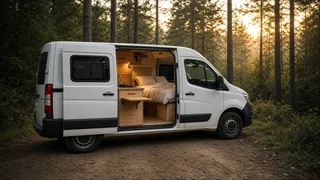
Dog-friendly camper van conversion
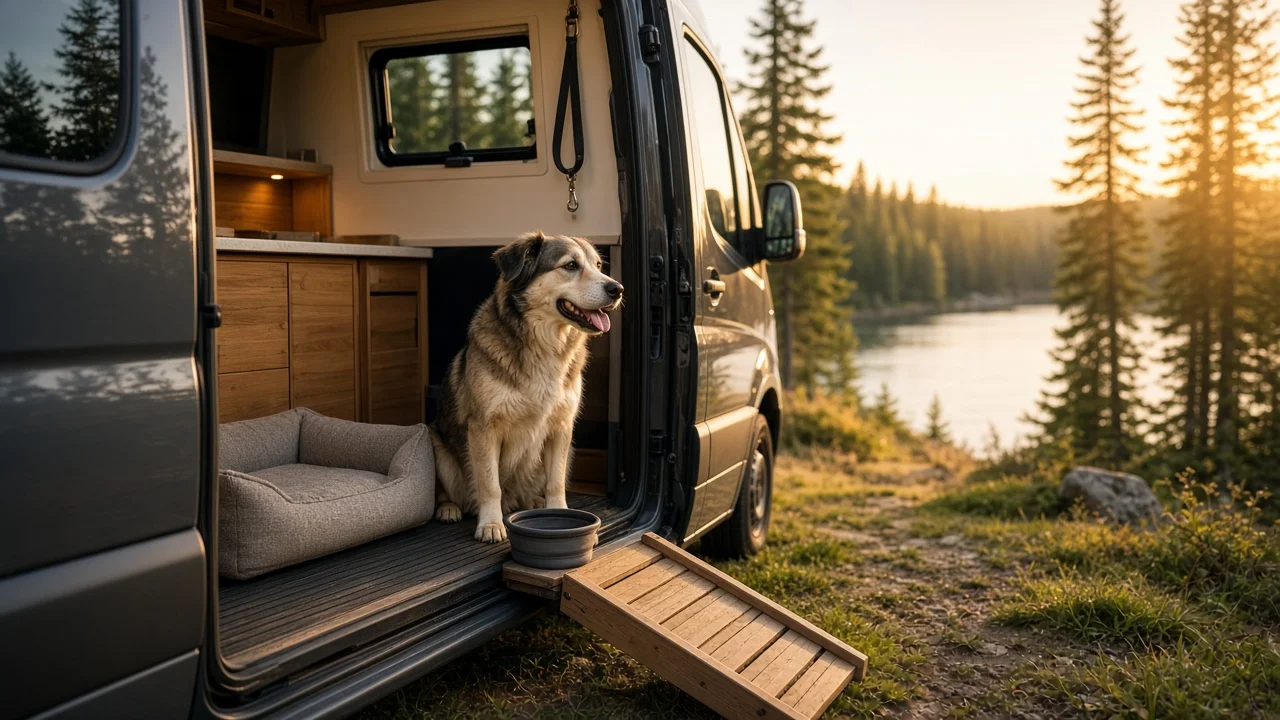
A dog camper van conversion rethinks a standard cargo or passenger van around safe, comfortable travel with a canine companion. The goal is not simply adding a pet bed; it is designing a mobile living space where restraint, ventilation, temperature control, and access work for both species. Because a dog experiences motion, heat, and confinement differently than a person, the conversion must address body configuration, seating layout, cargo access, wheelbase, powertrain options, and market specification from the start. Without these choices, even a well-built camper can become stressful or unsafe for a dog on longer trips.
Essential answer
A dog-friendly camper van conversion is a van build that prioritizes a pet’s physical security and thermal comfort inside a moving and parked vehicle. This typically means a restrained travel position with a crash-tested harness or secured crate, a low-entry sleeping area, washable surfaces, and ventilation that works without engine power. The conversion also limits direct sun exposure through window placement and insulation choices, because a parked van can heat rapidly. In practical terms, the dog’s needs shape the floor plan as much as the owner’s bed or kitchen.
The scope depends on the donor vehicle and intended use. A shorter wheelbase panel van is easier to park but leaves less room for a large dog to stand beside the bed. A longer body configuration may accept a fixed crate and still preserve a useful galley. Cargo access matters for loading a hesitant or wet dog, while seating layout determines whether the animal can be watched from the driver’s seat. Powertrain options may affect the ability to run ventilation or climate systems through a secondary electrical setup rather than idling the engine.