Does Car Insurance Cover Windshield Replacement?
The Short Answer
Car insurance can cover a cracked or broken windshield, but only when the loss falls under a coverage type included in your policy. In most cases, windshield replacement is handled through comprehensive coverage rather than collision coverage. Comprehensive coverage pays for damage caused by things other than a crash, such as falling objects, hail, vandalism, fire, or contact with an animal.
A standard liability-only policy will not pay for your windshield. Liability coverage is designed to pay for damage you cause to others, so it does not include repairs to your own vehicle. If you only carry the minimum required liability insurance, a cracked windshield will generally be an out-of-pocket expense.
How Comprehensive Coverage Applies
Comprehensive coverage, sometimes called other-than-collision coverage, is the primary insurance protection for windshield damage. A rock striking the glass, a branch falling on the car, or severe weather breaking the windshield are typical claims under this coverage. The key issue is the cause of the damage: it must be something other than a collision with another vehicle or object while driving. If the windshield was damaged in a traffic crash, collision coverage would apply instead.
Having comprehensive coverage does not automatically mean a windshield replacement will be free. Most policies apply a deductible to comprehensive claims. If the replacement cost is close to or below the deductible, filing a claim may not make financial sense. The insurance company generally pays only the amount above the deductible, up to the policy limit.
State Rules and Glass Deductibles
A few states require insurers to offer or apply special treatment for windshield claims. In some jurisdictions, a full glass endorsement or a reduced or waived deductible is available for windshield repair or replacement. Coverage details vary by state and by insurer, so the same policy language can produce different results depending on where the vehicle is registered. The specific version of the policy matters more than general insurance advice.
Because state law and insurer programs differ widely, the only reliable way to confirm whether your cracked windshield is covered is to review your policy declarations page and contact your insurer. The declarations page will show whether comprehensive coverage is present, what deductible applies, and whether a separate glass endorsement is listed.
Repair Versus Replacement
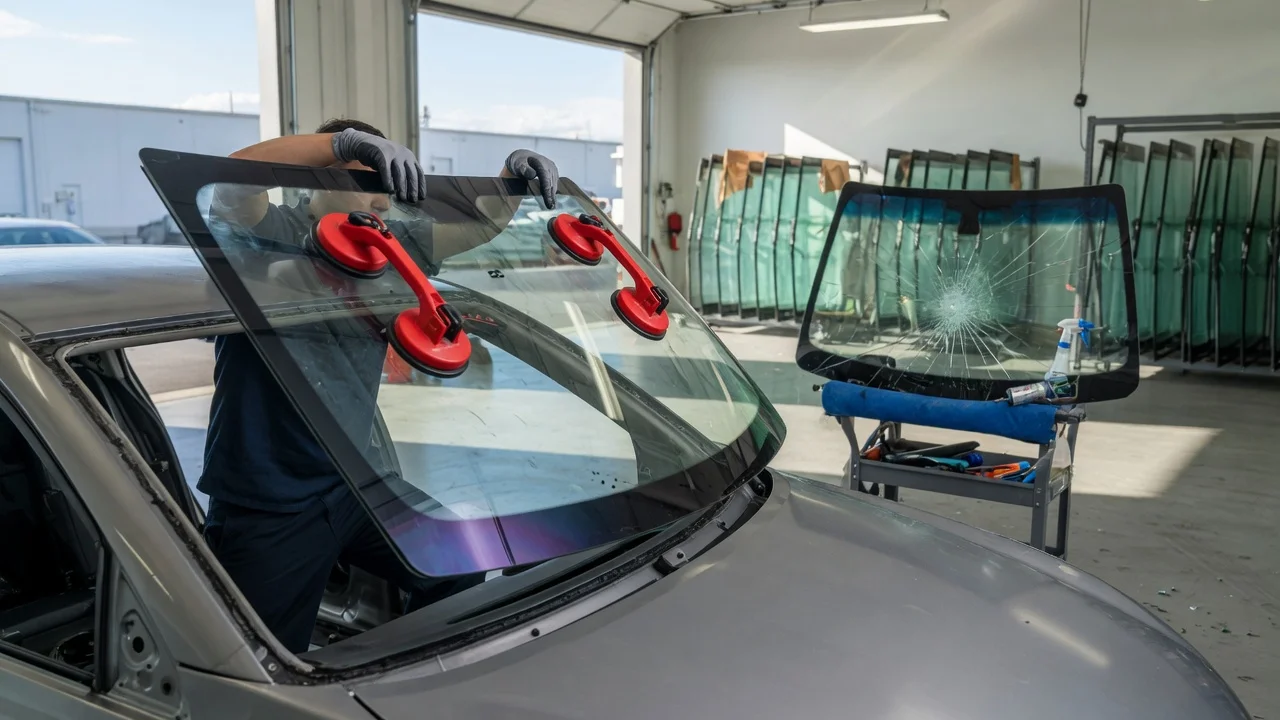
Insurers often prefer to pay for a repair when the damage is small enough to be safely fixed. Minor chips and short cracks can sometimes be repaired with resin injection, which is usually cheaper than replacing the entire windshield. Many companies waive the deductible for a repair because preventing a larger crack reduces their overall claim cost. Replacement is generally reserved for cracks that are too long, damage in the driver's line of sight, or breaks near the edge of the glass that would compromise structural strength.
The final decision depends on the size, location, and depth of the damage, along with the insurer's guidelines. A small chip at the edge of the windshield may require replacement even if a same-sized chip in the center could be repaired.
Does a Windshield Claim Raise Your Premium?
A comprehensive windshield claim has a different rating impact than an at-fault collision claim. Many insurers treat comprehensive losses less harshly because they are often outside the driver's control. However, filing any claim can still affect your premium or eligibility for certain discounts. The effect varies by insurer, state, and your claims history. There is no universal rule that a single glass claim will increase your rate, but it is also not guaranteed to leave your premium unchanged.
Before filing, compare the repair or replacement estimate with your deductible and consider the potential long-term policy impact. For a low-cost repair, paying directly may be the better financial choice. For a full replacement that costs significantly more than the deductible, using your coverage is usually more practical.
How to Check Your Coverage
• Review the declarations page for comprehensive coverage and the listed deductible. • Look for any separate glass coverage, full glass endorsement, or state-specific windshield language. • Contact your insurer or agent and ask whether windshield damage from the specific cause is covered and what out-of-pocket amount would apply. • If the damage is minor, ask whether the insurer will waive the deductible for a repair rather than a replacement. • Get a written estimate before deciding whether to submit a claim.
What This Article Does Not Cover
Specific claim outcomes, premium changes, and deductible waivers are policy- and state-dependent. This article does not supply a universal guarantee that a particular insurer will cover a cracked windshield or replace it at no cost. The information here is general and should be confirmed against your actual policy documents and the rules in your state.
Coverage checklist: 1) Confirm comprehensive coverage exists. 2) Identify the comprehensive deductible. 3) Check for a glass endorsement or state-specific windshield rule. 4) Determine whether repair is possible or replacement is required. 5) Compare the estimate against the deductible and potential premium impact.