Does Insurance Cover a Cracked Windshield Repair?
The short answer
A cracked windshield is often covered, but only if the policy includes glass or comprehensive physical-damage coverage. A liability-only policy generally pays nothing toward repair or replacement of the driver’s own glass. Collision coverage can apply when the crack is part of a crash. The deductible, any glass endorsement, the insurer’s repair-versus-replace rules, and state insurance requirements can change what the driver actually pays.
The rest of this guide explains which coverage typically responds, how repair differs from replacement, when a deductible applies, and what to check before filing a claim. Exact terms sit in the declarations page and glass endorsement, not in a general rule that fits every policy.
Which coverage usually pays
Auto insurance is sold in layers. Only some of those layers pay to fix the policyholder’s windshield.
Coverage What it typically does for a cracked windshield; Comprehensive (other-than-collision) Pays for glass damage from road debris, gravel, hail, falling objects, vandalism, and similar non-crash events, subject to the comprehensive or glass deductible. Collision Pays when the windshield cracks as part of a collision with another vehicle or object, subject to the collision deductible. Liability only Pays damage the driver causes to other people and their property. It does not pay to repair the driver’s own windshield. Full glass or zero-deductible glass endorsement Waives or reduces the deductible for windshield repair or replacement when that endorsement is on the policy. Uninsured or underinsured motorist property damage May apply in some markets if another at-fault driver has no usable coverage; this is not universal and depends on the policy and state.
Most “rock chip” and weather cracks are comprehensive claims. A windshield that shatters in a parking-lot impact or a multi-vehicle crash is more often a collision claim. If both coverages could apply, the insurer assigns the claim to the coverage that matches how the damage occurred.
Repair versus replacement
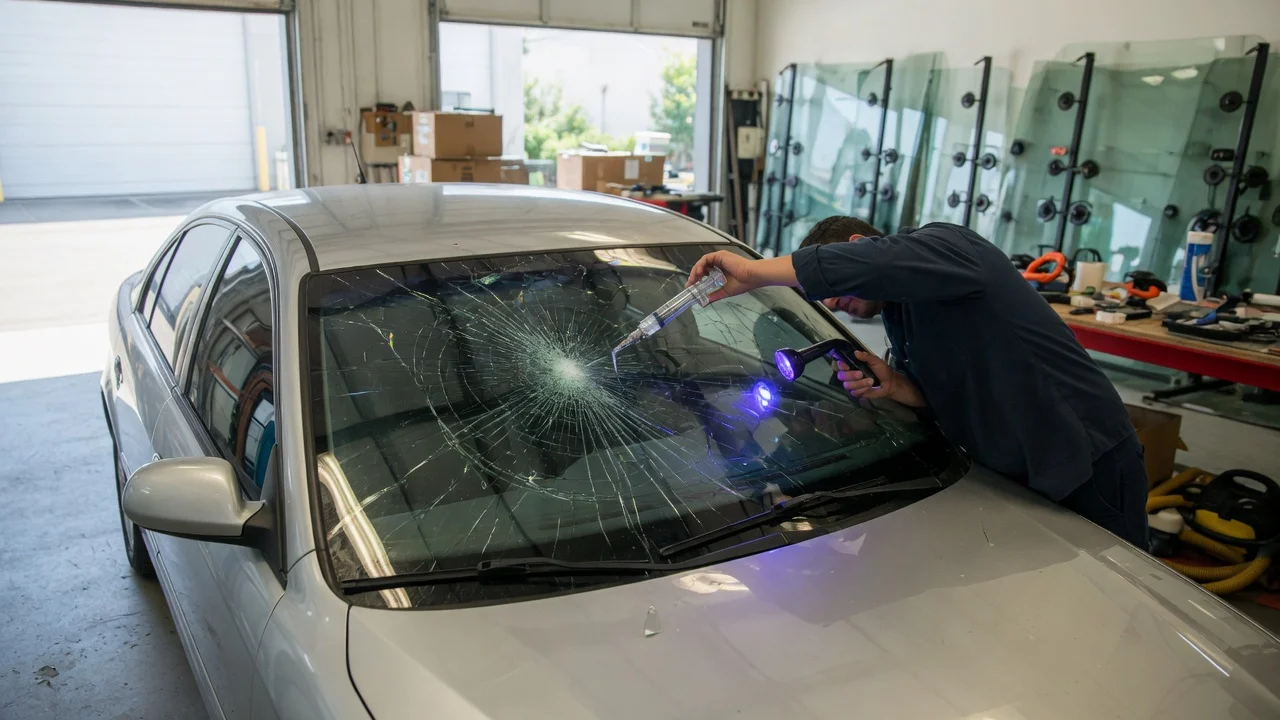
Insurers and glass shops treat a small chip or short crack differently from a windshield that has lost structural integrity or sits in the driver’s forward view. Repair injects resin into a chip or short crack, restores much of the local strength, and is usually faster and cheaper. Replacement removes the entire glass unit, including the original adhesive bond, and installs a new windshield.
Typical shop and insurer screening questions include the size of the damage, whether it sits in the driver’s primary line of sight, whether it reaches the edge of the glass, how many impact points exist, and whether the inner laminate is delaminating. A small bull’s-eye or star break outside the wiper sweep is often a candidate for resin repair. A long crack, damage at the glass edge, damage in the camera or sensor area, or a crack that already runs through the driver’s view more often leads to replacement. Those are working guidelines used in the trade; a given insurer or state inspection rule can be stricter.
Modern windshields are part of the vehicle’s structure and often hold the rain sensor, interior camera, and forward-collision or lane-keeping hardware. After replacement, vehicles with those systems commonly need camera or sensor aiming, sometimes called calibration. Whether the insurer pays for calibration as part of a covered replacement depends on the policy and the estimate; it is a point to confirm in writing before the shop starts work.
Deductibles and what the driver actually pays
If comprehensive coverage applies, the comprehensive deductible is the usual out-of-pocket amount for replacement, unless a glass waiver is on the policy. Collision claims use the collision deductible. Some insurers waive the deductible for resin repair because repair costs less than a new windshield. Others apply the same deductible to repair and replacement. A high comprehensive deductible can make a simple repair cheaper to pay in cash than to claim.
Confirm whether the policy has comprehensive coverage at all. Read the declarations page for the comprehensive deductible and any separate glass deductible. Ask whether a glass endorsement waives the deductible for repair, replacement, or both. Ask whether the insurer requires a preferred glass network and whether using an independent shop changes the payout. Get a written estimate that separates glass, moldings, adhesive, and any camera or sensor calibration.
State law can override a deductible for windshield work in some markets. Those rules change by jurisdiction and by whether the job is a repair or a full replacement. A local agent or the policy’s glass section is the reliable source for the rule that applies to a given vehicle and registration state. No single nationwide deductible figure is accurate.
Will a windshield claim raise the premium?
A comprehensive glass claim is often treated differently from an at-fault collision claim, but insurers still use their own rating rules. Some companies do not surcharge a single comprehensive glass claim. Others count it in the claims history used at renewal. Filing several glass claims in a short period is more likely to affect the rate or the willingness to keep the policy. Because rating is company-specific, the only firm answer comes from the insurer or agent before the claim is opened.
If another driver caused the crack, the claim may be presented against that driver’s property-damage liability instead of the policyholder’s comprehensive coverage. That path depends on identifying the other party, proving fault, and the other policy’s limits. It is a different process from a first-party glass claim and can take longer.
Safety and why delay matters
A windshield helps the passenger cabin keep its shape in a crash and gives the passenger-side airbag a surface to work against in many designs. A growing crack can reduce that contribution and can distort the view through the glass. Temperature swings, car washes, and road vibration tend to lengthen a crack once it has started. Driving with a long crack in the forward view, or with glass that is separating from the frame, is a reason to stop using the vehicle until it is repaired or replaced. Local inspection and equipment rules can also fail a vehicle for cracked glass in the driver’s view.
What to do next
Photograph the damage, including a scale reference such as a coin, and note the date and how it happened. Check the policy declarations for comprehensive coverage, the deductible, and any glass endorsement. Call the insurer’s glass line or the agent and ask three questions: whether the damage is covered, whether the deductible is waived for repair, and whether the shop must be in a preferred network. If the estimate is below the deductible and no waiver applies, paying the shop directly is often the simpler path. If coverage applies, follow the insurer’s inspection or photo-claim steps before the glass is changed so the claim is not delayed.
Keep the estimate, the calibration invoice if one is issued, and the claim number. After replacement, confirm that rain sensors, cameras, and driver-assistance warnings behave as they did before the job. A warning lamp that appears after glass work is a reason to return to the installing shop rather than to assume the new windshield is the finished repair.
What this guide cannot settle from a single policy
Coverage is contract- and state-specific. This article cannot name a universal deductible, a universal crack-length cutoff, or a complete list of states that require no-deductible windshield replacement. It also cannot say how any one insurer will treat a glass claim at renewal. Those answers require the declarations page, the glass endorsement, and the insurer’s current claim handling. Where a fact is missing from those documents, treat it as unresolved until the insurer or a licensed agent confirms it in writing.