Does Car Insurance Cover Repairs? Accidents, Damage and Breakdowns
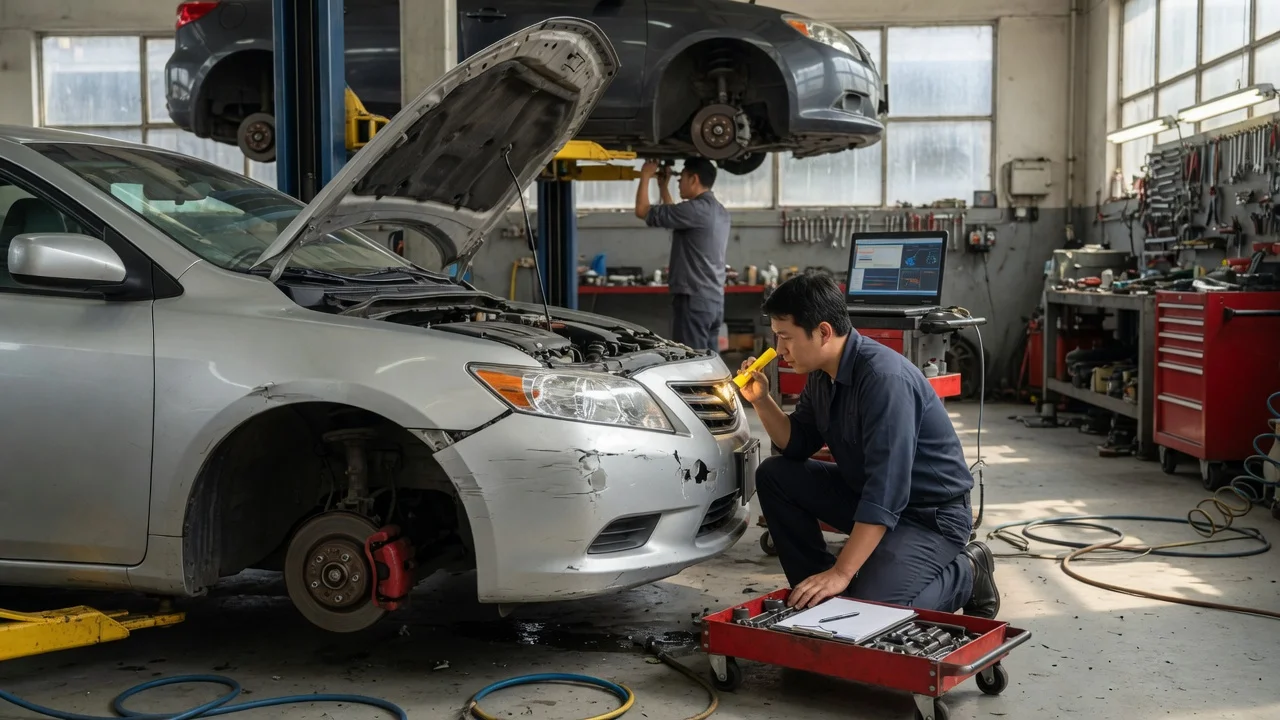
The short answer
Car insurance can cover repairs, but only when the damage comes from an event the policy insures. Collision and comprehensive cover typically pay to restore the insured vehicle after a crash, theft, vandalism, weather loss or similar sudden event. Liability cover typically pays for damage the policyholder causes to someone else’s vehicle, not for the policyholder’s own car. Standard auto insurance does not pay for mechanical breakdowns, wear, neglected maintenance or ordinary servicing.
The practical answer therefore depends on three qualifications: what caused the damage, which coverages are on the policy, and how much of the bill the deductible, exclusions and settlement rules leave unpaid. Policy names, compulsory minimums and fault rules vary by market and by insurer, so the declarations page and policy wording control the result in any given claim.
Repairs after an accident
If the insured vehicle is damaged in a collision with another vehicle, a stationary object, a rollover or a similar impact, collision cover is the part of the policy that usually pays to repair it. That cover is optional in many markets. Without it, the owner generally pays for their own vehicle unless another driver’s liability cover applies.
When another at-fault driver is identified, that driver’s liability cover may pay for the repairs instead. If fault is disputed, shared, or the other driver is uninsured or underinsured, the claim path can shift to the owner’s collision cover, uninsured or underinsured motorist property-damage cover where that option exists, or to the owner’s own funds. Liability cover on the owner’s policy does not, by itself, repair the owner’s car after a crash the owner caused.
Insurers commonly inspect the vehicle, approve a repair plan, and settle on the basis of actual cash value. If repair cost plus any remaining salvage value exceeds the vehicle’s pre-loss value, the claim may be paid as a total loss rather than as a repair. That valuation, and whether a total-loss threshold is a fixed percentage, is policy- and market-specific and is not uniform.
Damage that is not from a crash
Comprehensive cover, sometimes described as other-than-collision cover, is the usual path for sudden physical damage that is not an accident with another vehicle or object. Typical insured events include theft and attempted theft, vandalism, fire, hail, flood, falling objects, and animal strikes. Glass breakage may fall under comprehensive, a glass endorsement, or collision, depending on the policy.
Comprehensive is also optional in many markets. A liability-only policy generally will not pay to repair the insured car after theft, weather damage or vandalism. Flood and storm losses can be covered under comprehensive where that cover is in force, but flood exclusions, waiting periods and catastrophe handling still follow the contract. Whether a particular weather or water event is treated as a covered comprehensive loss is a policy question, not a general rule that applies to every flood or storm.
Breakdowns and mechanical failure
A failed engine, transmission, battery, starter, alternator or similar component from age, wear, manufacturing defect or lack of maintenance is not an insured accident. Standard auto insurance treats that as a mechanical breakdown or maintenance cost, and it is outside collision and comprehensive. Roadside assistance, if purchased, may pay for a tow or a jump-start; it does not repair the failed part.
Separate mechanical breakdown insurance, a vehicle service contract, or a manufacturer warranty is the usual route for those repairs, and each of those products has its own term, mileage limit, excluded parts and claim process. Damage that starts as a mechanical failure and then causes a crash is assessed on the resulting collision, not as a blanket promise to rebuild the failed component. The supplied brief does not include sample policy forms, so the exact wording for concurrent mechanical and collision damage has to be read from the actual contract.
What a covered repair still costs
A covered claim is not a zero-cost repair. Collision and comprehensive claims typically apply a deductible chosen at purchase. The insurer pays the approved repair cost above that amount, up to the vehicle’s actual cash value and any policy limits. Using the policy can also affect future premiums, which is a pricing consequence rather than a coverage grant or denial.
Settlement may use aftermarket or recycled parts unless the policy or an endorsement requires original-equipment parts. Betterment charges can apply if a repair replaces a worn item with a new one. Pre-existing damage, racing, using the vehicle as a livery or delivery vehicle without the right endorsement, intentional damage, and wear-related rust or corrosion are common reasons a repair bill is reduced or refused. Those exclusions are typical, but the controlling list is the one in the policy.
What to check before you authorise work
Confirm the cause of the damage, then match it to a named coverage on the declarations page: collision for crash damage to the insured car, comprehensive for many non-crash physical losses, and liability for damage caused to other people and their vehicles. Note the deductible, any glass or rental-car endorsement, and whether the policy is liability-only. Report the claim before repairs if the insurer requires an inspection; paying a shop first does not create coverage that the policy never granted.
If the event is a mechanical failure with no sudden insured loss, contact the warranty or service-contract administrator rather than the auto insurer. If another driver is involved, record the other policy details and the accident report number so fault and liability can be sorted. For a market-specific compulsory cover, a named-driver restriction, or a commercial-use question, the insurer or a licensed adviser has to apply the local rules; this guide cannot substitute for that review.