Dodge Ram Transfer Case Linkage Bushing: How to Identify the Right Part
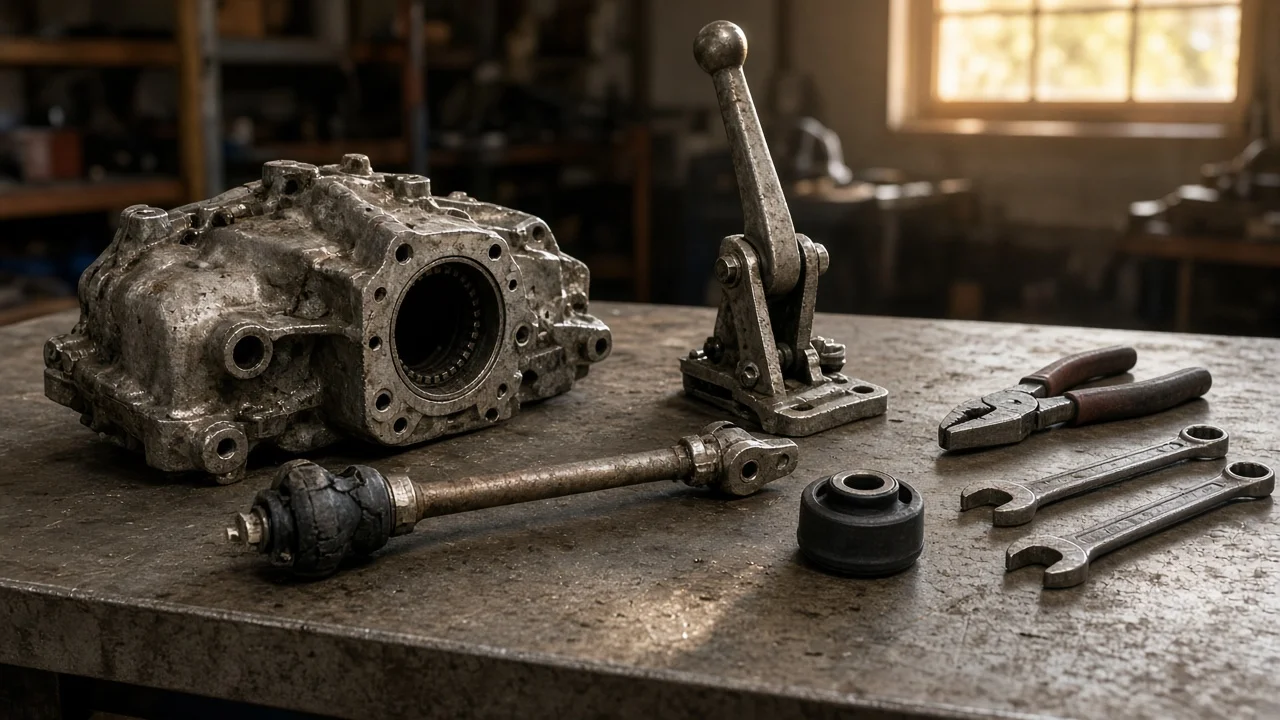
When the four-wheel-drive lever on a Dodge Ram feels loose, flops without engaging, or refuses to select a range, a common cause is a small bushing where the shift rod meets the transfer case. This guide explains how to identify that bushing, why it fails, how your truck's configuration affects the correct replacement, and what you can check yourself before buying parts or booking a shop visit.
The short answer
On Rams with a floor-mounted transfer case lever, the linkage bushing, often sold as a grommet, is a small press-in insert made of plastic or a rubber-like polymer. It sits in the hole of a lever arm and holds the end of the shift rod. It is most often located on the shift lever on the side of the transfer case, and some trucks have a similar bushing at the shifter end of the rod. To identify the correct part, first confirm that your truck has mechanical linkage. Then find which end has failed and match the replacement to the lever hole size, lever thickness and rod end diameter, or to the parts listing for your exact vehicle configuration. Trucks with an electronic dash or console selector do not use this rod, so a linkage bushing will not apply to them.
On a truck such as a 2004 Ram 1500 with a manual floor lever, a failed grommet frequently explains a lever that moves but no longer changes ranges. The repair is usually inexpensive, but the part must fit snugly. An undersized or loose universal piece will wear quickly or let the rod pop free again.
How the shift linkage works
The lever in the cab pivots in a bracket on the floor. A rod runs from the bottom of that lever to a shorter lever on the transfer case. When you move the cab lever, the rod pushes or pulls the transfer case lever, which rotates the internal shift mechanism into positions such as two-wheel-drive high, four-wheel-drive high, neutral and four-wheel-drive low. The bushing is the link between rod and lever. The rod end passes through the bushing, which is pressed into the lever hole. The bushing prevents metal-to-metal contact, takes up clearance, reduces vibration and noise, and in many designs uses a lip or shoulder to retain the rod.
Because it sits under the truck near the transmission and exhaust, the bushing is exposed to heat, road salt, water, dirt and fluid leaks, as well as the load of every shift. Over time the material hardens, cracks and wears into an oval. As slop increases, the cab lever travels without moving the transfer case lever, and eventually the rod can pull out entirely. When owners finally inspect it, the old bushing is sometimes missing completely, with only a bare hole left in the lever.
What changes the answer for your truck
The first question is the shift system. A manual floor lever uses linkage and a bushing. An electronic selector uses a switch and a shift motor, and its problems are diagnosed differently. Beyond that, the transfer case model and linkage design vary by model year, light-duty versus heavy-duty chassis, drivetrain and trim. Do not assume that a bushing listed for one Ram generation fits another. A lookup by VIN, or the identification tag on the transfer case, is the reliable way to narrow it down.
Location matters too. The bushing at the transfer case end and the one at the shifter end may be different sizes or styles, and some linkages also use a retaining clip, washer or adjustable rod end. Service history can mislead you. If a previous owner or shop installed a universal grommet, the part in your truck may not match the original. Operating conditions also play a role. Trucks used off-road, in snow, or on salted roads tend to wear these parts faster and are more likely to need attention at both ends of the rod.
How to inspect and identify the worn bushing
Park on level ground, set the parking brake and chock the wheels before working underneath. This is especially important here. If the linkage has come apart, the transfer case may be sitting in neutral, and in that state the transmission's Park position will not hold the truck. Never rely on Park alone. With a helper slowly moving the cab lever, watch the transfer case end. Look for the rod moving inside the hole before the lever moves, cracked or missing bushing material, or a rod that has already dropped out.
To identify the part, disconnect the rod end and note the shape of whatever bushing remains, including any collar, flange or retaining lip. With calipers, measure the lever hole diameter, the lever thickness and the rod end diameter. Also note whether the rod has a groove for a clip. Take these measurements and the old piece to a parts counter, or use a catalog filtered by year, model, drivetrain and transfer case. Universal bushing assortments are widely available. If you use one, pick a bushing that matches all three dimensions rather than the closest size in the box.
Replacing the bushing and checking the result
Clean the lever hole and remove any old fragments so the new bushing can seat fully. Many bushings press in with pliers or a small socket used as a backing support, but follow the instructions supplied with the part, including any guidance on lubrication. Push the rod end through until it seats, then tug on it to confirm it is retained. Next, shift through each range using the procedure in your owner's manual, and confirm that each position engages and that any indicator lights respond. If the cab lever positions no longer line up with the transfer case detents, the linkage may need adjustment according to the service information for your truck.
While you are underneath, check the bushing at the shifter end, look for a bent rod, and inspect the transfer case lever hole itself. A worn or elongated hole can chew through a new bushing quickly. There is no universal replacement interval for this part on a maintenance schedule. A practical approach is to check the linkage during routine inspection under the truck, such as at oil changes, and whenever shifting feels loose or vague.
Limitations and when to get help
Measurements and catalog listings are the only way to confirm the right part for your truck. Configurations differ, and this guide does not replace manufacturer specifications. If a new bushing restores firm lever movement but four-wheel drive still does not engage, the problem may be elsewhere. Possible causes include the internal transfer case shift mechanism, front axle engagement components, or worn detents. These need proper diagnosis. Grinding, a transfer case that jumps out of range, or fluid leaking from the case are also signs to involve a qualified technician.
Before ordering, write down your VIN, the transfer case tag information and your caliper measurements. If anything is unclear, a dealer parts department or a trusted shop can confirm the correct bushing from that information and check the linkage adjustment once it is installed.