Dodge Ram Transfer Case Linkage Adjustment: What Owners Should Know
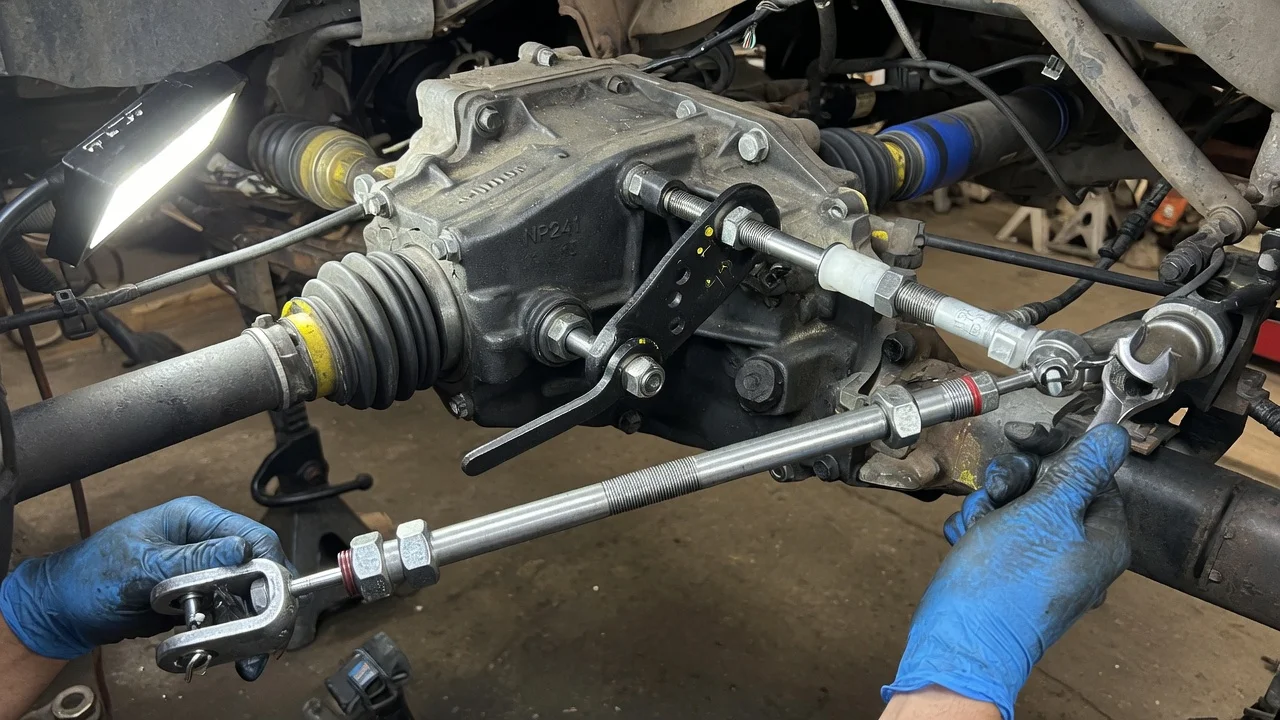
A Dodge Ram four-wheel-drive lever that is hard to move, won't settle fully into a range, or lets the transfer case slip out of gear often points to the shift linkage. On trucks with a floor-mounted lever, adjusting it is usually a short job. The correct reference position and fastener torque, however, come from the service information for your exact truck and transfer case, not from a universal number.
The short answer
On a Ram with a manual floor shifter, adjusting the transfer case linkage means synchronizing the lever in the cab with the selector lever on the transfer case, so each position you feel in the cab matches a fully engaged position at the case. The usual approach is to safely support the truck and loosen the clamp or lock bolt where the shift rod passes through an adjustable trunnion or swivel. Next, place the transfer case lever and the cab lever in the reference position the service procedure specifies for that case, and confirm the rod slides freely. Then tighten the bolt to the specified torque and test every range. If the truck selects four-wheel drive with a dash switch or dial and an electric shift motor, there is no mechanical linkage to adjust in this sense, and diagnosis follows a different path.
Adjustment only corrects misalignment between the two levers. It will not fix free play from worn bushings, a bent rod, a loose lever bracket, or wear inside the transfer case. These faults can feel like misadjustment, so it pays to identify them first.
How the shift linkage works
The floor lever pivots on a bracket and connects through a rod to a lever on the transfer case selector shaft. Inside the case, that shaft moves the shift mechanism that selects two-wheel drive, four-wheel-drive high, neutral, and four-wheel-drive low, depending on the case design. Spring-loaded detents in the case hold each position. When the linkage is set correctly, the cab lever reaches each of its positions exactly as the case drops into its matching detent.
When the rod length is off, two things can happen. The cab lever may hit its end of travel before the case is fully engaged. Or the linkage may keep pressure on the case lever and push the internal mechanism partly out of its detent. Partial engagement can show up as grinding, the truck jumping out of low range under load, difficulty finding neutral, or a four-wheel-drive indicator that does not light even though the lever looks correct. The rod ends ride in bushings or grommets that wear over time, and the trunnion can corrode. Either condition adds slop or stiffness that changes how the shifter feels.
What changes the answer for your truck
The vehicle configuration matters more than anything else. Over the years, Ram pickups have used several transfer cases. These include New Venture part-time units such as the NV231 and NV241 on earlier trucks, and some trims offered cases with an added full-time position. The number and order of lever positions differ between cases, and so does the reference position used during adjustment. The identification tag on the transfer case and the build information for the truck tell you which case you have. Generation also matters, because lever brackets, rod routing, and the location of the adjustment point have changed between body styles.
Modifications and service history can also change the result. Suspension lifts, body lifts, aftermarket shifters, and drivetrain swaps change linkage geometry and can leave the lever touching the floor or boot before the case is fully engaged. If the transmission or transfer case was removed recently, the linkage was probably disconnected and may not have been set correctly afterward. Operating conditions play a part as well. Mud, road salt, and off-road use can seize the rod in its trunnion, and cold weather stiffens old grease. On some older Rams, the front axle uses a separate disconnect mechanism. If the case shifts and the indicator lights but the front wheels are not driving, the problem may be at the axle rather than the linkage.
Checks to do before adjusting
Start by noting which positions are affected. A problem at only one end of the lever's travel suggests rod length. Loose, vague movement everywhere points to worn bushings or a loose bracket. With the engine off and the truck secured, have a helper move the cab lever while you watch the linkage. Look for a cracked or missing bushing, a bent rod, a loose clamp bolt, or a lever that moves before the rod does. Check the transfer case fluid level and condition as part of your regular maintenance schedule, since low or incorrect fluid can make shifting stiffer.
Also rule out shifting technique. The owner's manual describes the conditions for each shift, such as having the vehicle stopped or rolling slowly and the transmission in neutral when selecting low range. On a part-time system, driving in four-wheel drive on dry pavement winds up the driveline. That can make the lever very hard to move until the truck rolls a short distance to release the tension. A shifter that is hard to move only after driving on pavement in four-wheel drive does not necessarily have a linkage fault.
Doing the adjustment safely
Park on level ground, set the parking brake, chock the wheels, and support the truck on stands rated for its weight. Keep one important caveat in mind: when the transfer case is in neutral, putting the transmission in park will not hold the truck. Clean the trunnion area and free a seized rod with penetrating oil before you try to move anything. Loosen the lock bolt, confirm the rod slides freely, and move the transfer case lever by hand until you feel it seat in the detent the procedure calls for. Then place the cab lever in its matching position and tighten the bolt to the manufacturer specifications for your truck.
Afterward, cycle the lever through every position with the engine off, and confirm that each one has a distinct detent and that the lever does not touch the floor or boot. Then test in a safe, open area, checking that the indicator responds and the truck drives correctly in each range. If one end of the travel still will not engage fully, do not bias the adjustment to force it. Inspect the bushings, bracket, and case instead.
Limits and when to get professional help
This explanation is general. The reference position, torque value, and adjustment point depend on the year, model, and transfer case, so use the factory service information for your specific truck rather than a number from another vehicle. If the case grinds, pops out of gear, or makes unusual noise after a correct adjustment, or if the fluid contains metal particles, the cause is likely inside the transfer case and needs a professional inspection. Trucks with electronic shifting need diagnosis of the switch, shift motor, and related circuits with appropriate scan equipment. If you are unsure whether your truck has a mechanical linkage at all, a shop can confirm the configuration and check the system before any parts are replaced.